Industrial Pressure Transmitter

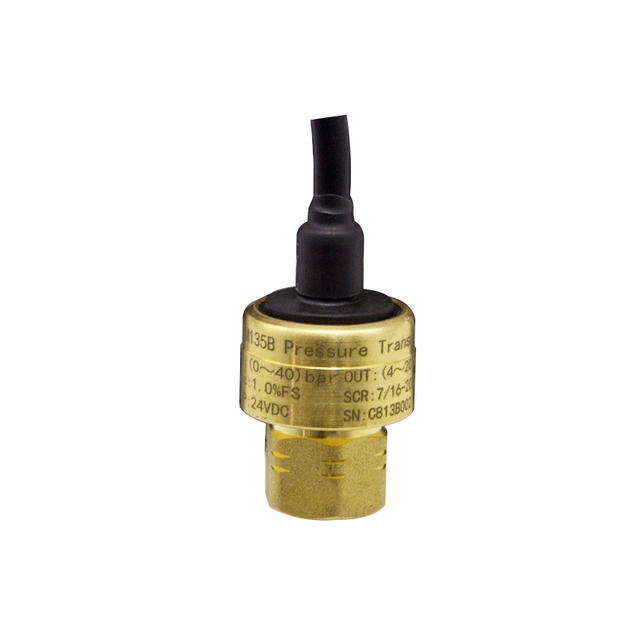


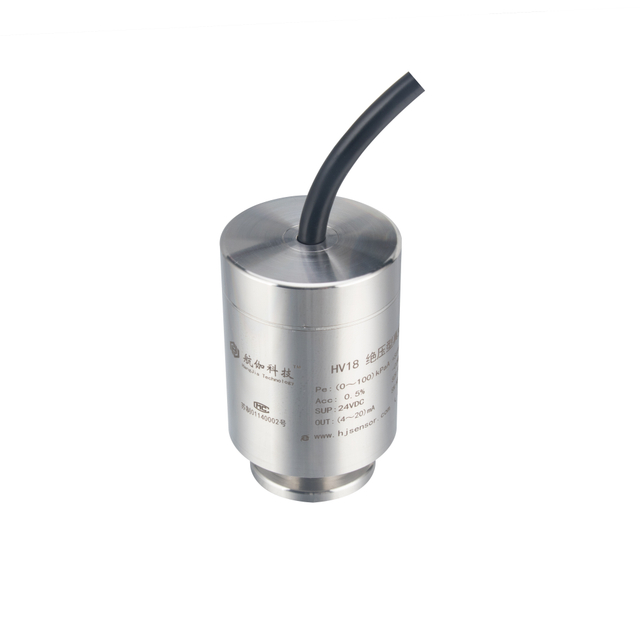


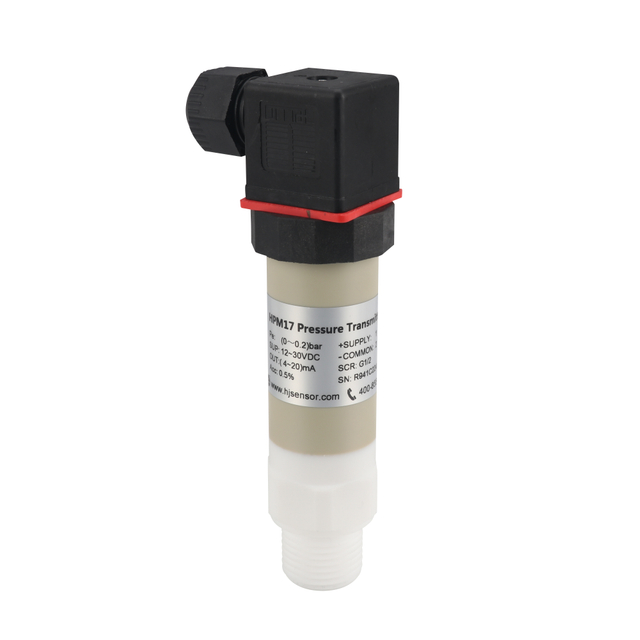


Rely on our Industrial Pressure Sensors for robust performance in demanding environments. Built to withstand harsh conditions, these sensors deliver accurate pressure measurements for critical industrial processes. From hydraulic systems to manufacturing lines, our Industrial Pressure Sensors ensure consistent performance and durability, maximizing uptime and productivity.
Industrial Pressure Transmitter
Accurate pressure measurement is the silent backbone of process control and industrial automation. A failing pressure transmitter can send wrong signals to your PLC, waste energy, and put your entire operation at risk.
Here you'll discover industrial pressure transmitters for gas, liquid, and steam – from general-purpose 4‑20 mA models to anti‑corrosion, high‑temperature, explosion‑proof, and oilfield mud versions.
On this page, we help you choose the right pressure range, output signal, and process connection so your system stays accurate, safe, and efficient.
What Is a Pressure Transmitter?
Pressure Transmitter Definition & Working Principle
A pressure transmitter is an electronic device that converts physical pressure – from a gas, liquid, or steam – into a standard industrial output signal.
Inside most transmitters, a sensing element (diffused silicon, MEMS, ceramic, or sapphire) deforms under pressure. That deformation changes electrical resistance or capacitance. An onboard signal conditioning circuit then amplifies, linearizes, and converts the change into a loop‑powered 4‑20 mA signal, 0‑10 V, or digital protocol like HART or RS485.
You connect it to a controller, display, or DCS, and instantly get a live, repeatable pressure reading for alarming, trending, and closed‑loop control.
Gauge, Absolute, Sealed Gauge & Differential
Pressure transmitters are available in four reference types:
Gauge pressure – measures relative to ambient atmosphere. Zero when open to air. Ideal for tanks, pipes, and pumps.
Absolute pressure – uses a sealed vacuum reference. Essential for barometric correction, vacuum systems, and altitude measurement.
Sealed gauge pressure – referenced to a fixed atmospheric pressure inside the housing. Used for high‑pressure hydraulics and oilfield applications.
Differential pressure – measures the difference between two ports. Perfect for filter monitoring, flow measurement, and level in closed tanks.
Types of Industrial Pressure Transmitters We Offer
Our transmitter portfolio covers multiple technologies and application‑specific designs. Here we keep it simple so you can match the right model to your media, environment, and control system.
Universal Pressure Transmitter (4‑20 mA / HART / RS485)
The universal workhorse for factory automation and process control. Built with a high‑precision diffused silicon core, stainless steel 316L housing, and a wide selection of outputs. Modular design supports multiple process connections and electrical interfaces.
Best when you need:
Direct PLC connection with 4‑20 mA loop power.
HART communication for remote configuration and diagnostics.
Gauge, absolute, or sealed gauge from -100 kPa up to 100 MPa.
High accuracy (±0.1 % FS) and long‑term stability (±0.1 % FS/year).
Anti‑Corrosion Pressure Transmitter (All‑Plastic / Ceramic Sensor)
Designed for aggressive chemicals, acids, and salt spray. Uses a 96 % Al₂O₃ ceramic sensor (dry, no filling oil) combined with anti‑corrosion plastic pressure interfaces (PVDF, PP, PTFE). The all‑plastic structure and waterproof breathable design make it perfect for chemical, environmental, and water treatment applications.
Best when you need:
Resistance to strong corrosive media.
No oil contamination – ideal for ultra‑pure or catalytic processes.
Flat diaphragm option for easy cleaning and anti‑scaling.
High‑Temperature Pressure Transmitter (Up to 350 ℃ Media)
For steam lines, hot oil, boilers, and exhaust gas. Uses a high‑temperature pressure core and a cooling fin structure to radiate heat away from the electronics. Media temperature can reach 200 ℃ with 10 fins, or 350 ℃ with a microporous structure and 8 fins.
Best when you need:
Reliable measurement of high‑temperature liquids or gases.
4‑20 mA, HART, or voltage output.
All stainless steel welded construction.
Explosion‑Proof Pressure Transmitter (Flameproof Enclosure)
Certified for hazardous areas – chemical plants, oil refineries, coal mines, and fuel depots. Fully welded stainless steel housing with flameproof design (Ex d). The internal silicon piezoresistive core provides excellent stability even in tough conditions.
Best when you need:
Safe operation in flammable gas or dust atmospheres.
Compact, lightweight flameproof design.
Long‑term stability and low temperature drift.
Oilfield & Mud Pressure Transmitter (Abrasion‑Resistant)
Specialised for drilling mud, slurry, and media containing abrasive particles. Uses a sapphire pressure sensor (single‑crystal silicon insulator) with a hard, wear‑resistant diaphragm. A special diaphragm protection mechanism prevents clogging and extends service life in harsh oilfield environments.
Best when you need:
Media with sand, rock cuttings, or other solids.
Medium temperature up to 150 ℃.
Sealed gauge pressure from 20 MPa to 80 MPa.
Quick comparison
| Transmitter Series | Technology | Pressure range | Output | Best for |
|---|---|---|---|---|
| HPM180 (Universal) | Diffused silicon / 316L | -100 kPa ~ 100 MPa | 4‑20 mA, HART, 0‑10 V, RS485 | General process, hydraulics, water, oil, gas |
| HPM17‑RH (Anti‑corrosion) | Ceramic + plastic | 0.5 bar ~ 10 bar | 4‑20 mA, 0‑5/0‑10 V, RS485 | Acids, alkalis, chemical, wastewater |
| HPM189 (High‑temperature) | Silicon + cooling fins | -100 kPa ~ 100 MPa | 4‑20 mA, HART, 0‑5/0‑10 V | Steam, hot oil, boilers, exhaust – up to 350 ℃ |
| HPM188 (Explosion‑proof) | Silicon + welded 316L | -100 kPa ~ 100 MPa | 4‑20 mA, voltage | Hazardous areas (Ex d), chemical, mining |
| HPM1610 (Oilfield mud) | Sapphire + titanium alloy | 20 MPa ~ 80 MPa (sealed gauge) | 4‑20 mA, 0.5‑4.5 V | Drilling mud, slurry, abrasive media |
| HPM18V (Vacuum gauge) | Ceramic capacitive (CDG) | 0.2 kPa ~ 100 kPa absolute | 0‑5/0‑10 V, 4‑20 mA, RS485 | Vacuum measurement, semiconductor, R&D |
Industrial Transmitter Applications by Industry
Chemical & Petrochemical
Corrosive media, high temperatures, and hazardous zones are daily realities. Choose anti‑corrosion (HPM17‑RH), high‑temperature (HPM189), or explosion‑proof (HPM188) transmitters depending on the specific zone and fluid. Stainless steel 316L, Hastelloy, or PTFE wetted parts are available.
Oil & Gas / Drilling
Mud pumps, wellhead pressure, and hydraulic fracturing require rugged transmitters that can handle abrasive slurries and pressure spikes. The HPM1610 with sapphire sensor and wear‑resistant diaphragm is purpose‑built for these conditions.
Power & Boiler Houses
Steam pressure, feedwater, and fuel oil monitoring demand high‑temperature capability and long‑term reliability. HPM189 with cooling fins and 4‑20 mA output is a common choice.
Water & Wastewater
Pump discharge, filter differential pressure, and tank level. Universal transmitters (HPM180) with 316L wetted parts and IP68 cable outlets provide reliable service in wet environments.
Food, Pharmaceutical & Sanitary
Although not covered in depth here, flush‑diaphragm and sanitary versions are available on request. For clean‑in‑place (CIP) applications, anti‑corrosion ceramic sensors or 316L with appropriate seals are recommended.
How to Choose the Right Pressure Transmitter
Pressure Range & Overload
Never size a transmitter so your normal operating pressure sits at the top of the range. Keep working pressure between 30 % and 80 % of full scale. All our transmitters have 1.5× overload protection as a minimum.
Output Signal
4‑20 mA loop‑powered – best for long cable runs (>500 m) and noisy plants. The industry standard.
0‑5 V / 0‑10 V – suitable for short runs inside control cabinets.
HART – digital communication over the 4‑20 mA loop; allows remote configuration and diagnostics.
RS485 / Modbus – for digital networks and multi‑sensor installations.
Wetted Materials & Media Compatibility
Water, oil, air, mild chemicals → 316L stainless steel is sufficient.
Strong acids, salt spray → Ceramic (HPM17‑RH) or PTFE/PP/PVDF interfaces.
Abrasive slurries, mud → Sapphire sensor with hardened diaphragm (HPM1610).
High‑temperature media → 316L with cooling fins (HPM189).
Process & Electrical Connections
Common process connections: M20×1.5, G1/2, NPT, flange, tri‑clamp. Electrical: Hirschmann/DIN43650, cable outlet (IP67/IP68), M12×1 connector.
Pressure Transmitter FAQs
What is the difference between a pressure sensor and a pressure transmitter?
A pressure sensor typically provides a raw mV signal that needs external conditioning. A pressure transmitter has built‑in amplification and converts the signal to a standard industrial output like 4‑20 mA or 0‑10 V. For direct PLC connection, always choose a transmitter.
How often should a pressure transmitter be recalibrated?
General industrial use: every 12 months. Critical safety loops: every 6 months. Our transmitters offer long‑term stability as low as ±0.1 % FS/year, so many users extend intervals to 2‑3 years with periodic verification.
Can I use a gauge pressure transmitter for liquid level in a sealed tank?
No – a closed tank needs differential pressure measurement (two ports) or an absolute transmitter with vapor space compensation. For vented tanks, a standard gauge transmitter works fine.
Which transmitter is suitable for high‑vibration environments?
All our transmitters are tested to 20 g vibration and 100 g shock. For extreme vibration, choose a model with welded construction and no moving parts (all of our transmitters are solid‑state).
Do I need an explosion‑proof transmitter?
If your installation lies in a hazardous area with flammable gases or dust (Zone 1, Zone 2, Class I Div 1, etc.), you must use a certified flameproof (Ex d) or intrinsically safe (Ex ia) transmitter. HPM188 is designed for such zones.
What output should I use for a cable run over 500 m?
4‑20 mA loop‑powered – it is immune to voltage drop and induced noise. Voltage outputs (0‑10 V) will degrade significantly over long distances.
Why Choose Our Industrial Pressure Transmitters?
We design and manufacture transmitters from the core to the finished product – diffused silicon, ceramic, sapphire, and MEMS technologies.
Reliable Industrial‑Grade Design
Fully welded stainless steel or all‑plastic construction.
Wide temperature compensation (-20 ℃ to +85 ℃, extended options available).
High overpressure (1.5× FS) and burst ratings.
Long‑term stability as low as ±0.1 % FS/year.
What you get:
Stable readings over the full product lifecycle.
Material options for water, steam, oil, gas, corrosive chemicals, abrasive slurries, and high‑temperature media.
Standardised process connections and electrical interfaces for easy replacement.
Fast Support, Customization & Global Service
We understand your system is unique. Our engineering team helps you size the range, pick the output, select the right wetted parts, and choose the electrical connection that fits your exact job.
Service advantages:
Fast response on sizing questions and cross‑reference of existing part numbers.
Support for OEM and project orders, from samples to large‑volume runs.
After‑sales support, including selection tweaks when your process changes later.