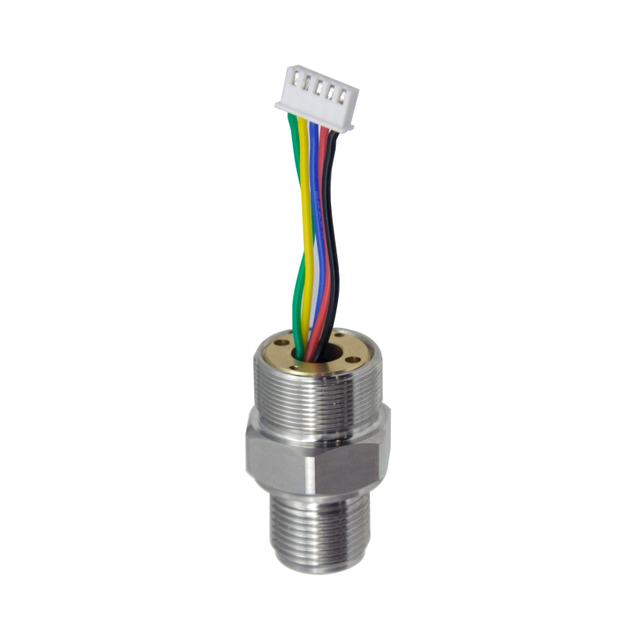
±1kpa ±6kpa ±40kPa ±100kPa Monocrystalline Silicon Differential Pressure Module
The Monocrystalline Silicon Differential Pressure Module represents the pinnacle of high-end sensing architecture. Unlike standard sensors that struggle with non-linearity under high static pressure, this module serves as the "intelligent heart" for the next generation of smart differential pressure transmitters. It is meticulously engineered to detect microscopic pressure variances—as low as 1kPa—while maintaining absolute structural integrity under massive system loads. It is the definitive choice for engineers who refuse to compromise on precision and long-term reliability.
-
Ultra-High Precision Performance: Delivers up to 0.05% FS accuracy, capturing the most subtle process fluctuations.
-
Exceptional Static Pressure Resistance: Advanced silicon-on-insulator technology allows for static pressure ratings up to 40MPa.
-
Intelligent Temperature Compensation: Integrated thermal sensors provide real-time dynamic linear correction across extreme ranges.
-
Minimal Long-term Drift: Designed for "install-and-forget" applications with stability rated at ±0.1% per 5 years.
-
Robust Mechanical Protection: Built-in dual-diaphragm overload protection prevents damage from sudden pressure spikes.
| Quantity: | |
|---|---|


The Silent Guardian of Industrial Accuracy
Imagine a high-pressure pipeline where the force of the flow is immense, yet you need to detect a pressure difference as light as a gentle breeze. This is the world of the Monocrystalline Silicon Differential Pressure Module. When you hold this module, you notice the cool, heavy precision of the laser-welded stainless steel housing and the mirror-like finish of the diaphragm. It doesn't just look like a premium component; it feels like a masterpiece of micromechanical engineering.
In the heart of a power plant or a sprawling refinery, thousands of variables shift every second. While lesser sensors "drift" or become erratic under the strain of high static pressure, the Monocrystalline Silicon module remains an unwavering anchor of truth. It translates chaotic physical forces into a clean, digital-ready signal with such grace that your control system can operate with surgical precision. By choosing this module, you are telling a story of efficiency—fewer shutdowns, reduced energy waste, and the confidence that comes from knowing your data is absolute. It is the transition from "estimating" your process to "mastering" it.
Monocrystalline Silicon Technology: The Science of Stability
The leap from polycrystalline or diffused silicon to Monocrystalline Silicon is significant. Standard sensors are made of many small crystals, creating "grain boundaries" that can cause noise and hysteresis. Our monocrystalline sensor is grown as a single, perfect crystal lattice.
Elasticity and Recovery: Because the crystal structure is perfect, the diaphragm returns to its exact original shape after every pressure cycle. This translates to virtually zero hysteresis, ensuring that your measurements are consistent whether the pressure is rising or falling.
Thermal Matching: The silicon sensing element is suspended in a way that allows it to expand and contract freely. This "floating" design prevents mechanical stress from the housing—caused by heat—from being misinterpreted as a pressure change.
Signal-to-Noise Ratio: The purity of the monocrystalline structure produces a very high signal output with very low background noise, allowing our modules to measure ultra-low ranges (like 100Pa) with high resolution.
High Overpressure Protection and Static Pressure Compensation
The most common cause of sensor failure in differential pressure applications is a "one-sided" overpressure event, often occurring during system start-up or venting. The Monocrystalline Silicon module is built with a sophisticated internal defense system.
Dual-Diaphragm Defense: If one side of the sensor experiences an extreme surge, the internal "stop" mechanism engages. The fill fluid is moved to a secondary chamber, preventing the sensing diaphragm from stretching beyond its elastic limit.
Static Pressure Correction: Measuring a small difference (DP) on top of a very high base pressure (Static) is notoriously difficult. Our modules are calibrated at multiple static pressure points, ensuring the DP reading remains accurate even if the line pressure jumps from 0 to 20MPa.
Mechanical Ruggedness: The internal structure is laser-welded and hermetically sealed, protecting the delicate silicon bridge from the high-pressure environment outside, ensuring that "measurement" never becomes "leakage."
Intelligent Signal Processing and Interface
As a core module, it is designed for seamless integration into smart transmitters. It does more than just sense; it communicates.
Integrated Digital Characterization: Each module comes pre-loaded with its own unique calibration map. It stores its own linearity and temperature data, allowing your transmitter electronics to "read" the module's personality and apply corrections instantly.
HART & Modbus Compatibility: Whether you are building a traditional 4-20mA loop or a sophisticated digital fieldbus network, the module’s output is optimized for high-speed digital communication, reducing the processing load on your main CPU.
Zero-Point Self-Correction: The module supports remote zero-trimming. If your installation orientation creates a slight offset, you can correct it digitally without ever opening the housing, maintaining the IP-rated seal of your device.
Application Versatility and Media Compatibility
While it is a high-tech component, its physical design is meant for the toughest media on the market. From clean steam to corrosive chemicals, we offer configurations that survive.
Wetted Material Options: We provide diaphragms in 316L for general water/gas, Hastelloy C for corrosive chemical processing, and Tantalum for high-acidity environments.
Custom Flange Interfaces: The module can be adapted to various process connections, making it a "drop-in" replacement for existing 3051-style transmitter bodies.
Low-Power Architecture: Ideal for wireless or solar-powered remote monitoring stations, the module's circuitry is optimized to deliver high-speed readings while consuming minimal current.
Why Choose Us
Selecting our Monocrystalline Silicon Differential Pressure Module is a strategic investment in the longevity and accuracy of your instrumentation line.
Expertise in High-Precision Calibration: We don't just manufacture; we validate. Every module undergoes a rigorous 48-hour thermal aging and pressure cycling process to ensure "infant mortality" is eliminated before shipping.
Global Compatibility: Our design follows the industry-standard "3051" footprint, allowing you to upgrade your existing transmitter lines with our high-stability cores without redesigning your mechanical housings.
Unmatched Technical Documentation: We provide full datasheet transparency, including accuracy curves, temperature drift charts, and register maps, empowering your developers to integrate our technology faster.
Quality Assurance Standards: Our facility is ISO9001 certified, and every module is serialized for full material traceability, meeting the strict audit requirements of the oil, gas, and power industries.
FAQ: Frequently Asked Questions
Q: What is the benefit of Monocrystalline Silicon over traditional Capacitance sensors?
A: Monocrystalline Silicon sensors offer much better long-term stability and are less sensitive to vibration and orientation changes. While capacitance sensors are good for certain applications, the "solid-state" nature of silicon makes it more durable in modern high-speed industrial processes.
Q: How does the static pressure affect the accuracy of the differential reading?
A: Most sensors "shift" when the line pressure increases. Our modules are specifically compensated for static pressure. We test each module up to 25MPa or 40MPa to ensure that the shift is minimized and digitally corrected, typically staying within 0.1% of the reading.
Q: Can these modules be used for flow measurement?
A: Yes, they are ideal for flow applications involving orifice plates, Venturi tubes, or Pitot tubes. Their high-speed response time (under 10ms) allows them to track rapid flow fluctuations in real-time, providing more accurate totalization for billing and control.
Q: Are custom pressure ranges available?
A: Absolutely. While 1kpa, 6kpa, and 40kpa are our standards, we can characterize modules for any specific range within our maximum limits. Simply provide your Lower Range Value (LRV) and Upper Range Value (URV) during the ordering process.
Would you like me to generate a technical comparison table between this Monocrystalline module and a standard Diffused Silicon module to highlight the E-E-A-T advantages for your customers?