Explosion-proof Pressure Transmitter


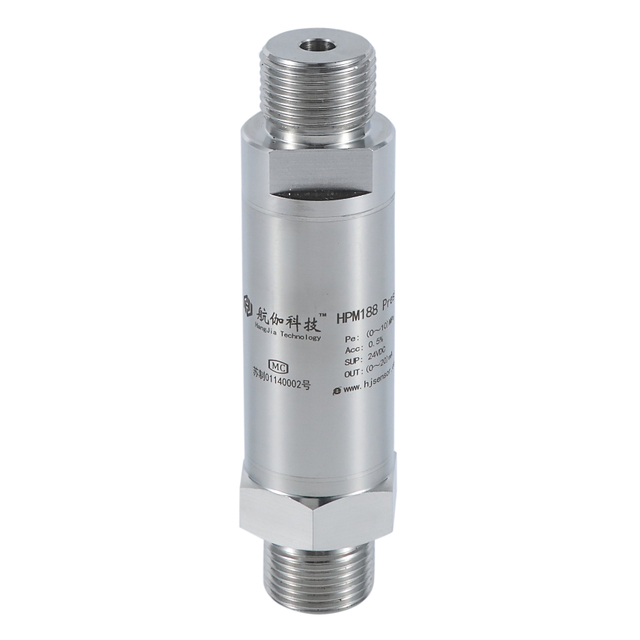

Explosion‑Proof Pressure Transmitter
In hazardous environments where flammable gases, vapours, or dust are present, a standard pressure transmitter can become an ignition source. One spark from a loose wire or a cracked housing could lead to a catastrophic explosion.
Here you'll discover explosion‑proof pressure transmitters designed for chemical plants, oil refineries, coal mines, and fuel depots. From flameproof enclosures (Ex d) to intrinsically safe options, we help you choose the right pressure range, output signal, and certification so your measurement is safe, compliant, and reliable.
What Is an Explosion‑Proof Pressure Transmitter?
An explosion‑proof pressure transmitter is a device that measures pressure in hazardous areas where the atmosphere contains flammable gases, vapours, mists, or combustible dust. Unlike standard transmitters, it is housed in a flameproof enclosure that can contain an internal explosion without propagating it to the outside environment.
Inside, a high‑performance silicon piezoresistive or diffused silicon pressure core converts the applied pressure into an electrical signal. The signal conditioning circuit then outputs a standard 4‑20 mA, 0‑10 V, or HART signal. The entire assembly is sealed and ruggedised to withstand extreme conditions.
Explosion‑Proof Certification (Ex d)
Our explosion‑proof transmitters comply with GB3836.1‑2010 and GB3836.2‑2010 (equivalent to IEC 60079‑0 and IEC 60079‑1). The flameproof enclosure is designed so that any internal ignition is contained, and the hot gases are cooled as they escape through flame paths. The marking Ex d II CT6 means:
Ex d – Flameproof enclosure
II – Suitable for surface industries (not mining only)
C – Gas group (hydrogen, acetylene, etc.)
T6 – Maximum surface temperature ≤ 85 ℃ (safe for most gases)
These transmitters are approved for use in Zone 1 and Zone 2 hazardous areas.
Types of Explosion‑Proof Pressure Transmitters We Offer
Our explosion‑proof range covers general flameproof models, high‑temperature versions, and flange diaphragm designs for corrosive media.
Flameproof Pressure Transmitter (HPM288)
The HPM288 is a compact, aluminium‑housed explosion‑proof transmitter built for general industrial hazardous areas. It uses a high‑stability silicon piezoresistive core and offers 4‑20 mA output (two‑wire). The housing is IP65, and the device can be supplied with or without a local LED display.
Best when you need:
Ex d II CT6 certification for Zone 1/2 hazardous areas.
Gauge, absolute, or sealed gauge pressure from -100 kPa up to 100 MPa.
Simple two‑wire 4‑20 mA loop‑powered connection.
Long‑term stability of ±0.1 % FS/year.
High‑Temperature Explosion‑Proof Transmitter (HPM289)
When your process media is hot (up to 200 ℃) but the area is still hazardous, the HPM289 combines explosion‑proof protection with a cooling fin structure. The cooling fins dissipate heat before it reaches the electronics, while the flameproof aluminium housing maintains safety certification.
Best when you need:
Media temperature up to 200 ℃ (with 10 cooling fins; 140 ℃ with 5 fins).
Same Ex d II CT6 certification.
4‑20 mA, HART, or voltage output.
Optional local display.
Flange Diaphragm Explosion‑Proof Transmitter (HPM20F)
For corrosive, viscous, or crystallising media that would clog a threaded pressure port, the HPM20F uses a flush flange diaphragm. The large‑area diaphragm (316L, Hastelloy, or Tantalum) isolates the sensor from the medium, and the transmitter housing is explosion‑proof. This is ideal for tanks, reactors, and pipelines with sticky or dirty fluids.
Best when you need:
Flange mounting (DN25 to DN100, ANSI, or custom).
Wetted parts compatible with strong acids or food/pharma.
4‑20 mA, HART, or RS485 output.
Easy cleaning and no dead zones.
Anti‑Corrosive Explosion‑Proof Transmitter (HPM27)
Designed for highly corrosive environments (chlor‑alkali, pickling lines, chemical storage), the HPM27 features a tantalum diaphragm or ceramic core, plus PTFE, PVDF, or titanium process connections. The housing is still explosion‑proof aluminium, but all wetted parts are selected for maximum chemical resistance.
Best when you need:
Resistance to HCl, H₂SO₄, HF, salt spray, etc.
Tantalum, Hastelloy C, or ceramic sensors.
Ranges up to 70 MPa (metal diaphragm) or lower with ceramic.
4‑20 mA, HART, 0‑10 V, or RS485.
Quick comparison
| Model | Certification | Pressure range | Special feature | Media temp. | Output |
|---|---|---|---|---|---|
| HPM288 | Ex d II CT6 | -100 kPa ~ 100 MPa | Compact, aluminium housing | -30~85 ℃ | 4‑20 mA |
| HPM289 | Ex d II CT6 | -100 kPa ~ 60 MPa | Cooling fins for high temp | Up to 200 ℃ | 4‑20 mA, HART, 0‑10 V |
| HPM20F | Ex d II CT6 | -100 kPa ~ 16 MPa | Flush flange diaphragm | -20~80 ℃ | 4‑20 mA, HART, RS485 |
| HPM27 | Ex d II CT6 | -100 kPa ~ 70 MPa | Tantalum / ceramic / PTFE | -20~80 ℃ | 4‑20 mA, HART, 0‑10 V |
Explosion‑Proof Transmitter Applications
Explosion‑proof transmitters are mandatory in areas classified as hazardous under ATEX, IECEx, or local standards.
Oil & Gas Upstream and Downstream
Wellhead pressure, pipeline monitoring, separator vessels, and refinery columns all contain flammable hydrocarbons. Our Ex d transmitters provide safe, reliable pressure data to the control room.
Chemical & Petrochemical Plants
Reactors, distillation columns, and storage tanks often handle flammable solvents, monomers, or hydrogen. Corrosive by‑products require anti‑corrosive wetted parts (HPM27). Flange transmitters (HPM20F) are used for sticky polymers.
Coal Mines & Mining
Underground coal mines have methane (firedamp) and coal dust. Explosion‑proof transmitters (HPM288) are used on ventilation fans, hydraulic roof supports, and slurry pumps.
Paint & Coating Factories
Spray booths and mixing rooms contain flammable vapours. A flameproof transmitter with a flush diaphragm (HPM20F) measures paint viscosity or tank level without creating a spark risk.
How to Choose an Explosion‑Proof Pressure Transmitter
Certification & Gas Group
First, identify your hazardous area classification (Zone 0, 1, 2 or Div 1, 2) and the gas group (IIA, IIB, IIC). For most petrochemical applications, IIC (hydrogen/ acetylene) is the most stringent. Our Ex d II CT6 covers IIC and T6 temperature class, suitable for almost all gases.
Pressure Range & Overload
Select a range where normal operating pressure is between 30 % and 80 % of full scale. All explosion‑proof models have at least 1.5× overload protection.
Wetted Materials for Corrosive Media
Standard – 316L stainless steel (water, oil, mild chemicals).
Highly corrosive – Hastelloy C, Tantalum, or ceramic.
Chlorine / HCl – Tantalum or PTFE‑lined.
Caustic – Nickel or Tantalum.
Process Connection
Threaded – G1/4, G1/2, M20×1.5, NPT (HPM288, HPM289, HPM27).
Flange – DN25 ~ DN100, ANSI 150 ~ 600 (HPM20F).
Sanitary / tri‑clamp – available on request.
Output & Local Display
4‑20 mA is the safest and most common for long cable runs through hazardous zones. HART allows remote configuration without opening the enclosure. A local LCD or LED display (optional on HPM288, HPM289) lets operators read pressure on‑site without needing a separate indicator.
Explosion‑Proof Pressure Transmitter FAQs
What is the difference between explosion‑proof (Ex d) and intrinsically safe (Ex ia)?
Explosion‑proof (Ex d) means the enclosure can contain an internal explosion. Intrinsically safe (Ex ia) limits electrical energy so low that a spark cannot ignite the atmosphere. Ex d is simpler to install and maintain for 4‑20 mA loops; Ex ia is often used for very sensitive gas groups. Our Ex d transmitters are widely accepted for Zone 1.
Do I need an explosion‑proof transmitter if I am just measuring water in a chemical plant?
It depends on the area classification. If the water line runs through a classified area (e.g., near a solvent storage tank), you must use a transmitter with the appropriate certification. Always consult your site’s hazardous area classification drawing.
Can I use an explosion‑proof transmitter in a high‑vibration environment?
Yes. Our transmitters are tested to 20 g vibration and 100 g shock. The flameproof housing is heavy‑duty, and there are no moving parts. For very high vibration, we recommend using a cable‑type electrical connection instead of a rigid conduit.
How do I wire an explosion‑proof pressure transmitter?
Power and signal are connected via a certified cable gland through the conduit entry. The housing must be properly sealed to maintain flameproof integrity. We provide detailed wiring diagrams for two‑wire 4‑20 mA, three‑wire voltage, and HART connections. Always follow local electrical codes.
What is the maximum media temperature for an explosion‑proof transmitter?
Standard HPM288 is limited to 85 ℃ media temperature because of the electronics inside the sealed housing. For higher media temperatures, use HPM289 with cooling fins (up to 200 ℃). Never exceed the rated temperature – it can compromise the explosion‑proof seal.
Does the transmitter need recalibration after being installed in a hazardous area?
Yes, standard recalibration intervals (12 months for general, 6 months for critical) still apply. However, calibration should be performed in a safe area or using a portable calibrator and a flameproof adaptor. Do not open the enclosure in a live hazardous area.
Why Choose Our Explosion‑Proof Pressure Transmitters?
We design and manufacture explosion‑proof transmitters that meet international flameproof standards. Every unit is tested for ignition containment, pressure integrity, and long‑term stability.
Certified for Safety
Ex d II CT6 certification (CNEX or equivalent).
IP65 aluminium or optional stainless steel housing.
Rigorous inspection of flame paths and sealing surfaces.
Industrial‑Grade Performance
Accuracy up to ±0.25 % FS (representative).
Long‑term stability ±0.1 % FS/year.
Low temperature drift (±0.03 % FS/°C).
Wide pressure range from vacuum to 100 MPa.
Flexible Configuration
Choice of threaded, flange, or sanitary process connections.
Wetted materials: 316L, Hastelloy, Tantalum, ceramic, PTFE.
Outputs: 4‑20 mA, HART, 0‑10 V, RS485.
Optional display (LED or LCD) for on‑site reading.
Fast & Expert Support
Our engineers help you select the correct certification, range, and materials for your specific hazardous area. We provide documentation for project certification, including ATEX/ IECEx declarations upon request. For OEM and project orders, we offer custom labelling, special pressure ranges, and extended cables.