Electronic Pressure Switch


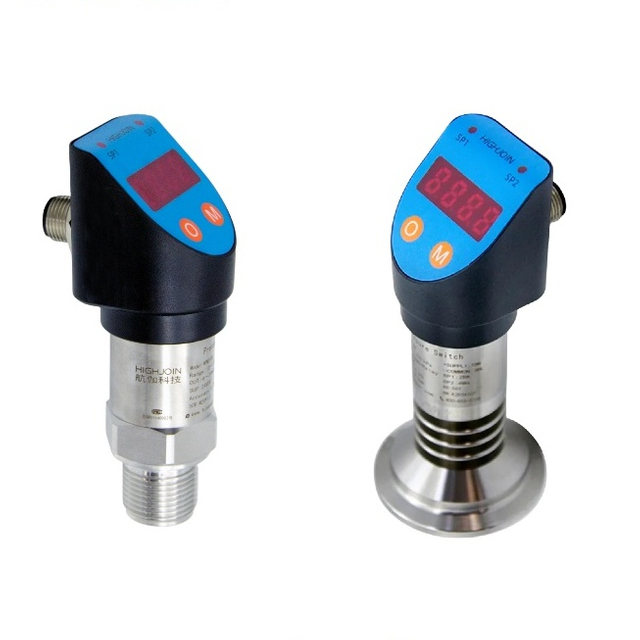


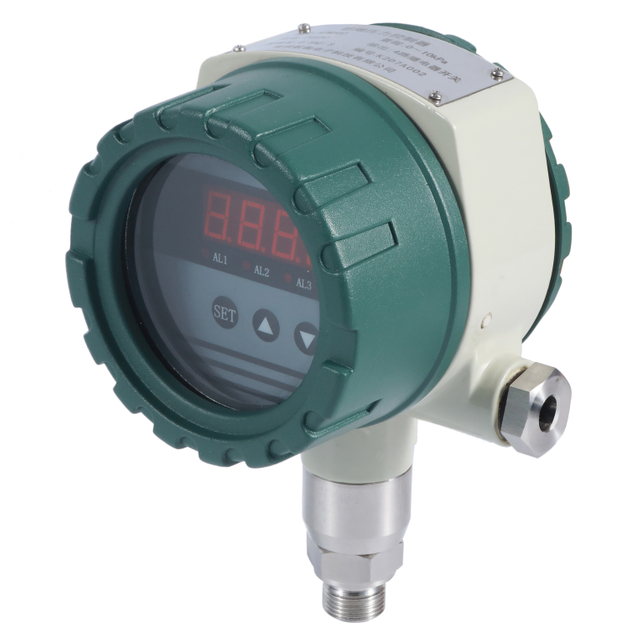
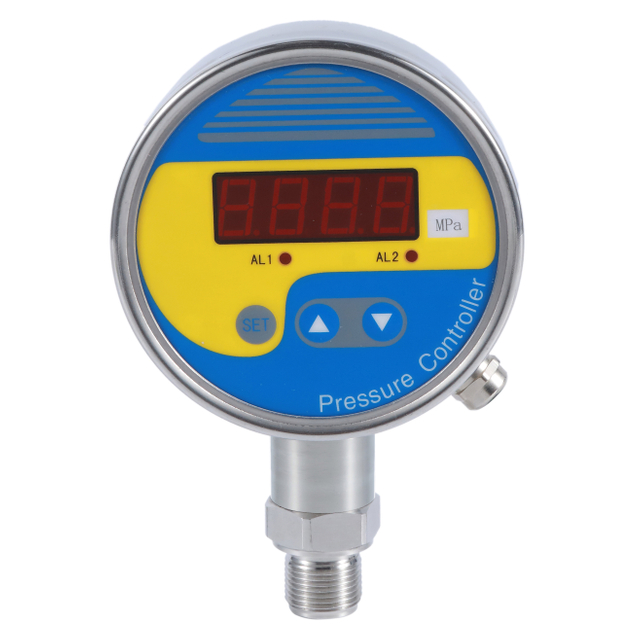
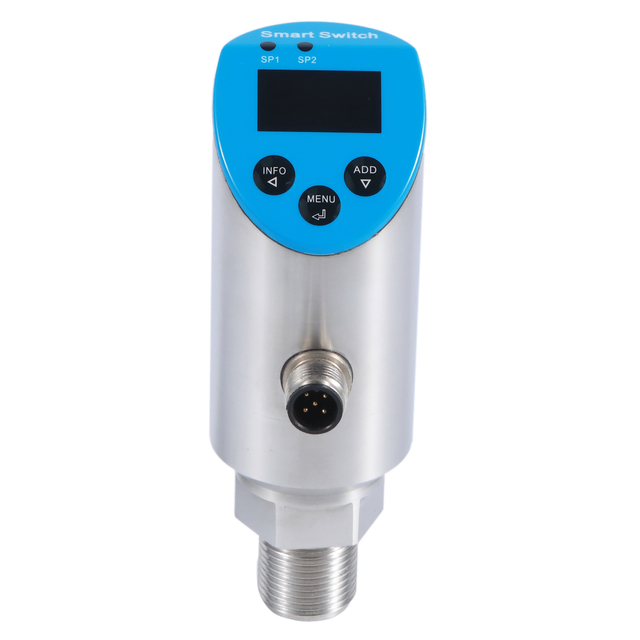
Electronic Pressure Switch
A standard pressure transmitter tells you the pressure. An electronic pressure switch acts on it – it triggers an alarm, starts a pump, or shuts down a valve when pressure crosses your setpoint. For automation that needs fast, reliable switching without a PLC, an electronic pressure switch is the answer.
Here you'll discover electronic pressure switches for gas, liquid, and steam – from compact industrial switches to differential pressure switches and intelligent controllers with display and analog output.
On this page, we help you choose the right pressure range, switch output (PNP/NPN/relay), and additional features so your system responds exactly when it should.
What Is an Electronic Pressure Switch?
An electronic pressure switch is a device that monitors pressure and opens or closes an electrical circuit when a preset pressure threshold is reached. Unlike mechanical pressure switches (which use a spring‑loaded diaphragm or piston), electronic switches use a solid‑state pressure sensor (typically a silicon piezoresistive or ceramic core) and a signal conditioning circuit. When the measured pressure crosses the setpoint, the switch output toggles – instantly sending a signal to a relay, PLC, or directly to a pump or solenoid valve.
Most electronic pressure switches also offer:
Local digital display (LED or OLED) showing live pressure.
Adjustable setpoints and hysteresis via buttons.
Analog output (4‑20 mA or 0‑10 V) alongside switch outputs.
Communication options like RS485 / Modbus.
They are more accurate, more repeatable, and longer‑lasting than mechanical switches because there are no mechanical springs to drift or fatigue.
Normally Open / Normally Closed and PNP / NPN
Normally open (NO) – the switch is open when pressure is below setpoint; it closes when pressure exceeds setpoint.
Normally closed (NC) – the switch is closed below setpoint; it opens when pressure exceeds setpoint.
PNP (sourcing) – switches the positive supply to the load. Common in PLCs and controllers.
NPN (sinking) – switches the ground to the load. Older or specific regional systems may use NPN.
Our switches can be configured for NO/NC and PNP/NPN as needed.
Types of Electronic Pressure Switches We Offer
Our electronic pressure switch range covers general‑purpose, differential, and intelligent multi‑function models.
Compact Pressure Switch (HPM510)
The HPM510 is a simple, cost‑effective electronic pressure switch in an all‑stainless steel housing. It uses an isolation diaphragm silicon piezoresistive sensor and outputs a single relay switch signal (normally open or normally closed). With no display, it is ideal for applications where only a clean switch output is needed.
Best when you need:
One relay switch output (≤24 V 2 A).
Gauge or absolute pressure from -100 kPa up to 60 MPa.
Small size and all‑stainless construction for harsh environments.
No display, no analog output – simple on/off control.
Adjustable setpoint (via potentiometer) from zero to full scale.
Compact Differential Pressure Switch (HPM530)
The HPM530 is a differential pressure switch with a 4‑digit LED display, two electronic switch outputs (PNP/NPN), and an optional 4‑20 mA analog output. It measures differential pressure across filters, flow elements, or level in sealed tanks. The pressure ports are threaded for direct installation.
Best when you need:
Differential pressure measurement (0~0.01 MPa up to 3.5 MPa).
On‑site display and keypad adjustment.
2‑way switch outputs (each ≤1.2 A) plus analog output.
Static pressure up to 20 MPa.
Intelligent Pressure Switch with Display & Analog Output (HPM560)
The HPM560 combines pressure measurement, display, and control in one unit. It has a 4‑bit LED display, two electronic switch outputs (PNP/NPN, load capacity 1.2 A), and one 4‑20 mA analog output. The switching point can be set anywhere between zero and full scale, and delay switching is configurable. The housing includes LED indicators for each switch action.
Best when you need:
Both switch and analog output in the same device.
Clear LED display for local reading.
High accuracy (±0.5 % FS) and low temperature drift (±0.02 % FS/℃).
Wide pressure range (-100 kPa to 60 MPa).
High‑Performance Intelligent Pressure Switch (HPM5010)
The HPM5010 is a premium multi‑function device built around an ARM industrial MCU, high‑accuracy AD converter, and a stable pressure sensor. It features an OLED self‑illuminating display (180° rotatable), three large backlit buttons, and a main body that can rotate 330° for easy viewing. It offers two PNP switch outputs, an analog output (0‑5 V, 0‑10 V, or 4‑20 mA), plus Modbus‑RTU over RS485. Switch modes include hysteresis or window, with delay up to 1000 s.
Best when you need:
Advanced features: OLED display, RS485 communication, flexible switch modes.
Multilingual menu (Chinese, English).
High visibility in dark environments.
Integration with digital control systems.
Quick comparison
| Model | Pressure range | Display | Switch outputs | Analog output | Communication | Special feature |
|---|---|---|---|---|---|---|
| HPM510 | -0.1 MPa ~ 60 MPa | None | 1× relay (2 A) | No | No | Compact, low‑cost |
| HPM530 | 0~0.01 MPa ~ 3.5 MPa (DP) | 4‑digit LED | 2× PNP/NPN (1.2 A) | 4‑20 mA (optional) | No | Differential pressure, keypad |
| HPM560 | -0.1 MPa ~ 60 MPa | 4‑bit LED | 2× PNP/NPN (1.2 A) | 4‑20 mA | No | Switch + analog, LED indicators |
| HPM5010 | -0.1 MPa ~ 60 MPa | OLED | 2× PNP (1.0 A) | 0‑5/0‑10 V or 4‑20 mA | RS485 Modbus | Rotatable body, hysteresis/window mode |
Electronic Pressure Switch Applications
Hydraulic & Pneumatic Systems
Monitor pump discharge, filter clogging, or accumulator pressure. Set a high‑pressure switch to stop the pump and a low‑pressure switch to start it. Electronic switches respond much faster than mechanical switches and are not affected by vibration.
Pump Control & Tank Level
Use a pressure switch to maintain water tank level. When pressure drops (low level), the switch starts the pump; when pressure rises (high level), it stops the pump. The HPM560 with display shows the current pressure, and the analog output can send a continuous signal to a remote indicator.
Filter & Differential Pressure Monitoring
Install a differential pressure switch (HPM530) across a filter. When the pressure drop exceeds the setpoint (filter clogged), the switch triggers an alarm or a cleaning cycle. The analog output can log the ΔP over time.
Machine Protection in Manufacturing
In presses, injection moulding machines, or test stands, a pressure switch can abort the cycle if pressure is too low or too high, preventing damage to tools or products.
How to Choose an Electronic Pressure Switch
Pressure Range & Type
Select a range where normal operating pressure is between 30 % and 80 % of full scale. Determine if you need gauge, absolute, or differential measurement. For differential, ensure static pressure rating ≤ 20 MPa (HPM530).
Switch Output & Load
How many independent switch points do you need? One (HPM510) or two (HPM530, HPM560, HPM5010)? Check the load voltage and current. Our switches typically handle 24 V / 1.2 A or 2 A. For larger loads, use the switch to energise a contactor.
Analog Output
If you need to transmit a continuous pressure signal to a PLC or display, choose a model with analog output (HPM560, HPM5010, optional on HPM530). This replaces a separate pressure transmitter.
Display & User Interface
For local monitoring and easy adjustment, a model with a bright LED or OLED display is essential. The HPM5010 OLED is backlit and readable in any light. The main body rotation allows optimal viewing angle after installation.
Communication (RS485 / Modbus)
For integration into a digital automation network (e.g., SCADA, IoT gateway), choose HPM5010 with RS485 Modbus‑RTU. You can read pressure, setpoints, and switch status digitally.
Environmental & Process Connection
All models are IP65, stainless steel wetted parts (304 or 316L). Process connections: G1/4, G1/2, M20×1.5, or custom. Media temperature ranges from -40 ℃ to 120 ℃ depending on model.
Electronic Pressure Switch FAQs
What is the difference between a mechanical pressure switch and an electronic one?
A mechanical switch uses a spring‑loaded diaphragm or piston that physically moves a micro‑switch. It has moving parts, suffers from fatigue and drift, and has limited accuracy (±2 % FS or worse). An electronic switch uses a solid‑state sensor, has no moving parts, offers ±0.5 % FS accuracy, long life (millions of cycles), and can include a display and analog output.
Can an electronic pressure switch replace both a pressure gauge and a transmitter?
Yes. Models like HPM560 and HPM5010 combine a local display (replacing a gauge), two switch outputs (replacing a mechanical switch), and an analog output (replacing a transmitter). This reduces components, wiring, and panel space.
How do I set the switching point?
On models with a display and buttons (HPM530, HPM560, HPM5010), simply apply pressure or use the menu to enter the desired setpoint. Hysteresis (the difference between switch‑on and switch‑off) can also be adjusted. For HPM510 without display, use a small screwdriver to adjust the potentiometer while monitoring pressure with a reference gauge.
What is hysteresis and why does it matter?
Hysteresis prevents rapid switching when the pressure hovers around the setpoint. For example, a pump start setpoint of 5 bar with a hysteresis of 1 bar will start the pump at 5 bar and stop it at 6 bar (or depending on configuration). Adjustable hysteresis avoids nuisance cycling.
Can I use an electronic pressure switch in an explosion‑proof area?
The models shown here are not certified Ex d. For hazardous areas, please see our explosion‑proof pressure transmitter series (HPM288, etc.) which can also provide switch outputs via a separate relay in a safe area, or use an intrinsically safe barrier. Contact us for Ex solutions.
What is the lifecycle of the relay output?
HPM510 relay is rated for >1 million operations. Electronic switches (PNP/NPN) have no moving contacts, so their service life is virtually unlimited under rated electrical conditions.
Why Choose Our Electronic Pressure Switches?
We combine reliable silicon pressure sensors with intelligent electronics to deliver switches that are accurate, easy to use, and built for industrial environments.
Robust & Reliable
All‑stainless steel or aluminium housing, IP65 protection.
No mechanical springs – no drift, no fatigue.
Overload protection and reverse polarity protection.
Flexible Configuration
Choose relay, PNP, or NPN outputs.
Single or dual switch points, plus optional analog output.
Many process connections (G1/4, M20×1.5, NPT, etc.).
Displays with rotatable bodies (HPM5010) for best viewing.
Easy to Install & Operate
On‑site setpoint adjustment via potentiometer or digital buttons.
Clear LED or OLED display shows live pressure and switch status.
Quick response time (<10 ms to <30 ms).
Fast Support & OEM Service
We can customise pressure ranges, switch logic, display units, and electrical connections for volume orders. For prototyping, samples are available. Our technical team answers configuration questions within one business day.