Differential Pressure Transmiter
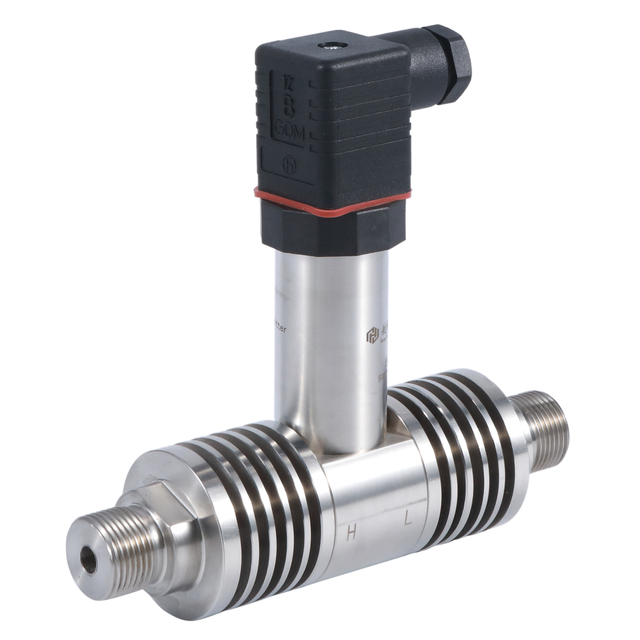


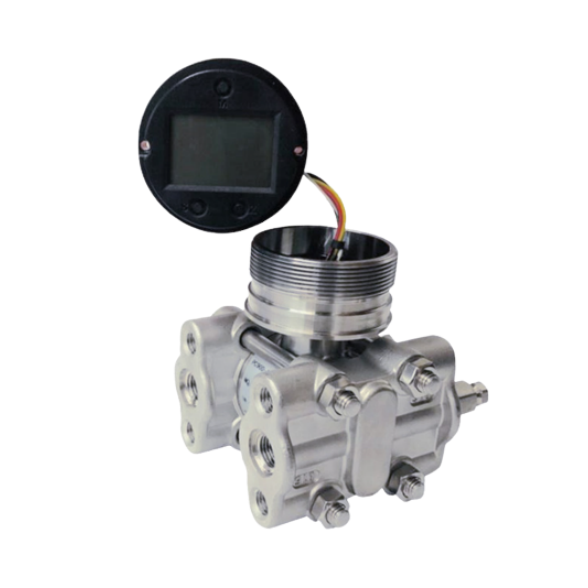


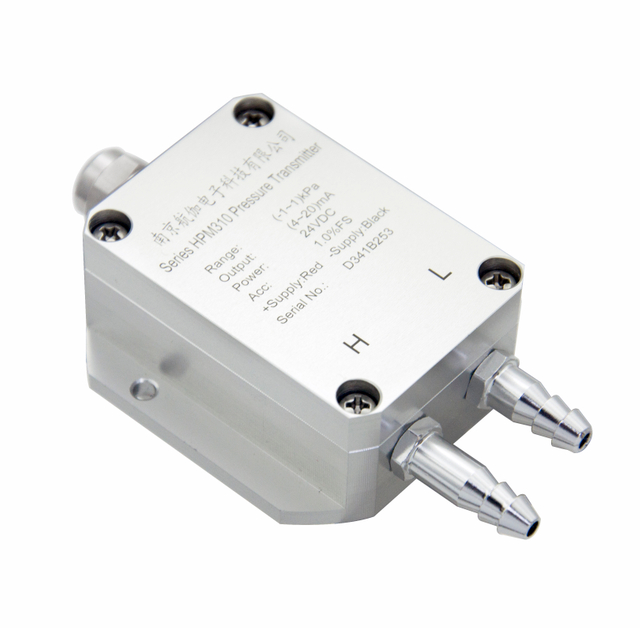
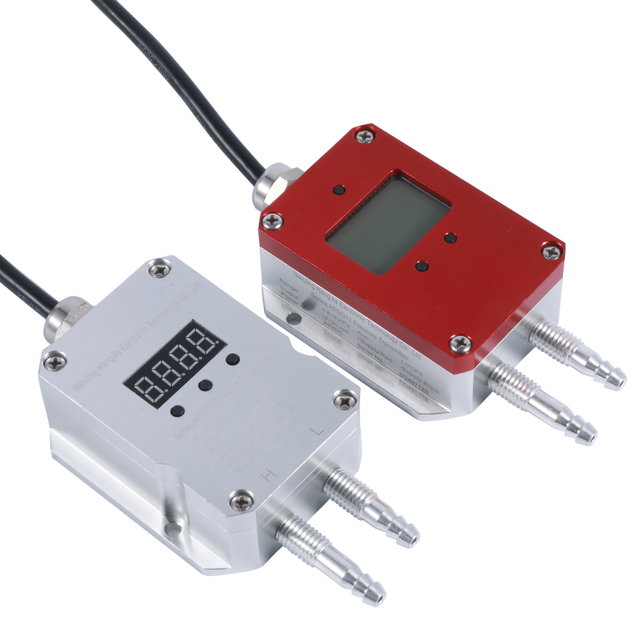
Optimize control and efficiency with our Differential Pressure Transmitters. Engineered to measure the difference in pressure between two points, these transmitters provide crucial data for flow rate and level monitoring. Whether in HVAC systems or industrial processes, our Differential Pressure Transmitters offer precise measurement and control, enhancing system performance and energy efficiency.
Differential Pressure Transmitter
Accurate differential pressure measurement tells you what is really happening inside your pipes, filters, and vessels. A single‑sided pressure reading often hides the critical difference that reveals clogged filters, failing pumps, or leaking heat exchangers.
Here you'll discover differential pressure transmitters for gas, liquid, and steam – from micro‑differential pressure for cleanrooms to high‑range models for filters and flow, including high‑temperature and high‑accuracy monocrystalline silicon versions.
On this page, we help you choose the right differential pressure range, static pressure rating, and output signal so you can detect problems early and keep your process running efficiently.
What Is a Differential Pressure Transmitter?
Differential Pressure Definition & Working Principle
A differential pressure transmitter measures the difference in pressure between two points in a system. It has two pressure ports: a high‑side (H) and a low‑side (L). The transmitter outputs a signal proportional to the difference (P_high – P_low), independent of the absolute pressures at each port.
Inside, a sensing element – typically a silicon piezoresistive differential pressure chip or a monocrystalline silicon sensor – deflects under the differential pressure. This deflection changes electrical resistance or capacitance, and the onboard electronics convert it into a standard 4‑20 mA, 0‑10 V, or HART signal.
Differential pressure is the basis for three common industrial measurements:
Flow – using an orifice plate, venturi, or pitot tube, the pressure drop across a restriction is proportional to the square of flow rate.
Level – in a closed tank, the hydrostatic pressure difference between bottom and top gives liquid level.
Filter condition – as a filter clogs, the pressure drop across it increases, signalling the need for cleaning or replacement.
Gauge, Absolute, and Differential – What’s the Difference?
Many users confuse these. A gauge pressure transmitter measures pressure relative to atmosphere using a single port. An absolute pressure transmitter uses a sealed vacuum reference. A differential pressure transmitter uses two ports and measures the difference – it does not rely on atmospheric reference. This makes it ideal for applications where common mode pressure (static pressure) is high but the difference is small.
Types of Differential Pressure Transmitters We Offer
Our differential pressure transmitter portfolio covers low‑pressure air, general industrial processes, high‑accuracy monitoring, and high‑temperature media.
Micro Differential Pressure Transmitter (HPM310)
Designed for very low differential pressures in clean, dry, non‑corrosive gases. The HPM310 uses a high‑sensitivity MEMS chip and features Ø8 mm barbed hose connections for easy installation. It is commonly used in HVAC duct pressure, fan monitoring, cleanroom differential pressure, and ventilation systems.
Best when you need:
Ranges from 0~100 Pa up to 0~100 kPa (bidirectional ± ranges available).
Accuracy from ±0.25% FS (for ≥1 kPa) to ±1.0% FS (for 100 Pa range).
Simple wall/panel mounting with manual zero adjustment.
Output: 4‑20 mA, 0‑5/0‑10 V, or RS485.
General Industrial Differential Pressure Transmitter (HPM320 / HPM3180)
These transmitters are built with a silicon piezoresistive differential pressure core and a stainless steel threaded process connection. They can handle liquid, gas, and steam, with bilateral static pressure up to 20 MPa. The housing is aluminium alloy (IP66) with optional local display.
Best when you need:
Ranges from 0~10 kPa up to 3.5 MPa (bidirectional ranges like -100~100 kPa supported).
Threaded connections: G1/4, G1/2, M20×1.5, NPT.
4‑20 mA, HART, 0‑10 V, or RS485 output.
Differential pressure for filters, flow (orifice), and level in closed tanks.
High‑Accuracy Monocrystalline Silicon Differential Pressure Transmitter (HPM3136 / HPM3186)
For critical applications requiring high precision and long‑term stability, these transmitters use a monocrystalline silicon differential pressure chip with integrated static pressure and temperature compensation. They offer excellent overload protection and low total error.
Best when you need:
Accuracy as high as 0.075% FS (HPM3186) or 0.1% FS.
Very low ranges down to 1 kPa (non‑oil‑filled) and up to 10 MPa.
High static pressure capability (up to 25 MPa or more).
Fully welded stainless steel construction, IP65.
Standard 4‑20 mA + HART output.
High‑Temperature Differential Pressure Transmitter (HPM3189)
When the process media is hot – up to 140 ℃ (or custom higher) – standard electronics can fail. The HPM3189 uses a heat dissipation structure (cooling fins) between the process connection and the electronics housing, protecting the sensitive circuitry while maintaining accurate differential measurement.
Best when you need:
Media temperature up to 140 ℃ (customizable for higher).
Same ranges as HPM320: 0~10 kPa to 3.5 MPa.
Threaded connections for direct installation.
Output options include 4‑20 mA, HART, RS485.
Quick comparison
| Model | Technology | Pressure range (DP) | Accuracy | Static pressure | Media temp. | Key feature |
|---|---|---|---|---|---|---|
| HPM310 | MEMS (gas only) | 0~100 Pa to 0~100 kPa | ±0.25% ~ ±1.0% FS | Low | -40~85 ℃ | Barbed hose, low cost |
| HPM320/3180 | Silicon piezoresistive | 0~10 kPa to 3.5 MPa | ±0.2% ~ ±0.5% FS | ≤20 MPa | -40~100 ℃ | Threaded, IP66, optional display |
| HPM3136 | Monocrystalline silicon | 1 kPa to 3 MPa | 0.1% ~ 0.5% FS | Up to 25 MPa | -40~120 ℃ | High accuracy, HART |
| HPM3186 | Monocrystalline silicon | 1 kPa to 10 MPa | 0.075% ~ 0.1% FS | Up to 40 MPa | -40~120 ℃ | Overload protection, high static |
| HPM3189 | Silicon + cooling fins | 0~10 kPa to 3.5 MPa | ±0.2% ~ ±0.5% FS | ≤20 MPa | Up to 140 ℃ (higher custom) | High media temperature |
Differential Pressure Transmitter Applications by Industry
Differential pressure transmitters are used wherever a pressure drop indicates process condition.
Filter & Strainer Monitoring
As a filter collects contaminants, the pressure drop across it increases. By monitoring DP, maintenance can replace or clean the filter based on actual condition, not on a fixed schedule. This saves energy (lower pump work) and prevents unexpected clogging.
Typical uses:
Air intake filters on compressors.
Lube oil filters on gearboxes and turbines.
Bag filters in dust collectors.
Strainers in water and chemical lines.
Flow Measurement (Orifice, Venturi, Pitot)
Differential pressure is the oldest and most reliable method for flow measurement in pipes. By installing a primary element (orifice plate, venturi tube, or pitot tube), the DP transmitter measures the pressure drop and the flow rate is calculated (usually square root extracted in the DCS or transmitter itself). Our transmitters support square root extraction options.
Liquid Level in Closed Tanks
In a sealed tank (e.g., pressure vessel, distillation column, boiler drum), a single gauge pressure transmitter cannot measure level because the vapour space pressure adds to the hydrostatic head. A differential pressure transmitter connected to the bottom (high side) and the top vapour space (low side) measures only the liquid column height, independent of tank pressure.
HVAC & Cleanroom Control
Maintaining positive or negative pressure between rooms is critical for hospitals, laboratories, and clean manufacturing. Micro‑differential pressure transmitters (HPM310) with ranges as low as 100 Pa are used to monitor room pressurisation and duct static pressure.
How to Choose the Right Differential Pressure Transmitter
Selecting DP Range, Static Pressure & Accuracy
First, estimate the maximum differential pressure you expect under normal and upset conditions. Choose a transmitter where the normal DP is between 30% and 80% of full scale.
Static pressure is the absolute pressure common to both ports (e.g., line pressure in a pipe). Ensure the transmitter’s static pressure rating exceeds your maximum line pressure. For high line pressure with small DP (e.g., 10 MPa line, 10 kPa DP), a high‑accuracy monocrystalline silicon transmitter (HPM3136/3186) is recommended because it maintains performance under static pressure.
Accuracy – for general filter monitoring, ±0.5% FS is adequate. For custody transfer flow or critical reactor level, choose ±0.1% or better.
Process Connections & Wetted Materials
Most threaded differential pressure transmitters use G1/4, M20×1.5, or NPT connections. For sanitary or corrosive media, we offer 316L stainless steel (standard), Hastelloy C, or Tantalum diaphragms. Seals are typically FKM (standard), NBR, EPDM, or HNBR depending on fluid compatibility.
Media Type & Temperature
Clean, dry, non‑corrosive gas (air, nitrogen) – HPM310 with barbed fittings is economical.
Liquids and general gases – HPM320/3180 with threaded 316L connections.
High‑temperature liquids/steam – HPM3189 with cooling fins.
Corrosive or high‑purity media – choose Hastelloy or tantalum diaphragm.
Output Signal & Electrical Connection
4‑20 mA – most common for long cable runs.
4‑20 mA + HART – allows digital configuration and diagnostics.
0‑10 V – for short runs and voltage‑input controllers.
RS485 / Modbus – for digital networks.
Electrical connections: DIN43650 (Hirschmann) connector, cable outlet (IP67), or M12.
Differential Pressure Transmitter FAQs
What is the difference between a differential pressure transmitter and a gauge pressure transmitter?
A gauge pressure transmitter has one port and measures pressure relative to atmosphere. A differential pressure transmitter has two ports and measures the difference between them. DP transmitters can be used for level in sealed tanks and flow measurement; gauge transmitters cannot.
Can I measure flow with a differential pressure transmitter?
Yes. Install a primary flow element (orifice plate, venturi, pitot tube) in the pipe. The DP transmitter measures the pressure drop across the element. The flow rate is proportional to the square root of the DP. Many of our transmitters and DCS systems provide square root extraction.
How does static pressure affect differential pressure measurement?
Static pressure is the common pressure applied to both ports. Ideally, the DP transmitter should reject static pressure completely. In real devices, a small static pressure error exists. Our monocrystalline silicon models (HPM3136, HPM3186) offer excellent static pressure performance, with error typically ≤0.5% FS per 10 MPa static.
What is the maximum media temperature for a standard DP transmitter?
Standard silicon piezoresistive DP transmitters (HPM320, HPM3180) handle media up to 100 ℃. For higher temperatures, use the HPM3189 high‑temperature version with cooling fins, which supports up to 140 ℃ (customisable to 200 ℃ or more).
Can I use a DP transmitter to measure level in an open tank?
Yes, but you can also use a simpler gauge pressure transmitter. For an open tank, connect the high side to the bottom and leave the low side open to atmosphere. The DP transmitter will measure gauge hydrostatic pressure, which is proportional to level. Many users prefer gauge transmitters for open tanks because they are less expensive.
How often should a differential pressure transmitter be calibrated?
For non‑critical monitoring (filter DP), calibration every 12‑18 months is typical. For flow measurement or level in safety‑related vessels, calibrate every 6‑12 months. Monocrystalline silicon models offer long‑term stability of ±0.1% FS/year, allowing extended intervals.
Why Choose Our Differential Pressure Transmitters?
We manufacture differential pressure transmitters using multiple core technologies – from low‑cost MEMS for HVAC to high‑end monocrystalline silicon for critical process control. Every transmitter is tested for static pressure influence, temperature drift, and overload.
Reliable Industrial‑Grade Design
All welded or fully sealed construction for harsh environments.
Wide temperature compensation (-10 ℃ to +80 ℃ in most models).
High overload protection (1.5~2× DP range; static pressure up to 40 MPa).
Long‑term stability as low as 0.075% FS/year.
What you get:
Stable differential readings even under varying static pressure and temperature.
Material options for corrosive media (316L, Hastelloy, Tantalum).
Standardised process connections for easy retrofit.
Fast Support, Customization & Global Service
We understand that every differential pressure application has unique piping, media, and accuracy requirements. Our engineers help you select the correct range, static pressure rating, diaphragm material, and output signal. Custom ranges, cooling fin lengths, and special process connections are available for OEM and project orders.
Service advantages:
Fast response on sizing and cross‑reference of existing part numbers.
Support from sample stage to large‑volume production runs.
After‑sales assistance when your process conditions change.