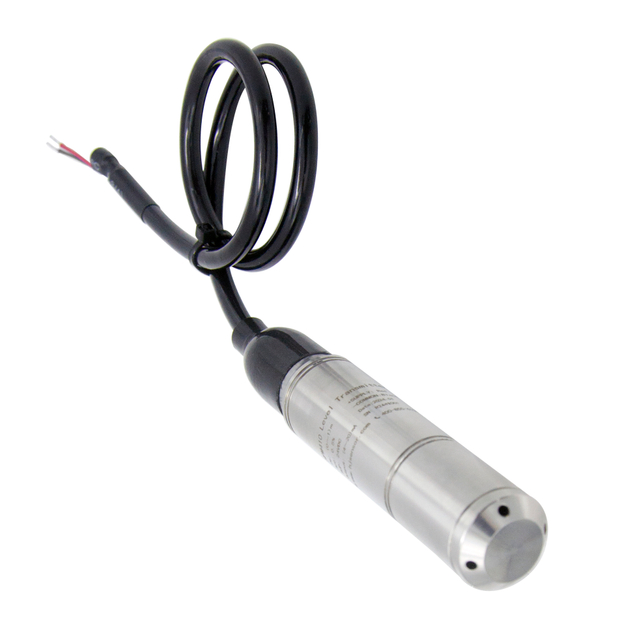

Enhance process control with our Temperature Transmitters. These versatile devices convert temperature signals into standardized output signals for easy integration into control systems. With high accuracy and stability, our Temperature Transmitters offer precise temperature measurement and control, improving efficiency and productivity in various applications.
A simple temperature sensor gives you a resistance value. A temperature transmitter turns that resistance into a standard 4‑20 mA signal that your PLC, DCS, or controller can read directly – no scaling, no lead‑wire errors, no extra calculations.
Here you'll discover industrial temperature transmitters for gas, liquid, steam and solids – from compact head‑mount models to explosion‑proof, hygienic, and combined pressure‑temperature versions.
On this page, we help you choose the right sensor type (Pt100, thermocouple), output signal (4‑20 mA, HART, RS485), and installation style so you get accurate, reliable temperature data for every process.
A temperature transmitter is an electronic device that converts the output of a temperature sensor (typically a Pt100 RTD or a thermocouple) into a standard industrial signal – most commonly 4‑20 mA, 0‑10 V, or digital protocols like HART and Modbus.
Inside, the transmitter includes:
A precision measuring bridge or input circuit that reads the sensor resistance (or microvoltage).
An amplifier and linearization circuit (especially important for thermocouples).
A signal conditioning stage that converts the value to a 4‑20 mA loop current.
Because the transmitter is mounted close to the sensor (often directly on the thermowell or in a connection head), the signal travels a long distance as a current, immune to lead resistance and electrical noise. This is why temperature transmitters are used in almost all industrial processes – from chemical reactors to HVAC systems.
Our temperature transmitter portfolio covers basic compact transmitters, explosion‑proof models, hygienic designs, and advanced devices with local display and switching outputs.
The HTM108 is a small, all‑stainless steel temperature transmitter with a Pt100 or Pt1000 sensing element built directly into the probe. It outputs a 4‑20 mA, 0‑10 V, or RS485 signal. The compact size makes it easy to install in pipes, tanks, or machinery. No separate connection head is required.
Best when you need:
Direct temperature measurement without a separate thermowell or head.
A rugged, corrosion‑resistant stainless steel housing.
Temperature ranges from -50 °C up to 500 °C.
4‑20 mA, HART, voltage, or Modbus output.
For hazardous areas where flammable gases or dust are present, the HTM208 is housed in a flameproof aluminium enclosure (IP66). It accepts Pt100 or thermocouple inputs and provides a 4‑20 mA output with optional HART or RS485. The large housing includes a built‑in display and push‑button configuration.
Best when you need:
Ex d certification for Zone 1/2 hazardous areas (gas groups IIA, IIB, IIC).
On‑site reading and configuration without opening the enclosure.
High reliability in petrochemical, oil & gas, and mining applications.
A wide temperature range – from cryogenic -196 °C up to 1500 °C with thermocouples.
The HTM228 is a simple, cost‑effective transmitter housed in a protective enclosure. It is designed for field installation where a basic 4‑20 mA output is sufficient. The Pt100 sensor can be inserted into a thermowell, and the transmitter is mounted separately.
Best when you need:
Low‑cost, reliable temperature‑to‑current conversion.
2‑wire 4‑20 mA loop‑powered operation.
IP65 protection for general industrial environments.
Specifically designed for food, beverage, and pharmaceutical applications, the HTM708 features a tri‑clamp (clamp) connection and an all‑316L stainless steel, crevice‑free construction. The flush or extended probe has no dead zones, making it cleanable in place (CIP). It includes an optional local display and outputs 4‑20 mA, HART, or 0‑10 V.
Best when you need:
Sanitary temperature measurement with clamp fittings (1", 1‑1/2" tri‑clamp).
Compliance with FDA and EHEDG guidelines.
Easy disassembly for cleaning and sterilisation.
A smooth, polished surface that resists bacterial growth.
The HTM560 combines a Pt100 temperature sensor, a digital display, two adjustable switch outputs (PNP/NPN), and a 4‑20 mA analog output in one compact device. It is a complete temperature control station – set a high temperature alarm, control a cooling valve, or transmit the live value to a PLC.
Best when you need:
Both local display and remote signal in one instrument.
Two independent switch points – start a pump, stop a heater, trigger an alarm.
No external controller – the switch acts directly on relays or solenoids (up to 1.2 A).
Easy on‑site programming via front buttons.
Quick comparison
| Model | Sensor | Temperature range | Output | Housing | Best for |
|---|---|---|---|---|---|
| HTM108 | Pt100 / Pt1000 | -50 °C ~ 500 °C | 4‑20 mA, HART, 0‑10 V, RS485 | Stainless steel, compact | Direct installation, no head |
| HTM208 | Pt100 / TC | -196 °C ~ 1500 °C | 4‑20 mA, HART, RS485, relays | Aluminium, Ex d | Hazardous areas, high temp |
| HTM228 | Pt100 | -40 °C ~ 1500 °C | 4‑20 mA | Protective IP65 | General field mounting, low cost |
| HTM708 | Pt100 | -50 °C ~ 500 °C | 4‑20 mA, HART, 0‑10 V | 316L, tri‑clamp | Food, pharma, sanitary |
| HTM560 | Pt100 | 0 °C ~ 150 °C | 2× PNP/NPN + 4‑20 mA | Aluminium, IP65 | Local display + switch control |
Sometimes you need both pressure and temperature at the same point – in a reactor, a pipeline, or a storage tank. Installing two separate instruments doubles the penetrations, cost, and maintenance. Our combined transmitters solve that.
The HPTM280 measures both parameters with a single insertion. Pressure is sensed by a silicon piezoresistive core; temperature by a built‑in Pt100. The device has a local display that alternates between pressure and temperature. Output is RS485 (Modbus), and it can be powered by an external 24 V supply or by an internal lithium battery for remote monitoring.
Best when you need:
One process connection for two measurements – save space and cost.
Battery‑powered operation for remote locations (standby current <20 µA).
Digital Modbus communication.
Pressure up to 40 MPa, temperature from -40 °C to 100 °C.
The HPTM890 is a dedicated two‑channel transmitter that outputs a separate 4‑20 mA signal for pressure and a separate 4‑20 mA signal for temperature. Both values are shown simultaneously on a large dual‑row LED display. No programming or scaling needed – each loop can go to its own controller.
Best when you need:
Two independent 4‑20 mA signals for pressure and temperature.
Simultaneous display of both values on a bright LED.
Simple integration with existing analog input cards.
The HPTM410 is a submersible probe that measures hydrostatic level (depth) and temperature in water or compatible liquids. It is fully sealed to IP68, with a special cable that vents the pressure reference. Output can be two 4‑20 mA loops (level + temperature) or a combined RS485 signal.
Best when you need:
Tank level and temperature measurement from one probe (e.g., water towers, wells).
Submersible installation up to 500 mH₂O.
Long‑term stability and corrosion‑resistant materials.
Reactors, distillation columns, and storage tanks need reliable temperature monitoring for process control and safety. HTM208 explosion‑proof transmitters with Pt100 sensors in thermowells are standard. For combined pressure‑temperature monitoring, HPTM890 gives two 4‑20 mA signals from one point.
Sanitary processes require easy‑to‑clean fittings. HTM708 with tri‑clamp connection and 316L polished probe is widely used in dairy pasteurisers, brew kettles, and CIP lines. The HTM560 intelligent switch can control heating jackets or cooling valves directly.
Air handling units, chillers, and boiler systems need temperature transmitters for energy management. Compact HTM108 transmitters are installed directly in pipe tees, sending 4‑20 mA to BMS controllers. For duct air temperature, a probe version with an averaging element is available.
Lift stations, aeration basins, and digesters require level and temperature monitoring. HPTM410 submersible combined transmitter provides both from a single probe, reducing cabling and penetrations.
Wellhead, pipeline, and refinery applications often face high ambient temperatures and hazardous areas. HTM208 explosion‑proof transmitters with thermocouple inputs (for up to 1500 °C) are used in flares and furnaces.
Pt100 RTD – most accurate and stable. Use for -200 °C to 500 °C. Suitable for 95 % of industrial processes.
Pt1000 – higher sensitivity, often used in battery‑powered devices.
Thermocouple (Type K, J, S, etc.) – use for very high temperatures (>500 °C) or when very fast response is needed. Lower accuracy and requires cold‑junction compensation.
4‑20 mA – standard for long cable runs. Loop‑powered (2‑wire) is simplest.
4‑20 mA + HART – adds digital communication over the same two wires for configuration and diagnostics.
0‑10 V – for short runs and voltage‑input cards.
RS485 / Modbus – for multi‑drop digital networks.
Switch outputs (relay/PNP) – for local alarm or control without a PLC.
Compact (HTM108) – all‑in‑one probe with transmitter inside. No separate head. Good for tight spaces.
Head‑mount (HTM228) – transmitter mounted inside a connection head on top of a thermowell. Easy to replace without pulling the thermowell.
Explosion‑proof (HTM208) – heavy aluminium housing for hazardous areas.
Hygienic (HTM708) – tri‑clamp fitting with flush or extended 316L probe.
Submersible (HPTM410) – IP68, cable‑sealed for immersion.
Threaded connections: G1/2, M20×1.5, NPT. For sanitary: tri‑clamp (1", 1‑1/2", 2"). For tanks, use a thermowell to protect the sensor. Minimum insertion depth is typically 50 mm to 100 mm to avoid stem conduction errors.
A temperature sensor (e.g., Pt100) changes resistance with temperature. A temperature transmitter converts that resistance into a 4‑20 mA signal. The transmitter can be integrated into the sensor head (HTM108) or mounted separately (HTM228). For direct PLC connection, always use a transmitter.
A thermowell is a pressure‑tight tube that protects the sensor from the process medium. Use a thermowell if the medium is corrosive, abrasive, under high pressure, or if you need to remove the sensor without shutting down the process (e.g., for calibration). For non‑critical, low‑pressure applications (air, water), a direct‑immersion transmitter like HTM108 can be used without a thermowell.
Yes – use the HTM208 explosion‑proof transmitter (Ex d II CT6). It is certified for Zone 1 and Zone 2 areas with flammable gases. The housing is flameproof, and all electrical connections are sealed. Do not open the enclosure in a live hazardous area.
You don’t – that is exactly why you use a transmitter. The transmitter does the linearisation and scaling internally. For example, a 2‑wire 4‑20 mA transmitter for 0‑100 °C will output 4 mA at 0 °C and 20 mA at 100 °C. Your PLC only sees the current, not the resistance.
A loop‑powered transmitter receives its operating power from the same two wires that carry the signal. No separate power supply is needed at the field device. This reduces wiring cost and simplifies installation. The HTM108, HTM208, and HTM228 all support 2‑wire 4‑20 mA loop power.
For general industrial processes, every 12 months is typical. For critical applications (pharma, food safety), every 6 months. Many transmitters have long‑term stability of ±0.2 % FS/year, allowing extended intervals with verification. Use a dry‑block calibrator and a precision resistance decade box to simulate Pt100 values.
We manufacture a full range of temperature transmitters – from simple head‑mount devices to explosion‑proof, hygienic, and combined pressure‑temperature instruments. Every transmitter is tested with calibrated Pt100 simulators and aged for stability.
Pt100 and thermocouple inputs.
4‑20 mA, HART, 0‑10 V, RS485.
Local display with or without switches.
Hazardous area certifications (Ex d).
All stainless steel or aluminium housings.
IP65 to IP68 protection.
Wide ambient temperature operation (-40 °C to +85 °C).
Vibration and shock resistance.
Tri‑clamp sanitary transmitters (HTM708).
Submersible combined level & temperature (HPTM410).
Combined pressure & temperature with dual 4‑20 mA (HPTM890) or battery‑powered RS485 (HPTM280).
We help you select the correct sensor, thermowell material, insertion length, and output signal. For OEM or project orders, we customise probe lengths, labelling, and electrical connections. Samples are available for prototyping.