| Availability: | |
|---|---|
| Quantity: | |
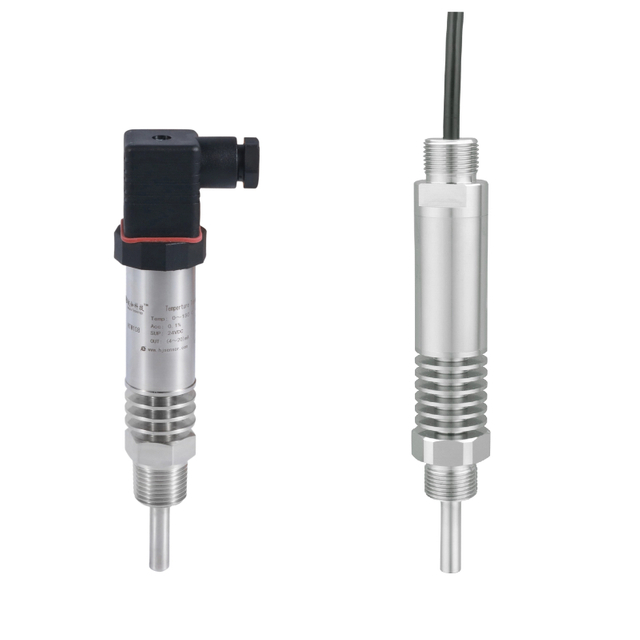
HTM208L low power temperature sensor is designed for measuring fluid temperature using a high-quality and high-stability PT100 or PT1000 sensing element. The sensor converts the temperature signal into a standard RS485 signal output through a signal conditioning circuit, enabling accurate temperature measurement.
What sets the HTM208L apart is its low power consumption and long service life. The sensor is powered by a built-in lithium battery, which provides the necessary power while consuming minimal energy. This allows for extended operation without frequent battery replacements, enhancing the convenience and cost-effectiveness of the product.
In addition to its low power design, the HTM208L features an on-site display, allowing users to directly view the temperature readings. Furthermore, the sensor can be networked through RS485 communication, enabling integration with other devices and systems for centralized monitoring and control of temperature data.
For added flexibility, the HTM208L can also be equipped with a wireless module, enabling wireless transmission of temperature data. This wireless capability eliminates the need for physical wiring connections, offering convenience and versatility in various monitoring applications.
Powered by external lithium battery
Low power consumption
With site display
Support RS 485 comm unication , a daptable wireless module
High protection level
Install the probe where it represents the actual process temperature. Avoid stagnant pockets, dead legs and positions too close to an external heat source unless that location is the intended measurement point.
The active part of the probe must have sufficient contact with the fluid. Shallow insertion can increase error from ambient heat conduction through the connection. In tanks and larger pipes, the selected probe length should place the sensing area in the representative flow zone without creating mechanical interference.
A thermowell may be appropriate when the process is pressurized, abrasive, corrosive or cannot be shut down for sensor removal. The thermowell material, wall thickness and response time must be evaluated as part of the process design.
IP65 protection depends on correct field assembly. Use a cable with the specified outside diameter, tighten the cable gland, close the housing cover and prevent water from travelling along the cable toward the entry.
Verify the local display, received RS485 value and expected process condition before putting the measurement point into service. Record the device address and communication settings for later maintenance.
Temperature Range | 50…0~100…500℃ |
Measuring Medium | Various fluid compatible with contact materials |
Output Signal | RS485 |
Power Supply | Vs=3.1~8 VDC (Built-in lithium battery ER14250, 3.6V 1200mAh) Vs=5VDC (external power supply supported) Vs=24VDC (external power supply supported) |
Power consumption (RS485 output) | Standby current: <20uA Date collection cycle: 0~65535s Power Consumption: About 200uA with data collection cycle as 1s About 70uA with data collection cycle as 3s About 50uA with data collection cycle as 5s. Note: Longer data collection cycle, lower consumption. |
Accuracy | ±0.5℃ (-50℃≤range≤100℃) ±1.0℃ (-50℃≤range≤300℃) ±3.0℃ (-50℃≤range≤500℃) |
The HTM208L can be configured for temperature monitoring in:
Remote IoT measurement points
Water and compatible-fluid pipelines
Storage tanks and process vessels
Industrial temperature-monitoring networks
Utility and equipment skids
Agricultural and environmental monitoring systems
Wireless gateway-based monitoring projects
General process-control installations
Application suitability depends on the medium, probe material, temperature span, pressure, enclosure location, update interval and communication architecture. For projects that combine multiple remote measurement points, the broader IoT sensor can be used to compare temperature, pressure and level options.
Configure Your Temperature Measurement Point
Send us your temperature range, fluid, pressure, probe dimensions, power arrangement and RS485 settings. HIGHJOIN will review the measurement point and prepare a configuration for your project.
Please include a drawing when probe dimensions or process connections are project-specific.
HTM208L low power temperature sensor is designed for measuring fluid temperature using a high-quality and high-stability PT100 or PT1000 sensing element. The sensor converts the temperature signal into a standard RS485 signal output through a signal conditioning circuit, enabling accurate temperature measurement.
What sets the HTM208L apart is its low power consumption and long service life. The sensor is powered by a built-in lithium battery, which provides the necessary power while consuming minimal energy. This allows for extended operation without frequent battery replacements, enhancing the convenience and cost-effectiveness of the product.
In addition to its low power design, the HTM208L features an on-site display, allowing users to directly view the temperature readings. Furthermore, the sensor can be networked through RS485 communication, enabling integration with other devices and systems for centralized monitoring and control of temperature data.
For added flexibility, the HTM208L can also be equipped with a wireless module, enabling wireless transmission of temperature data. This wireless capability eliminates the need for physical wiring connections, offering convenience and versatility in various monitoring applications.
Powered by external lithium battery
Low power consumption
With site display
Support RS 485 comm unication , a daptable wireless module
High protection level
Install the probe where it represents the actual process temperature. Avoid stagnant pockets, dead legs and positions too close to an external heat source unless that location is the intended measurement point.
The active part of the probe must have sufficient contact with the fluid. Shallow insertion can increase error from ambient heat conduction through the connection. In tanks and larger pipes, the selected probe length should place the sensing area in the representative flow zone without creating mechanical interference.
A thermowell may be appropriate when the process is pressurized, abrasive, corrosive or cannot be shut down for sensor removal. The thermowell material, wall thickness and response time must be evaluated as part of the process design.
IP65 protection depends on correct field assembly. Use a cable with the specified outside diameter, tighten the cable gland, close the housing cover and prevent water from travelling along the cable toward the entry.
Verify the local display, received RS485 value and expected process condition before putting the measurement point into service. Record the device address and communication settings for later maintenance.
Temperature Range | 50…0~100…500℃ |
Measuring Medium | Various fluid compatible with contact materials |
Output Signal | RS485 |
Power Supply | Vs=3.1~8 VDC (Built-in lithium battery ER14250, 3.6V 1200mAh) Vs=5VDC (external power supply supported) Vs=24VDC (external power supply supported) |
Power consumption (RS485 output) | Standby current: <20uA Date collection cycle: 0~65535s Power Consumption: About 200uA with data collection cycle as 1s About 70uA with data collection cycle as 3s About 50uA with data collection cycle as 5s. Note: Longer data collection cycle, lower consumption. |
Accuracy | ±0.5℃ (-50℃≤range≤100℃) ±1.0℃ (-50℃≤range≤300℃) ±3.0℃ (-50℃≤range≤500℃) |
The HTM208L can be configured for temperature monitoring in:
Remote IoT measurement points
Water and compatible-fluid pipelines
Storage tanks and process vessels
Industrial temperature-monitoring networks
Utility and equipment skids
Agricultural and environmental monitoring systems
Wireless gateway-based monitoring projects
General process-control installations
Application suitability depends on the medium, probe material, temperature span, pressure, enclosure location, update interval and communication architecture. For projects that combine multiple remote measurement points, the broader IoT sensor can be used to compare temperature, pressure and level options.
Configure Your Temperature Measurement Point
Send us your temperature range, fluid, pressure, probe dimensions, power arrangement and RS485 settings. HIGHJOIN will review the measurement point and prepare a configuration for your project.
Please include a drawing when probe dimensions or process connections are project-specific.