| Availability: | |
|---|---|
| Quantity: | |
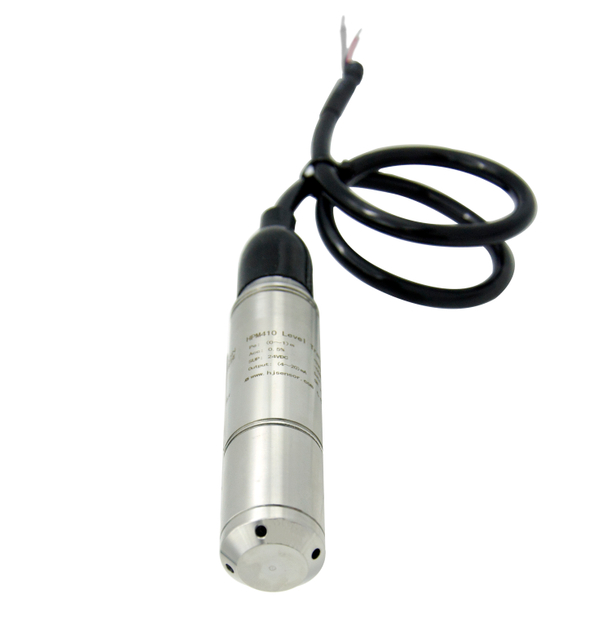
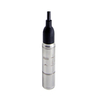
The HPM410LV is a low-power submersible level transmitter that converts liquid hydrostatic pressure into a proportional voltage signal. It is designed for remote monitoring points, IoT terminals and battery-supported data acquisition systems that require a lower supply voltage and current consumption than a conventional industrial current-loop transmitter.
Available measuring ranges extend from 0–0.5 mH₂O to 0–10 mH₂O. Standard voltage-output choices include 0.25–1.25V, 0.25–2.25V and 0.5–2.5V, with other voltage ranges available for project evaluation. The transmitter operates from a 3.1–8VDC supply and has a working current below 2.5mA.
The sensor is lowered into the liquid and measures the pressure generated by the liquid column above its sensing diaphragm. A signal-conditioning circuit converts this pressure into a voltage that can be read by a data logger, telemetry controller, ADC input or compatible wireless terminal.
Correct selection depends on the required level range, liquid density, cable length, wetted-material compatibility, power source and input range of the receiving device. These details should be defined before calibration and cable assembly.
HPM410LV pressure transmitter stands out with its low power consumption, making it an energy-efficient solution for long-term operations. With its high-quality pressure sensor, this transmitter ensures accurate and stable measurements, allowing for precise monitoring and control of liquid levels.
The 3.1–8VDC supply range supports systems built around low-voltage controllers and external lithium batteries. This makes the HPM410LV suitable for monitoring stations where mains power is unavailable or where the sensor is integrated into a larger energy-managed device.
The specified working current is less than 2.5mA. Actual battery service time depends on battery capacity, battery chemistry, temperature, voltage regulation, sampling strategy and the current drawn by the wireless module or data logger. Battery life should therefore be calculated for the complete monitoring system rather than from the transmitter current alone.
Three stated output options—0.25–1.25V, 0.25–2.25V and 0.5–2.5V—allow the transmitter to be matched to different analog input ranges. Keeping the output above zero at the lower endpoint can also help the controller distinguish a valid zero-level signal from some wiring or supply faults, subject to the system design.
An external lithium battery can be used when its voltage, capacity, protection circuit and discharge behavior meet the transmitter and system requirements. The HPM410LV does not contain a wireless radio; it provides the measurement signal that a compatible telemetry or IoT module can acquire and transmit.
The product includes an anti-condensation design intended to reduce moisture-related measurement problems. The cable termination and atmospheric reference path still require appropriate protection because condensation or water entry at the dry end can affect a vented hydrostatic transmitter.
Output range, measuring range, cable length and other project details can be reviewed for customization. The approved quotation and model configuration should identify every deviation from the standard parameters.
This transmitter is suitable for use in a wide range of industries, including oil and gas, chemical, water treatment, and pharmaceutical. Its robust construction and technology make it resistant to harsh environmental conditions, ensuring durability and longevity in demanding industrial settings.
1. What is the measurement range of the HPM410LV?
The HPM410LV is designed to measure a wide range of liquid levels, suitable for various applications. Please refer to the specifications for exact values.
2. How does the low power consumption benefit users?
Low power consumption extends the device's operational life and reduces energy costs, making it ideal for remote or continuous monitoring applications.
3. Can the HPM410LV be used for liquids other than water?
Yes, while it is optimized for water, the HPM410LV can measure non-corrosive liquids in various industrial applications.
4. Is installation straightforward?
Absolutely. The HPM410LV is designed for easy installation with clear instructions, allowing for quick setup in your monitoring systems.
5. How does the 4-20mA output facilitate monitoring?
The 4-20mA output allows for easy integration with most control systems, enabling real-time data transmission and effective monitoring of liquid levels.
Low Power Consumption
Easy adapted with wireless module
Can equip lithium battery outside as supply.
Common regular profile, easy to install.
Special Anti-condensation design
Customized requests supported.
Level Range | 0~0.5…10mH2O Notes:Can also use mH2O、inH2O、m、mm, etc. as unit Need to highlight the density of liquid to be measured when use length unit such as m、mm etc. |
Overload | 1.5 times of Full scale |
Measuring Medium | Liquid which applicable with the contact material |
Output Signal | 0.25~1.25、0.25~2.25、0.5~2.5V or other voltage |
Power Supply | 3.1~8 VDC |
Power consumption | Working currency <2.5mA |
Accuracy | ±0.5%FS |
Long term stability | ±0.25%FS/year |
Medium temperature | -40~85℃ |
The HPM410LV is intended for compatible liquid-level monitoring in applications such as:
IoT liquid-level monitoring terminals
Battery-supported remote measurement stations
Water-treatment tanks and process vessels
Groundwater and monitoring wells
River and lake level monitoring
Reservoirs and open storage tanks
Shipboard water tanks and compatible marine applications
Agricultural water storage and irrigation monitoring
Environmental data acquisition systems
Remote alarm and telemetry projects
Application suitability depends on liquid compatibility, measuring range, cable construction, installation environment and the electrical design of the complete monitoring system.
Configure Your Low-Power Level Sensor
Send the liquid, density, level range, cable length, output voltage, available supply and receiving-device details. HIGHJOIN will review the transmitter configuration for your remote monitoring project.
Output scaling and cable details are confirmed before production.
The HPM410LV is a low-power submersible level transmitter that converts liquid hydrostatic pressure into a proportional voltage signal. It is designed for remote monitoring points, IoT terminals and battery-supported data acquisition systems that require a lower supply voltage and current consumption than a conventional industrial current-loop transmitter.
Available measuring ranges extend from 0–0.5 mH₂O to 0–10 mH₂O. Standard voltage-output choices include 0.25–1.25V, 0.25–2.25V and 0.5–2.5V, with other voltage ranges available for project evaluation. The transmitter operates from a 3.1–8VDC supply and has a working current below 2.5mA.
The sensor is lowered into the liquid and measures the pressure generated by the liquid column above its sensing diaphragm. A signal-conditioning circuit converts this pressure into a voltage that can be read by a data logger, telemetry controller, ADC input or compatible wireless terminal.
Correct selection depends on the required level range, liquid density, cable length, wetted-material compatibility, power source and input range of the receiving device. These details should be defined before calibration and cable assembly.
HPM410LV pressure transmitter stands out with its low power consumption, making it an energy-efficient solution for long-term operations. With its high-quality pressure sensor, this transmitter ensures accurate and stable measurements, allowing for precise monitoring and control of liquid levels.
The 3.1–8VDC supply range supports systems built around low-voltage controllers and external lithium batteries. This makes the HPM410LV suitable for monitoring stations where mains power is unavailable or where the sensor is integrated into a larger energy-managed device.
The specified working current is less than 2.5mA. Actual battery service time depends on battery capacity, battery chemistry, temperature, voltage regulation, sampling strategy and the current drawn by the wireless module or data logger. Battery life should therefore be calculated for the complete monitoring system rather than from the transmitter current alone.
Three stated output options—0.25–1.25V, 0.25–2.25V and 0.5–2.5V—allow the transmitter to be matched to different analog input ranges. Keeping the output above zero at the lower endpoint can also help the controller distinguish a valid zero-level signal from some wiring or supply faults, subject to the system design.
An external lithium battery can be used when its voltage, capacity, protection circuit and discharge behavior meet the transmitter and system requirements. The HPM410LV does not contain a wireless radio; it provides the measurement signal that a compatible telemetry or IoT module can acquire and transmit.
The product includes an anti-condensation design intended to reduce moisture-related measurement problems. The cable termination and atmospheric reference path still require appropriate protection because condensation or water entry at the dry end can affect a vented hydrostatic transmitter.
Output range, measuring range, cable length and other project details can be reviewed for customization. The approved quotation and model configuration should identify every deviation from the standard parameters.
This transmitter is suitable for use in a wide range of industries, including oil and gas, chemical, water treatment, and pharmaceutical. Its robust construction and technology make it resistant to harsh environmental conditions, ensuring durability and longevity in demanding industrial settings.
1. What is the measurement range of the HPM410LV?
The HPM410LV is designed to measure a wide range of liquid levels, suitable for various applications. Please refer to the specifications for exact values.
2. How does the low power consumption benefit users?
Low power consumption extends the device's operational life and reduces energy costs, making it ideal for remote or continuous monitoring applications.
3. Can the HPM410LV be used for liquids other than water?
Yes, while it is optimized for water, the HPM410LV can measure non-corrosive liquids in various industrial applications.
4. Is installation straightforward?
Absolutely. The HPM410LV is designed for easy installation with clear instructions, allowing for quick setup in your monitoring systems.
5. How does the 4-20mA output facilitate monitoring?
The 4-20mA output allows for easy integration with most control systems, enabling real-time data transmission and effective monitoring of liquid levels.
Low Power Consumption
Easy adapted with wireless module
Can equip lithium battery outside as supply.
Common regular profile, easy to install.
Special Anti-condensation design
Customized requests supported.
Level Range | 0~0.5…10mH2O Notes:Can also use mH2O、inH2O、m、mm, etc. as unit Need to highlight the density of liquid to be measured when use length unit such as m、mm etc. |
Overload | 1.5 times of Full scale |
Measuring Medium | Liquid which applicable with the contact material |
Output Signal | 0.25~1.25、0.25~2.25、0.5~2.5V or other voltage |
Power Supply | 3.1~8 VDC |
Power consumption | Working currency <2.5mA |
Accuracy | ±0.5%FS |
Long term stability | ±0.25%FS/year |
Medium temperature | -40~85℃ |
The HPM410LV is intended for compatible liquid-level monitoring in applications such as:
IoT liquid-level monitoring terminals
Battery-supported remote measurement stations
Water-treatment tanks and process vessels
Groundwater and monitoring wells
River and lake level monitoring
Reservoirs and open storage tanks
Shipboard water tanks and compatible marine applications
Agricultural water storage and irrigation monitoring
Environmental data acquisition systems
Remote alarm and telemetry projects
Application suitability depends on liquid compatibility, measuring range, cable construction, installation environment and the electrical design of the complete monitoring system.
Configure Your Low-Power Level Sensor
Send the liquid, density, level range, cable length, output voltage, available supply and receiving-device details. HIGHJOIN will review the transmitter configuration for your remote monitoring project.
Output scaling and cable details are confirmed before production.