The HPM47W RPN is the definitive answer to one of the most expensive headaches in liquid management: sensor corrosion and clogging. Designed for the darkest, most aggressive corners of industrial fluid storage, this submersible level sensor thrives where stainless steel perishes. By combining a "metal-free" wetted surface with high-performance ceramic sensing technology, the HPM47W RPN offers a permanent solution for monitoring acids, alkalis, and slurry-heavy wastewater.
Engineered for Aggressive Media: Full PTFE or PVDF housing options provide an impenetrable shield against chemical attack.
Clog-Free Ceramic Core: A flush-mounted, high-purity ceramic diaphragm prevents the buildup of solids and salts.
Industrial-Grade Sealing: IP68-rated submersible design with a triple-sealed cable entry for lifelong underwater reliability.
High Stability Signal: Delivers clean 4-20mA or 0-5V analog outputs, even in environments with high electrical noise.
Versatile Range Options: Capable of measuring depths from 1 meter to 200 meters with pinpoint accuracy.
| Availability: | |
|---|---|
| Quantity: | |
In the heart of a chemical processing plant or a municipal wastewater lift station, the environment is a constant assault on equipment. You can smell the sharp tang of acidic vapors and hear the churning of thick, particulate-heavy fluids. Most sensors in these conditions fail within months—their metal casings pitted by corrosion, their sensor ports choked by sludge. The HPM47W RPN was born from the need to stop this cycle of failure. When you touch the smooth, non-stick PTFE surface of the HPM47W, you realize it isn't just a sensor; it’s a high-tech armor for your data.
Imagine the relief of your maintenance team when they no longer have to pull "dead" sensors out of a tank every quarter. The HPM47W RPN sits silently at the bottom of the tank, submerged in liquids that would dissolve ordinary equipment. It provides a steady, reliable pulse of data that keeps your pumps running and your tanks from overflowing. It is the story of a product designed for the "dirty work"—the essential, high-stakes monitoring that keeps infrastructure safe and industries profitable. By choosing the HPM47W RPN, you are investing in a future where liquid level measurement is no longer a variable of concern, but a constant of certainty.
The primary failure point of traditional level sensors is the chemical reaction between the fluid and the sensor body. The HPM47W RPN eliminates this through advanced material science.
The PTFE Powerhouse: Polytetrafluoroethylene (PTFE) is one of the most inert materials on earth. Our PTFE-bodied sensors can be dropped into concentrated sulfuric acid or hydrochloric acid without losing a micron of their surface integrity.
Integrated Cable Shielding: The chemical defense doesn't stop at the probe. Our specialized PTFE-jacketed cables feature a vented tube to compensate for atmospheric pressure changes, ensuring accuracy while remaining entirely resistant to the corrosive gases that often hover above the liquid line.
Non-Metallic Integrity: By removing all external metallic components, we prevent the formation of galvanic corrosion, a common issue in desalination plants and seawater applications where salt act as a catalyst for metal decay.
Wastewater is rarely just "water"—it is a complex mixture of oils, solids, and biological matter. Standard sensors with narrow pressure ports become clogged, leading to false readings and pump dry-running.
Open-Diaphragm Design: The HPM47W RPN features a large-diameter ceramic face. This "flush" or "open" design means there are no small holes for debris to get trapped in. The fluid pushes directly against the ceramic, and the smooth surface allows gravity to pull away any clinging particles.
High-Purity Ceramic Core: Ceramic is naturally harder and more abrasion-resistant than stainless steel. In "gritty" fluids containing sand or minerals, the HPM47W’s sensing face remains unscratched and perfectly functional where a metal diaphragm would be torn or deformed.
Effortless Maintenance: If cleaning is required, the sensor can simply be wiped down. There is no need for delicate tools to pick out debris from a sensing port, significantly reducing technician time and the risk of accidental sensor damage.
Deep submersion requires more than just a tight seal; it requires a sophisticated moisture-management system.
Triple-Seal Technology: The internal electronics of the HPM47W RPN are protected by a series of redundant O-rings and specialized potting compounds. This multi-layered defense ensures that even at depths of 50 meters, the high-pressure liquid cannot find a path to the circuit board.
Atmospheric Reference Venting: To measure depth accurately, the sensor must "know" the air pressure above the tank. Our cables contain a micro-bore vent tube with an integrated moisture filter. This allows the sensor to breathe, preventing errors caused by weather changes while keeping humidity out of the internal housing.
Piezoresistive Accuracy: The ceramic core uses high-stability piezoresistive technology. When the liquid level rises, the pressure on the ceramic increases, creating a change in resistance that our onboard electronics convert into a precise milliamp signal. The result is a measurement that is stable, repeatable, and fast.
Q: Can I use the HPM47W RPN in a tank with heavy agitation or mixers?
A: Yes, however, in highly turbulent tanks, we recommend installing the sensor inside a "stilling well"—a simple perforated pipe. This protects the sensor from the physical force of the moving liquid while still allowing the pressure to be measured accurately.
Q: Which material should I choose: PTFE, PP, or PVC?
A: PTFE is the "gold standard" for strong acids and high temperatures. PP (Polypropylene) is excellent for general industrial wastewater and milder chemicals. Our team can provide a chemical compatibility chart based on your specific liquid concentration to ensure the longest lifespan.
Q: What is the maximum depth the HPM47W RPN can measure?
A: While our standard range goes up to 200 meters, we specialize in high-pressure submersion. If your application requires measurement at even greater depths, our engineering team can provide a custom-housed solution with reinforced seals.
Q: How do I protect the vent tube in high-humidity environments?
A: Every HPM47W RPN comes with a desiccant filter or a specialized waterproof/breathable cap for the vent tube. We recommend checking the filter annually to ensure the reference path remains clear of moisture, ensuring long-term signal accuracy.
Would you like me to create a comparison guide between the ceramic sensing technology and traditional silicon sensors to further demonstrate the E-E-A-T value to your chemical industry clients?
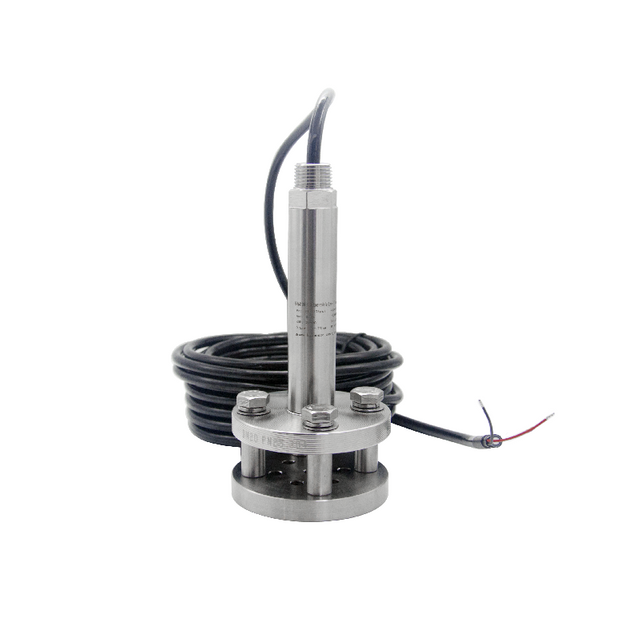
Pressure Range | ||||||
Rated range (Gauge,kPa) | 50 | 100 | 200 | 500 | 1000 | 2000 |
Min range (Gauge, kPa) | 40 | 60 | 120 | 250 | 500 | 1000 |
Overload (kPa) | 100 | 200 | 400 | 1000 | 1500 | 3500 |
Note:The measuring unit can be converted into mmH2O@ 4℃, inH2O@4℃ etc When m, mm, etc. are used as units, please give the density value of the measuring medium | ||||||
Input Signal/Power Supply | |
Standard | Two wire:4~20mADC /Vs=10~30Vdc |
Standard | Two wire:4~20mADC+HART /Vs=12~32Vdc |
Standard | Three-wire:0~5V etc /Vs=10~30Vdc |
Standard | Four wire:Modbus-RTU/RS485 /Vs=3~8Vdc or 10~30Vdc |
Measurement Medium | |
Medium Type | Any of various liquids compatible with contact materials |
Characteristics | |
Accurate | ±0.5%F.S.(Typical) ±0.2%F.S.(HART) * Accuracy refer to IEC 60770(nonlinear, hysteresis, repeatability) |
Load Resistant | 4~20mADC two wires:RL≤(U-10)/0.02Ω 4~20mADC+HART two wires:RL≤(U-12)/0.02Ω Voltage three wires:RL>10kΩ |
Long Stability | ±0.2%FS/year |
Response Time | About 1ms |
Boot time | ≤3s |
Temperature Drift Characteristics | |
Temperature Compensation Range | 25~80℃ |
Zero Temperature drift | ≤±0.040%FS(within Temperature Compensation Range 25°) |
Full Temperature drift | ≤±0.015%FS(within Temperature Compensation Range 25°) |
In the heart of a chemical processing plant or a municipal wastewater lift station, the environment is a constant assault on equipment. You can smell the sharp tang of acidic vapors and hear the churning of thick, particulate-heavy fluids. Most sensors in these conditions fail within months—their metal casings pitted by corrosion, their sensor ports choked by sludge. The HPM47W RPN was born from the need to stop this cycle of failure. When you touch the smooth, non-stick PTFE surface of the HPM47W, you realize it isn't just a sensor; it’s a high-tech armor for your data.
Imagine the relief of your maintenance team when they no longer have to pull "dead" sensors out of a tank every quarter. The HPM47W RPN sits silently at the bottom of the tank, submerged in liquids that would dissolve ordinary equipment. It provides a steady, reliable pulse of data that keeps your pumps running and your tanks from overflowing. It is the story of a product designed for the "dirty work"—the essential, high-stakes monitoring that keeps infrastructure safe and industries profitable. By choosing the HPM47W RPN, you are investing in a future where liquid level measurement is no longer a variable of concern, but a constant of certainty.
The primary failure point of traditional level sensors is the chemical reaction between the fluid and the sensor body. The HPM47W RPN eliminates this through advanced material science.
The PTFE Powerhouse: Polytetrafluoroethylene (PTFE) is one of the most inert materials on earth. Our PTFE-bodied sensors can be dropped into concentrated sulfuric acid or hydrochloric acid without losing a micron of their surface integrity.
Integrated Cable Shielding: The chemical defense doesn't stop at the probe. Our specialized PTFE-jacketed cables feature a vented tube to compensate for atmospheric pressure changes, ensuring accuracy while remaining entirely resistant to the corrosive gases that often hover above the liquid line.
Non-Metallic Integrity: By removing all external metallic components, we prevent the formation of galvanic corrosion, a common issue in desalination plants and seawater applications where salt act as a catalyst for metal decay.
Wastewater is rarely just "water"—it is a complex mixture of oils, solids, and biological matter. Standard sensors with narrow pressure ports become clogged, leading to false readings and pump dry-running.
Open-Diaphragm Design: The HPM47W RPN features a large-diameter ceramic face. This "flush" or "open" design means there are no small holes for debris to get trapped in. The fluid pushes directly against the ceramic, and the smooth surface allows gravity to pull away any clinging particles.
High-Purity Ceramic Core: Ceramic is naturally harder and more abrasion-resistant than stainless steel. In "gritty" fluids containing sand or minerals, the HPM47W’s sensing face remains unscratched and perfectly functional where a metal diaphragm would be torn or deformed.
Effortless Maintenance: If cleaning is required, the sensor can simply be wiped down. There is no need for delicate tools to pick out debris from a sensing port, significantly reducing technician time and the risk of accidental sensor damage.
Deep submersion requires more than just a tight seal; it requires a sophisticated moisture-management system.
Triple-Seal Technology: The internal electronics of the HPM47W RPN are protected by a series of redundant O-rings and specialized potting compounds. This multi-layered defense ensures that even at depths of 50 meters, the high-pressure liquid cannot find a path to the circuit board.
Atmospheric Reference Venting: To measure depth accurately, the sensor must "know" the air pressure above the tank. Our cables contain a micro-bore vent tube with an integrated moisture filter. This allows the sensor to breathe, preventing errors caused by weather changes while keeping humidity out of the internal housing.
Piezoresistive Accuracy: The ceramic core uses high-stability piezoresistive technology. When the liquid level rises, the pressure on the ceramic increases, creating a change in resistance that our onboard electronics convert into a precise milliamp signal. The result is a measurement that is stable, repeatable, and fast.
Q: Can I use the HPM47W RPN in a tank with heavy agitation or mixers?
A: Yes, however, in highly turbulent tanks, we recommend installing the sensor inside a "stilling well"—a simple perforated pipe. This protects the sensor from the physical force of the moving liquid while still allowing the pressure to be measured accurately.
Q: Which material should I choose: PTFE, PP, or PVC?
A: PTFE is the "gold standard" for strong acids and high temperatures. PP (Polypropylene) is excellent for general industrial wastewater and milder chemicals. Our team can provide a chemical compatibility chart based on your specific liquid concentration to ensure the longest lifespan.
Q: What is the maximum depth the HPM47W RPN can measure?
A: While our standard range goes up to 200 meters, we specialize in high-pressure submersion. If your application requires measurement at even greater depths, our engineering team can provide a custom-housed solution with reinforced seals.
Q: How do I protect the vent tube in high-humidity environments?
A: Every HPM47W RPN comes with a desiccant filter or a specialized waterproof/breathable cap for the vent tube. We recommend checking the filter annually to ensure the reference path remains clear of moisture, ensuring long-term signal accuracy.
Would you like me to create a comparison guide between the ceramic sensing technology and traditional silicon sensors to further demonstrate the E-E-A-T value to your chemical industry clients?
Pressure Range | ||||||
Rated range (Gauge,kPa) | 50 | 100 | 200 | 500 | 1000 | 2000 |
Min range (Gauge, kPa) | 40 | 60 | 120 | 250 | 500 | 1000 |
Overload (kPa) | 100 | 200 | 400 | 1000 | 1500 | 3500 |
Note:The measuring unit can be converted into mmH2O@ 4℃, inH2O@4℃ etc When m, mm, etc. are used as units, please give the density value of the measuring medium | ||||||
Input Signal/Power Supply | |
Standard | Two wire:4~20mADC /Vs=10~30Vdc |
Standard | Two wire:4~20mADC+HART /Vs=12~32Vdc |
Standard | Three-wire:0~5V etc /Vs=10~30Vdc |
Standard | Four wire:Modbus-RTU/RS485 /Vs=3~8Vdc or 10~30Vdc |
Measurement Medium | |
Medium Type | Any of various liquids compatible with contact materials |
Characteristics | |
Accurate | ±0.5%F.S.(Typical) ±0.2%F.S.(HART) * Accuracy refer to IEC 60770(nonlinear, hysteresis, repeatability) |
Load Resistant | 4~20mADC two wires:RL≤(U-10)/0.02Ω 4~20mADC+HART two wires:RL≤(U-12)/0.02Ω Voltage three wires:RL>10kΩ |
Long Stability | ±0.2%FS/year |
Response Time | About 1ms |
Boot time | ≤3s |
Temperature Drift Characteristics | |
Temperature Compensation Range | 25~80℃ |
Zero Temperature drift | ≤±0.040%FS(within Temperature Compensation Range 25°) |
Full Temperature drift | ≤±0.015%FS(within Temperature Compensation Range 25°) |