| Availability: | |
|---|---|
| Quantity: | |
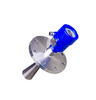
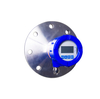
The extremely narrow microwave pulse emitted by the antenna on radar level instrument can travel at the speed of light and part of its energy, which is reflected off the surface of target medium, is received by the very same antenna. The time lapse between pulse emission and reception by the antenna is proportional to the distance between the surface of target medium and the reference point on antenna. However, due to the fact that the electromagnetic wave is transmitted at extremely high speed, which leads to the tiHH time lapse (nanosecond level) and makes it difficult to be identified, series of radar level instrument have adopted a special demodulation technology, enabling itself to detect the time lapse between pulse emission and reception correctly, and eventually generate accurate measurement result.
1.Small beam angle, which centralize energy, make RD80X high ability of anti-jamming, hence high accuracy and reliable.
2. Small antenna size, easy to mount and easy to equip extra dust protection
3. Small blind zone, good accuracy even for small.
4. Shorter wave-length, suitable for the measurement of powder, grain and etc.
5. The guided wave radar level instrument, with pulses as its working tool and extremely low emission power, can be mounted on various metal or nonmetal vessels, harmless towards the environment and human beings.
6. Equipped with advanced microprocessor and unique Echo Discovery echo processing technology, the radar level instrument can be used under various hazardous process conditions.
Measure Range | 0-20m |
Measuring medium | Strong dew, crystal, corrosive liquid, dust |
Frequency | 26GHz |
Accurate | ±5mm |
Temperature | -40~80℃ |
Process temperature | -40~350℃ |
Process pressure | -0.1~4.0MPa |
Process connection | Thread, Flange selected |
Protection grade | IP67 |
Output signal | 4...20mA/HART/RS485/Modbus |
Power Supply | Two-wire standard version (16~36)V DC Four-wire(21.6~26.4)V DC |
Temperature Coefficient of Zero | ±1.0%FS/℃(Reference 25℃) |
Temperature Coefficient of Full Scale | ±1.0%FS/℃(Reference 25℃) |
The HWM510 can be configured for continuous level measurement in:
Industrial liquid-storage tanks
Chemical and process vessels
Water and wastewater tanks
Reactors with compatible vapour and pressure conditions
Fuel or solvent tanks, subject to material and hazardous-area review
Tanks with agitation, condensation or light foam
Grain, powder or other suitable bulk-material vessels
Pressurised tanks within the approved connection rating
For other contact and non-contact technologies, review HIGHJOIN's liquid level sensor.
When a narrower beam, smaller blind zone or higher-resolution 80GHz configuration is required, compare the HWM500 80GHz radar level meter.
It is normally installed on the tank roof with the horn antenna facing the material through an open nozzle or process connection. Measurement through a metal wall is not suitable. Any proposal to measure through a non-metallic window requires testing of the window material, thickness and microwave transmission.
The standard HWM510 configuration is intended to measure the upper material surface. Interface measurement between two liquid layers is not listed as a standard function and should not be assumed without application testing and written confirmation.
The transmitter measures level or distance. Volume and mass can be calculated in a PLC, display or software platform using the tank geometry and, for mass, the material density. An irregular tank requires an appropriate strapping table.
Relay outputs are not listed among the standard HWM510 output options. Pump start, stop and alarm functions can be implemented through a PLC, controller or external relay device using the 4–20 mA or digital level signal.
Possibly, but a low dielectric constant produces a weaker reflection. Provide the material name, dielectric value, range, antenna size and vessel conditions so that echo strength and installation suitability can be reviewed before ordering.
Plan Your Radar Level Measurement
Send us your vessel drawing, measuring range, medium, process temperature, pressure and output requirements. HIGHJOIN will review the antenna, mounting position and electrical configuration for your project.
A vessel drawing helps us review beam clearance and false-echo risks.
The extremely narrow microwave pulse emitted by the antenna on radar level instrument can travel at the speed of light and part of its energy, which is reflected off the surface of target medium, is received by the very same antenna. The time lapse between pulse emission and reception by the antenna is proportional to the distance between the surface of target medium and the reference point on antenna. However, due to the fact that the electromagnetic wave is transmitted at extremely high speed, which leads to the tiHH time lapse (nanosecond level) and makes it difficult to be identified, series of radar level instrument have adopted a special demodulation technology, enabling itself to detect the time lapse between pulse emission and reception correctly, and eventually generate accurate measurement result.
1.Small beam angle, which centralize energy, make RD80X high ability of anti-jamming, hence high accuracy and reliable.
2. Small antenna size, easy to mount and easy to equip extra dust protection
3. Small blind zone, good accuracy even for small.
4. Shorter wave-length, suitable for the measurement of powder, grain and etc.
5. The guided wave radar level instrument, with pulses as its working tool and extremely low emission power, can be mounted on various metal or nonmetal vessels, harmless towards the environment and human beings.
6. Equipped with advanced microprocessor and unique Echo Discovery echo processing technology, the radar level instrument can be used under various hazardous process conditions.
Measure Range | 0-20m |
Measuring medium | Strong dew, crystal, corrosive liquid, dust |
Frequency | 26GHz |
Accurate | ±5mm |
Temperature | -40~80℃ |
Process temperature | -40~350℃ |
Process pressure | -0.1~4.0MPa |
Process connection | Thread, Flange selected |
Protection grade | IP67 |
Output signal | 4...20mA/HART/RS485/Modbus |
Power Supply | Two-wire standard version (16~36)V DC Four-wire(21.6~26.4)V DC |
Temperature Coefficient of Zero | ±1.0%FS/℃(Reference 25℃) |
Temperature Coefficient of Full Scale | ±1.0%FS/℃(Reference 25℃) |
The HWM510 can be configured for continuous level measurement in:
Industrial liquid-storage tanks
Chemical and process vessels
Water and wastewater tanks
Reactors with compatible vapour and pressure conditions
Fuel or solvent tanks, subject to material and hazardous-area review
Tanks with agitation, condensation or light foam
Grain, powder or other suitable bulk-material vessels
Pressurised tanks within the approved connection rating
For other contact and non-contact technologies, review HIGHJOIN's liquid level sensor.
When a narrower beam, smaller blind zone or higher-resolution 80GHz configuration is required, compare the HWM500 80GHz radar level meter.
It is normally installed on the tank roof with the horn antenna facing the material through an open nozzle or process connection. Measurement through a metal wall is not suitable. Any proposal to measure through a non-metallic window requires testing of the window material, thickness and microwave transmission.
The standard HWM510 configuration is intended to measure the upper material surface. Interface measurement between two liquid layers is not listed as a standard function and should not be assumed without application testing and written confirmation.
The transmitter measures level or distance. Volume and mass can be calculated in a PLC, display or software platform using the tank geometry and, for mass, the material density. An irregular tank requires an appropriate strapping table.
Relay outputs are not listed among the standard HWM510 output options. Pump start, stop and alarm functions can be implemented through a PLC, controller or external relay device using the 4–20 mA or digital level signal.
Possibly, but a low dielectric constant produces a weaker reflection. Provide the material name, dielectric value, range, antenna size and vessel conditions so that echo strength and installation suitability can be reviewed before ordering.
Plan Your Radar Level Measurement
Send us your vessel drawing, measuring range, medium, process temperature, pressure and output requirements. HIGHJOIN will review the antenna, mounting position and electrical configuration for your project.
A vessel drawing helps us review beam clearance and false-echo risks.