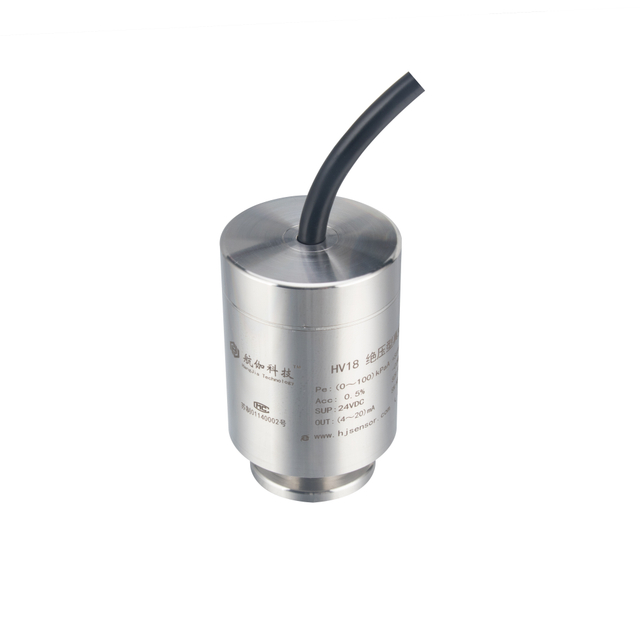
Advantages of Using Capacitance Manometers for Measurements
Views: 0 Author: Site Editor Publish Time: 2026-04-30 Origin: Site
High-vacuum and low-pressure processes require absolute certainty. Relying on indirect measurement methods often introduces unacceptable variability. It ultimately leads to substantial yield loss. You simply cannot afford to guess when managing sensitive advanced manufacturing environments. This is why engineers increasingly turn to direct measurement solutions for critical steps. We recognize Capacitance Manometers as the definitive industry standard for delivering high-accuracy pressure data. They measure physical force directly, ensuring reliable performance regardless of the specific gas species present. This article establishes a comprehensive technical and financial evaluation framework. You will learn exactly how to assess the benefits of upgrading your vacuum measurement systems. We will explore underlying mechanisms, operational advantages, and strategic specification guidelines. By understanding these components, you can confidently optimize your next facility upgrade.
Key Takeaways
Gas Independence: Capacitance manometers measure true physical force, completely eliminating the gas-composition dependency found in thermal conductivity gauges.
Superior Accuracy: Provide high-resolution measurements (up to 0.1% of reading) critical for strict compliance and process repeatability.
Material Resilience: Built with corrosion-resistant alloys (e.g., Inconel) to withstand harsh chemical vapor deposition (CVD) and etch environments.
The Business Problem: Where Indirect Vacuum Gauges Fail
Process engineers face constant pressure to maximize yield. Indirect vacuum gauges often compromise this fundamental goal. Devices like thermal conductivity gauges or traditional ionization sensors do not measure true physical force. Instead, they estimate pressure by evaluating a specific gas's thermal or electrical properties. This core design choice introduces significant operational risk into delicate manufacturing lines.
Gas mixtures frequently shift during semiconductor manufacturing. They also change rapidly in aerospace testing environments. These shifting gas mixtures skew readings heavily in traditional gauges. You must apply continuous correction factors to maintain even basic accuracy. Relying on manual or programmed correction formulas increases the chance of human error. It also triggers subtle process deviations over time.
Furthermore, indirect sensors suffer greatly in reactive environments. Traditional gauges expose delicate hot filaments directly to aggressive chamber gases. These filaments degrade quickly under chemical stress. Burnout, signal drift, and frequent replacements plague facility managers daily. Operations inevitably stall while maintenance technicians swap out compromised sensors.
Inaccuracy always carries a high financial price tag. Undetected measurement drift ruins entire production batches. Facilities routinely fail strict quality compliance audits due to poor data logging. You experience increased unplanned downtime. The resulting business losses heavily outweigh the perceived savings of buying cheaper sensors. Indirect gauges simply fail to deliver the confidence required for modern advanced manufacturing.
Core Advantages of Capacitance Manometers for Measurements
Direct, Gas-Independent Pressure Reading
A Capacitor diaphragm vacuum gauge operates on a remarkably simple principle. It measures the physical deflection of a highly engineered, thin diaphragm. As vacuum levels change, this exact deflection alters the electrical capacitance. The variance occurs between the moving diaphragm and a fixed internal electrode. The system quickly translates this microscopic capacitance change into an exact pressure reading. It completely ignores thermal conductivity. It bypasses ionization properties entirely.
This mechanism offers a massive operational advantage. You can introduce completely unknown gases into your chamber. You can aggressively change gas mixtures during complex etch steps. The reading remains perfectly accurate. The sensor only cares about the physical force exerted against the metal barrier. This gas independence eliminates complex conversion charts. It removes the guesswork from dynamic process recipes.
High Precision and Resolution at the Bottom of the Scale
Advanced vacuum processes demand wide, multi-decade dynamic ranges. Capacitance-based sensors excel across these broad sweeps of pressure. More importantly, they deliver exceptional resolution at the absolute bottom of their designated scale. You gain visibility where other instruments go completely blind.
Accuracy benchmarks differ significantly from conventional gauges. Most standard sensors state their accuracy strictly as a percentage of Full Scale (FS). This means the absolute error margin remains static. Consequently, the relative error becomes massive at lower pressures. Conversely, premium manometers often quote accuracy as a percentage of Reading. A specification of 0.1% of Reading ensures exceptionally tight control. It maintains precision even as pressure approaches the vacuum baseline.
Robustness in Harsh Environments
Aggressive chemical vapor deposition (CVD) quickly destroys fragile instruments. Manufacturers deliberately build capacitance sensors to survive these harsh industrial realities. They utilize ultra-durable materials. Welded Inconel alloys dominate the premium market. Specialized ceramic sensors also provide excellent chemical immunity.
These materials enable isolated sensor designs. Corrosive and reactive gases never touch delicate internal electronics. Only the rugged diaphragm contacts the process media. Furthermore, these robust sensors naturally resist severe overpressure events. A sudden influx of atmospheric pressure usually snaps delicate filament-based sensors. Inconel welded diaphragms simply rest safely against a structural backplate during rapid overpressure. They recover quickly and maintain their calibration once normal vacuum levels return.
Evaluating the Capacitor Diaphragm Vacuum Gauge vs. Alternatives
Engineers must compare solutions systematically. We often evaluate capacitance sensors directly against Pirani (thermal) and Ionization gauges. You must understand the specific tradeoffs involved in each technology.
Accuracy vs. Range: Pirani gauges offer incredibly broad, multi-decade sweeps. They cover atmospheric pressure down to medium vacuum easily. However, they completely lack pinpoint precision. Capacitance sensors excel deeply in specific pressure decades. They deliver unmatched accuracy strictly within their targeted operational ranges. You trade broad sweeping capacity for absolute certainty.
Media Compatibility: Corrosive gases quickly degrade standard thermal sensors. Pirani filaments oxidize or coat heavily under exposure. Capacitance sensors inherently solve this problem through isolated designs. Only the corrosion-resistant diaphragm ever contacts the process media. This structural difference drastically extends operational lifespan.
Capital Expenditure (CapEx) vs. Operational Expenditure (OpEx): Facility budgets require careful balancing. Advanced diaphragm gauges demand a higher initial capital investment. They cost more to purchase and commission. Yet, they require significantly less long-term maintenance. Calibration cycles extend much further. Spontaneous failure rates drop to near zero.
You must intelligently match the gauge to your specific process criticality. We recommend strict shortlisting criteria based on application risk.
Atomic Layer Deposition (ALD): This process demands extreme, repeatable precision. Capacitance sensors remain absolutely non-negotiable here.
Freeze Drying: This application requires moisture-independent readings. Shifting water vapor ruins thermal gauge accuracy. Diaphragm gauges prevent catastrophic batch loss.
Simple Load Locks: These chambers merely require fast pump-downs. They operate without strict accuracy needs. Standard Pirani gauges suffice perfectly for this basic task.
Comparison Chart: Vacuum Measurement Technologies
Technology | Measurement Method | Gas Dependency | Accuracy Profile | Best Application |
|---|---|---|---|---|
Capacitance Manometer | Direct Physical Deflection | None | Extremely High (% of Reading) | ALD, CVD, Freeze Drying |
Pirani Gauge | Thermal Conductivity | High | Moderate (% of Full Scale) | Load Locks, Roughing Lines |
Ionization Gauge | Gas Ionization | High | Low to Moderate | Ultra-High Vacuum Base Pressure |
Implementation Realities: Mitigating Risks and Optimizing Performance
Even the highest-quality sensors require proper implementation. You must actively manage environmental variables to optimize performance. Ambient temperature fluctuations heavily affect capacitance sensors. Minor thermal expansion shifts the physical distance between internal electrodes. This microscopic shift alters the baseline reading and introduces error.
To effectively counter this, manufacturers offer heated units. Temperature-controlled manometers regulate themselves continuously. They maintain steady internal temperatures, commonly running at 45°C, 100°C, or even 160°C. Heating actively prevents process gas condensation. It also effectively minimizes thermal zero-drift. Unheated units suffice for clean, stable environments. Heated units are absolutely mandatory for complex deposition processes.
Mounting and installation constraints also demand strict attention. Always follow manufacturer guidelines carefully. Best practices dictate vertical mounting whenever physically possible. The measurement port should point completely downward. This orientation strategically prevents particulates from settling on the delicate diaphragm. Debris buildup ruins measurement accuracy over time.
Finally, strict zeroing procedures govern long-term performance. You must properly zero the gauge at its true base pressure. Perform this routine regularly according to protocol. It ensures the unit maintains its published accuracy specifications throughout its entire lifecycle. Skipping this step compromises your baseline data.
Specification Framework: How to Select the Right Manometer
Choosing the right instrument demands a highly structured approach. Never buy a gauge blindly based on pipe fitting size alone. You must evaluate the system entirely.
Defining Full Scale (FS) Range
You must carefully match the gauge's maximum pressure to your critical process window. Do not match it to the system's maximum pressure capability. For example, if your delicate process operates optimally at 1 Torr, select a 10 Torr full-scale gauge. Do not select a 1000 Torr gauge just because the chamber occasionally vents to atmosphere. Oversizing the scale ruins your functional resolution at the bottom end.
Interface and Compliance
Evaluate your facility control system requirements thoroughly. Older manufacturing facilities often rely on basic analog 0-10V signals. However, modern advanced manufacturing facilities require robust digital communication protocols. You might need native EtherCAT or DeviceNet compatibility. Ensure the chosen sensor interfaces seamlessly directly into your existing PLC. Proper integration prevents data bottlenecks.
Next-Step Actions
Before finalizing a massive facility upgrade, take actionable steps. Implement a phased rollout.
Request pilot testing units to directly verify performance within your specific gas mixture.
Demand NIST-traceable calibration certificates to guarantee strict audit compliance.
Consult application engineers to verify heating requirements based on precursor volatility.
Review material compatibility documentation for all wetted parts thoroughly.
Conclusion
Direct physical measurement remains the only reliable choice for critical low-pressure environments. Your operations demand gas-independent accuracy to maintain product quality. While upgrading from indirect thermal sensors requires a higher initial investment, it eliminates catastrophic batch failures. Careful installation and proper range selection ensure lifelong stability.
To secure your process yields, take the following steps:
Audit your current indirect vacuum gauges to identify unacceptable data drift.
Download our detailed specification matrix to match full-scale ranges precisely to your needs.
Schedule a consultation to map out digital interface requirements for your facility.
FAQ
Q: Do capacitance manometers require frequent calibration?
A: Yes, they require periodic calibration to maintain strict accuracy. Most facilities schedule annual calibration intervals. However, stability heavily depends on the environment. Heated units demonstrate superior zero-drift stability compared to unheated models. High-contamination processes might demand more frequent zeroing checks to ensure performance remains perfect.
Q: Can a capacitor diaphragm vacuum gauge measure atmospheric pressure?
A: Yes, certain models are scaled specifically for 1000 Torr (atmosphere). However, their primary engineering value lies in low-pressure and high-vacuum applications. They deliver their highest precision and resolution when monitoring critical sub-atmospheric process windows rather than general ambient pressure.
Q: Why are heated capacitance manometers necessary for certain processes?
A: Heated units prevent process by-products from condensing inside the sensor. Deposition processes like CVD create reactive gases. If these gases cool, they solidify on the sensor diaphragm. This buildup alters the mechanical deflection, ruins accuracy, and eventually destroys the unit entirely.
Q: What happens if a capacitance manometer is exposed to overpressure?
A: Quality models feature built-in overpressure protection. They typically withstand 4x to 10x their Full Scale rating safely. The diaphragm safely bottoms out against a structural backplate. Exceeding these hard limits, however, risks permanent diaphragm deformation. This permanently alters calibration and requires complete replacement.
Related News
content is empty!