
Does Fill Fluid Affect Sanitary Pressure Transmitters?
Views: 0 Author: Site Editor Publish Time: 2026-10-14 Origin: Site
Imagine a multi-million dollar pharmaceutical batch running flawlessly. Suddenly, the entire tank is scrapped. Why? A microscopic tear allowed sensor fluid to seep into the mix. A single contamination event in food, beverage, or biotech applications costs far more than lost raw materials. It shatters consumer trust. It triggers brutal regulatory audits. At the core of these critical pipelines sits the sanitary pressure transmitter. This component is indispensable for monitoring line pressure while strictly adhering to 3-A, EHEDG, and FDA hygiene standards. But a hidden vulnerability exists within many of these devices. To transfer physical pressure from the process media to the delicate internal electronics, traditional sensors rely on a thin metallic flush diaphragm backed by a specialized fill fluid.
Does this internal liquid compromise system safety, performance, and maintenance schedules? Yes, it introduces distinct operational variables. Choosing between traditional fluid-filled technologies and modern dry ceramic alternatives dramatically impacts operational accuracy and product purity. In this comprehensive engineering guide, we dissect the mechanics of these instruments. We evaluate their inherent risks and outline actionable strategies to help you select the optimal measurement solution for your facility.
Key Takeaways
Fill fluid directly impacts measurement accuracy. Thermal expansion occurs when the fluid is exposed to high-temperature processes like standard Clean-in-Place or Sterilize-in-Place cleaning cycles. This physical expansion leads to potential measurement drift.
Contamination remains a persistent risk. The flush diaphragm of an oil-filled transmitter is extremely thin. If it ruptures due to mechanical impact or overpressure, the fill fluid leaks into the process media and ruins the sanitary batch.
Oil-filled systems excel in specific niches. They remain popular for their proven durability against unexpected overpressure and water hammer effects. Facilities must utilize FDA-approved food-grade fill fluids to mitigate toxicity risks.
Dry ceramic technology eliminates the threat. A modern completely oil-free design eradicates contamination risks entirely. It also provides excellent corrosion and abrasion resistance.
Selection dictates productivity. Choosing the optimal measurement instrument depends heavily on specific process temperature variations, media abrasiveness, and facility hygiene requirements.
Understanding the Hydraulic Bridge in Sanitary Measurement
How do internal liquids actually influence process measurement? You have to look under the hood of these hygienic instruments. In standard industrial pipelines, a sensor might sit inside a threaded cavity directly exposed to the fluid. Hygienic manufacturing outright bans this architecture. Sanitary lines cannot harbor dead legs, crevices, or microscopic pockets where bacteria multiply.
This strict biological requirement mandates the use of a flush diaphragm design. The isolating metal face sits perfectly even with the inner wall of the pipe or vessel. Standard sanitary connections often utilize G1 or G1/2 thread flush diaphragms to achieve this seamless integration. The highly sensitive piezoresistive silicon chip cannot be bonded directly to this external face. Process forces would destroy it immediately. Instead, the chip is safely tucked away inside the upper housing.
The void between the external flush isolating diaphragm and the internal electronic chip is packed with a specialized transmission medium. This is the fill fluid. When process pressure pushes against the external metal membrane, it compresses this internal liquid. The fluid then relays the exact pressure reading to the internal sensor. Understanding this hydraulic bridge is vital when selecting a Sanitary Oil-Filled Pressure Transmitter for your facility. The very presence of this fluid introduces unique operational behaviors that engineers must account for.
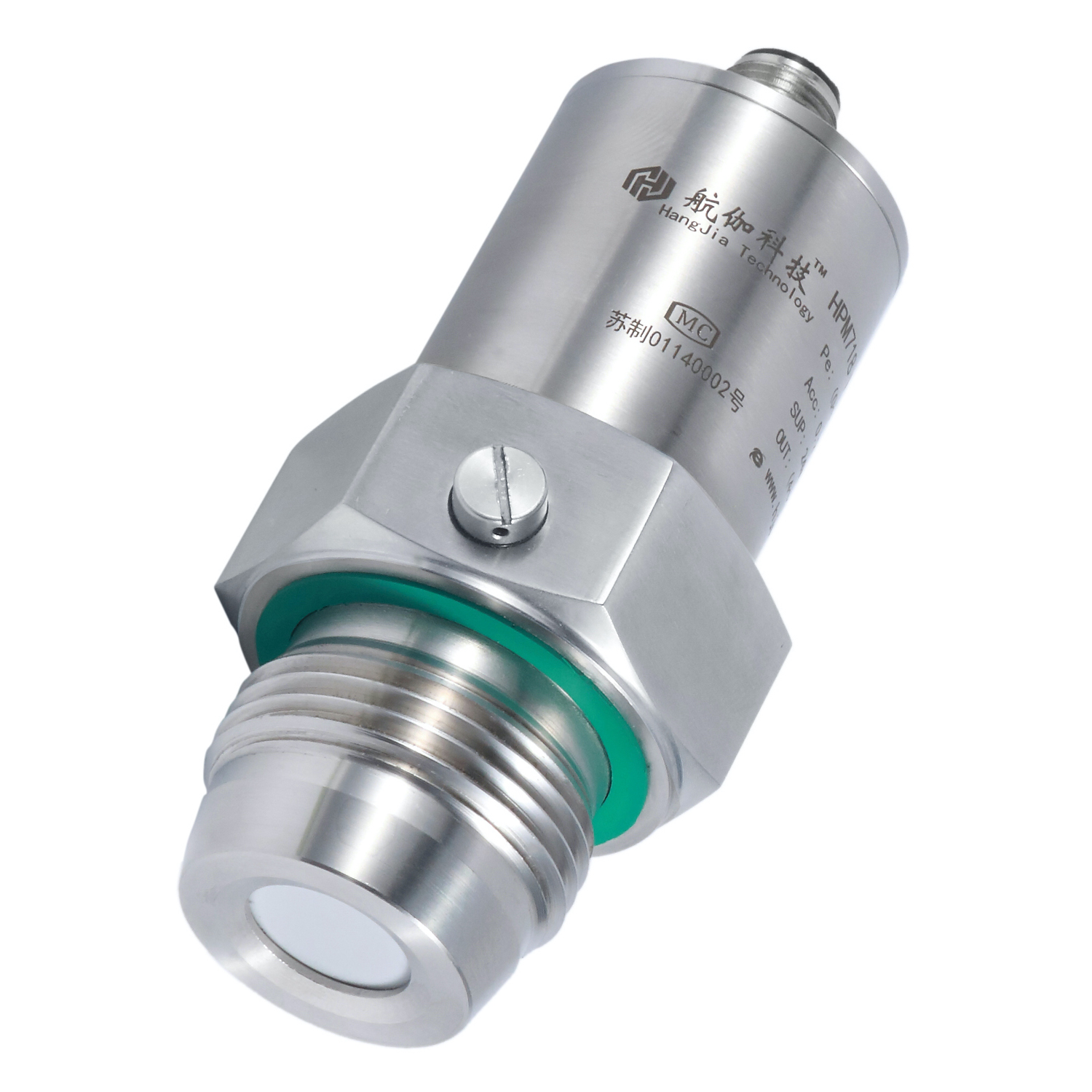
How Fill Fluid Affects Sanitary Pressure Transmitter Performance
Relying on a fluid transmission medium means the physical properties of that liquid dictate overall performance. Engineers must account for fluid mechanics and thermodynamics when deploying these devices in volatile hygienic environments.
Thermal Zero Shift and Temperature Fluctuations
The most profound performance impact of fill fluid is its reaction to heat. According to the laws of thermodynamics, liquids expand when heated and contract when cooled. In dairy or pharmaceutical processing, equipment routinely endures aggressive temperature swings. During a high-temperature sterilization cycle, a sudden blast of steam rapidly heats the sensor face.
Consequently, the trapped internal fill fluid expands. It has nowhere to go within the sealed cavity. This expansion exerts an artificial physical force against the internal sensor chip. The electronics interpret this thermal swelling as actual pipeline pressure. This phenomenon is known as thermal zero shift. High-tier instruments utilize minimal fluid volumes and algorithmic compensation to fight this effect. However, thermal drift remains an unavoidable characteristic of fluid-filled systems during rapid temperature transitions.
Response Time and Viscosity
Performance is equally tied to fluid viscosity. Viscosity shifts dynamically with ambient conditions. At standard room temperatures, the internal oil transfers kinetic energy instantly. In stark contrast, cold processing environments cause the fill fluid to thicken significantly. Think of refrigerated dairy lines or cryogenic pharmaceutical skids.
This increased viscosity creates microscopic drag within the capillary system of the sensor housing. The fluid becomes sluggish. This leads to a slight but measurable delay in the instrument response time. Highly dynamic automated processes require millisecond-level valve adjustments. A delayed feedback loop can easily destabilize system efficiency.
Output Fluctuations in Flow Measurement
Rapid micro-pulsations are common when measuring pressure in turbulent fluid flow scenarios. The internal fill fluid naturally acts as a hydraulic shock absorber. It dampens some of these high-frequency vibrations. This dampening can sometimes stabilize the output signal. But improper fluid volume or microscopic air bubbles trapped during manufacturing can completely derail reading stability. If the fluid volume is not perfectly calibrated to the flexibility of the metal diaphragm, the output jumps erratically during turbulent flow. This complicates control loop tuning.
The Contamination Risk: Fluid Leaks in Hygienic Processes
Beyond the nuances of thermal drift and viscosity, a critical concern haunts plant managers. Process contamination is a catastrophic risk. Maintaining absolute purity is not just a goal in food and pharmaceutical manufacturing. It is a strict legal mandate.
The stainless steel flush diaphragm must be manufactured to extreme thinness to accurately transfer pressure with minimal resistance. It frequently measures less than 0.1 millimeters. That is roughly the thickness of a human hair. Materials like 316L stainless steel offer superb chemical compatibility. Yet, their physical thinness makes them inherently fragile.
Physical hazards are everywhere in an active processing plant. A delicate metal membrane is easily dented by abrasive media. Fruit slurries containing hard seeds or crystallizing pharmaceutical compounds cause severe wear. Accidental strikes from cleaning brushes during routine washdowns compromise structural integrity. Severe hydraulic water hammer events can also rupture this barrier.
What is the fallout of a ruptured membrane? The pressurized process media forces its way into the sensor housing and destroys the electronics. Simultaneously, the internal fill fluid bleeds out into the process pipeline. Even a microscopic tear results in synthetic oil seeping into a batch of life-saving medication. Reputable manufacturers strictly utilize FDA-approved non-toxic fill fluids like food-grade mineral oil to mitigate this nightmare scenario. These fluids prevent severe consumer poisoning. But regulatory standards dictate that any batch contaminated with foreign oil must be immediately discarded. The financial losses are massive.
The hygienic processing sector is currently experiencing a massive operational shift. Driven by increasingly stringent global food safety regulations and strict pharmaceutical guidelines, facility managers are aggressively phasing out potential contamination vectors. Audits now scrutinize even the most minor risks of foreign fluid ingress. Process engineers are moving away from traditional fluid-filled architectures wherever possible. The current industry trajectory heavily favors dry sensing technologies equipped with smart diagnostics. This evolution allows operators to prioritize absolute purity and predictively monitor sensor health rather than reacting to a catastrophic leak after the fact.
Pros and Cons of Oil-Filled Systems
Despite the documented risks, the traditional fluid-filled architecture remains deeply entrenched in process automation. Weighing mechanical advantages against vulnerabilities is an essential step in the procurement process.
The hydraulic nature of the fill fluid allows an Oil-Filled Hygienic Pressure Transmitter to absorb and dissipate sudden pressure shocks highly efficiently. This shields the internal piezoresistive chip from destruction. These systems excel in extremely high-pressure environments like dairy homogenization. Advanced models are even capable of handling process temperatures up to 150 degrees Celsius while maintaining tight linearity over wide measurement spans. This technology has been the industry backbone for decades. Standard models are widely available and generally feature a lower upfront procurement cost.
However, the primary drawback remains the fragility of the ultra-thin metal diaphragm. The system is highly susceptible to mechanical damage and subsequent fluid leaks. Thermal expansion during cleaning cycles induces thermal zero shift. Operators are forced to wait for the sensor to normalize before resuming accurate production. Finally, these devices demand exceptionally careful handling during installation and routine plant washdowns to avoid accidental face damage.
The Rise of Dry Ceramic Technology
Instrumentation manufacturers have engineered advanced alternatives as regulatory bodies globally tighten their grip on product purity. The most prominent innovation reshaping the hygienic sector is the dry ceramic sensor.
A Dry Ceramic Sanitary Pressure Transmitter represents a paradigm shift. It abandons the paper-thin metal diaphragm backed by fluid. Instead, this modern solution utilizes a robust Al2O3 99.9 percent measuring cell that sits completely flush with the process media.
The ceramic diaphragm itself acts as the primary sensing element in this architecture. The back of the ceramic face features printed gold electrodes that form a capacitor with the base substrate. Process pressure causes microscopic deflections in the thick ceramic. The capacitance changes instantly. The critical distinction here is that this direct mechanical measurement requires absolutely zero internal fill fluid.
The most profound benefit is the absolute elimination of fluid leaks. There is no internal oil reservoir. Zero risk exists of fluid contaminating the process media. This ensures total compliance with the strictest purity mandates. High-purity ceramic is also incredibly robust. The measuring cell absorbs significant overpressure events without permanent plastic deformation. It returns flawlessly to its zero point immediately after the spike subsides.
Unlike thin stainless steel, a solid ceramic face is exceptionally hard. It is second only to diamond. This makes it impervious to scratching and abrasion. It is the perfect solution for challenging media containing hard particulates that would otherwise shred a metallic diaphragm.
Comparing Oil-Filled vs. Oil-Free Technologies
Plant managers and engineering teams need to make data-driven decisions. The following matrix compares the core operational parameters of both technologies side-by-side.
Evaluation Parameter | Oil-Filled Hygienic Pressure Transmitter | Oil-Free Ceramic Hygienic Pressure Transducer |
|---|---|---|
Contamination Risk | Low to Moderate. Mitigated by food-grade oil, but physical risk remains. | Zero. Completely dry, oil-free measuring cell. |
Temperature Stability | Moderate. Fill fluid expands during sterilization, causing temporary zero shift. | Excellent. Ceramic possesses a minimal thermal expansion coefficient. |
Diaphragm Durability | Highly susceptible to dents, scratches, and plastic deformation. | Exceptionally resistant to scratches, abrasions, and chemical corrosion. |
Overpressure Handling | Good. Relies on fluid dampening to absorb sudden shock. | Superior. Diaphragm safely bottoms out against the solid substrate. |
Ideal Applications | Smooth liquids, extreme high-pressure lines, standard processes. | Abrasive slurries, strict zero-contamination zones, frequent cleaning cycles. |
Choosing the correct sensor architecture directly impacts overall plant productivity. Utilizing an oil-free ceramic transducer in abrasive applications prevents frequent sensor failures. This slashes unscheduled downtime and maintenance labor. Conversely, deploying oil-filled sensors in highly stable liquid lines optimizes upfront capital expenditure without compromising daily operational efficiency.
Troubleshooting Common Transmitter Faults
Even the most rugged industrial instruments require occasional maintenance. Rapidly identifying the root cause of transmitter faults is crucial for technicians to get production back online. Here is practical troubleshooting advice for common measurement issues.
If the output drifts upward significantly without a corresponding change in actual pipeline pressure, the most likely culprit is thermal expansion. This typically occurs immediately after a high-temperature sterilization cycle. Allow the process line to return to its standard operating temperature. Perform a zero-trim calibration while the transmitter is hot if precision is required at elevated temperatures. Upgrade to a dry ceramic alternative if thermal drift causes unacceptable delays in your automation schedule.
A sudden drop to a fault signal or wildly erratic signal jumping strongly indicates a ruptured isolating diaphragm. This results in a total loss of fill fluid. The internal electronic chip is likely destroyed by the ingress of wet process media. Isolate the instrument immediately and inspect the flush face. The unit cannot be repaired in the field if you spot dimples, scratches, or tears. Emphasize preventative care with your sanitation crew. Operators must avoid pointing high-pressure water jets directly at the sensor face during washdowns.
Cold ambient or process temperatures may be thickening the internal fill fluid if pressure changes register slower than usual. This increased viscosity dampens the mechanical transfer of kinetic energy. Verify that the specified operating temperature range aligns with actual environmental conditions. Consult your supplier about utilizing a lower-viscosity fill fluid designed specifically for cryogenic applications if cold temperatures are unavoidable.
How to Choose the Right Measurement Solution
Selecting the appropriate instrumentation requires a holistic evaluation of your specific processing environment. There is no universally perfect sensor. There is only an optimal tool for your unique set of operational variables.
First, analyze the physical makeup of your product. Is it a smooth homogeneous liquid like milk or purified water? Traditional oil-filled sensors are highly effective here. Are you pumping an abrasive slurry containing seeds, grains, or crystallizing sugars? An Oil-Free Ceramic Hygienic Pressure Transducer that delivers a stable 4 to 20mA output is mandatory to prevent rapid diaphragm degradation.
Next, document your cleaning protocols. Do you utilize extreme temperature swings on a daily basis? A ceramic sensor minimizes thermal zero shift and allows production to resume much faster if rapid thermal cycling is standard operating procedure. Ensure you select specialized high-temperature models engineered with minimal fluid volumes if you must use oil-filled units.
Finally, evaluate the Total Cost of Ownership. Dry ceramic sensors occasionally carry a premium initial price point. But their extended lifespan in harsh conditions yields a significantly lower total cost over a five-year period. Absolute elimination of batch contamination risks is priceless. Avoiding just one contaminated batch pays for the premium sensor hundreds of times over.
Conclusion: Optimize Your Process with HJ Sensor
Internal fill fluid fundamentally alters the behavior of process measurement equipment. It impacts temperature stability. It dictates response times in cold environments. It introduces a persistent risk of process contamination. Traditional oil-filled options remain reliable industry workhorses when deployed in the right conditions. But the landscape of hygienic manufacturing is evolving.
The dry ceramic sensor has rapidly become the gold standard for facilities prioritizing absolute purity, unmatched temperature stability, and rugged durability against abrasives. We encourage plant engineers and quality assurance managers to critically evaluate their current process lines today. Understanding the mechanical realities of your instrumentation allows you to proactively protect your product and streamline maintenance schedules.
Ready to eliminate contamination risks and stabilize your pressure monitoring? Explore the comprehensive range of high-performance sanitary measurement solutions at HJ Sensor. Whether your facility requires the robust durability of dry ceramic technology or high-temperature oil-filled transmitters, HJ Sensor provides precision-engineered instruments designed to safeguard your bottom line. Visit HJ Sensor today to find the exact match for your hygienic process requirements.
FAQ
What kind of fill fluid is used in hygienic applications?
Reputable instrumentation manufacturers exclusively use FDA-approved food-grade fluids for hygienic applications. The most common fill fluids include synthetic food-grade oils, highly refined mineral oil, or specific glycerin and water mixtures. These fluids are carefully selected to ensure minimal toxicity. They prevent severe health hazards in the rare event that a diaphragm ruptures and fluid leaks into the process media.
Can a dry ceramic sensor handle high temperatures?
Yes. High-quality ceramic measuring cells are inherently stable across extremely wide temperature ranges. They lack internal fluids. They are fully capable of withstanding standard high-temperature cleaning and sterilization processes. They maintain structural integrity and measurement accuracy without suffering from the thermal zero-shift issues commonly associated with expanding fill fluids.
Why does my transmitter output fluctuate during cleaning cycles?
The sudden and extreme spike in temperature during a cleaning cycle causes the internal fill fluid to thermally expand if you are operating an oil-filled transmitter. This expansion pushes against the internal sensing element. It creates a false high-pressure reading even when the actual pipe pressure is zero. This fluctuation is a physical reaction to heat. The reading typically normalizes once the sensor cools back to its standard operating temperature.
Is an oil-free ceramic transducer more fragile than a stainless steel one?
No, it is generally much more robust in process environments. Ceramic is technically a brittle material if dropped on a concrete floor. However, the thick ceramic measuring cell used in these transducers is highly resistant to process abrasion, scratches, and overpressure events. It is significantly tougher against physical impacts and particulate wear in dynamic fluid applications than a paper-thin stainless steel flush diaphragm.
How often should I calibrate my sanitary instrumentation?
Calibration frequency depends heavily on specific industry regulations and the underlying sensor technology. Oil-filled sensors may require more frequent calibration checks due to minor thermal drift and mechanical fatigue over time. Dry ceramic sensors offer excellent long-term stability and minimal drift. As a general industry rule of thumb, hygienic pressure instruments should be verified and calibrated once every 6 to 12 months to ensure continuous accuracy.
Does fill fluid affect the calibration of a sanitary pressure transmitter?
Yes, it introduces specific calibration challenges. Technicians must account for both ambient temperature and process temperature during calibration. Because the fluid expands and contracts, calibrating the sensor in a cool maintenance shop might result in a slightly shifted zero point when installed on a hot process line. Best practices dictate performing a final zero-trim calibration under actual operating conditions to compensate for fluid expansion.
What happens if the fill fluid leaks into a sanitary process?
A leak immediately compromises the entire batch. Even if the sensor utilizes FDA-approved food-grade mineral oil, introducing foreign synthetic fluid into a precisely formulated food, beverage, or pharmaceutical product violates strict quality control standards. The contaminated product must be quarantined and destroyed. The processing line must then be shut down, thoroughly flushed, and sanitized before production can safely resume.


