
Which Sanitary Pressure Transmitter Handles CIP Chemicals?
Views: 0 Author: Site Editor Publish Time: 2026-10-07 Origin: Site
Walk the floor of any modern liquid processing facility, and you will quickly spot a recurring maintenance nightmare. Harsh cleaning chemicals destroy standard industrial sensors with alarming speed. Conventional pressure measurement devices fail rapidly when exposed to aggressive caustics or concentrated acids. This corrosion causes false readings and severe thermal drift. Ultimately, it leads to catastrophic batch contamination. Addressing this prevalent pain point in food, beverage, and pharmaceutical manufacturing requires specialized instrumentation.
To maintain strict hygiene protocols while ensuring accurate process control, facilities must deploy a proper Sanitary Pressure Transmitter. The operational success of these devices hinges entirely on choosing the right diaphragm material to survive hostile cleaning cycles. Plant engineers and procurement managers need actionable criteria to select the optimal sensor for their specific processing environment.
Key Takeaways
Material Selection is Critical: The operational longevity of a hygienic measurement device depends entirely on matching its internal diaphragm material to the specific cleaning chemicals deployed in your facility.
Stainless Steel vs. Ceramic: A 316L stainless steel model serves as the baseline industry standard for general food and beverage applications. However, advanced ceramic configurations are strictly required for highly aggressive chemical environments.
Eliminating Dead Legs: Utilizing a flush diaphragm design ensures no bacteria or chemical residue becomes trapped within the sensor connection. This maintains strict FDA hygiene protocols.
Automation Readiness: Modern hygienic instruments provide real-time process data. This enables smart automation that significantly reduces water consumption, chemical waste, and production downtime.
The Core Challenge of Clean-in-Place Systems
In food and pharmaceutical processing, standard industrial sensors pose a severe contamination risk due to their threaded connections and recessed cavities. A hygienic transmitter is engineered specifically to eliminate these biological hazards. It features a flush diaphragm, meaning the sensing surface sits perfectly level with the inner wall of the pipe. This seamless architecture prevents the formation of microscopic crevices where microbial growth typically occurs.
Furthermore, these instruments must comply with stringent regulatory frameworks. Certifications from 3-A Sanitary Standards and the European Hygienic Engineering and Design Group dictate everything from surface roughness to internal components. Typically, the wetted parts require an Ra value of less than 0.8 micrometers. Any internal fill fluids utilized to transfer pressure must be food-grade to mitigate risks in the rare event of a diaphragm rupture.
Automated interior cleaning methodology cleans the surfaces of pipes and vessels without requiring major mechanical disassembly. While this forms the backbone of modern plant hygiene, it simultaneously creates an exceptionally hostile environment for sensitive instrumentation. Within seconds, sensors endure rapid thermal shock, transitioning from ambient product temperatures to scalding washes. This thermal stress is accompanied by high-velocity fluid flow intended to create mechanical scrubbing action. If an instrument lacks full chemical compatibility, aggressive media will rapidly strip away the metal passive oxide layer. A breached diaphragm not only destroys the calibration but can leak transmission fluid directly into the product stream.
Analyzing Chemical Threats to Instrumentation
To accurately diagnose and prevent sensor failure, process engineers must analyze the specific chemical cocktails utilized during their facility cleaning phases. Different sanitizing agents attack sensor materials through distinct metallurgical pathways.
Alkaline Cleaners and Caustic Washes
Alkaline washes serve as the primary defense against organic soils. When an operator initiates a caustic wash, the solution effectively breaks down stubborn fats and proteins through saponification. Sodium hydroxide is the most prevalent alkaline cleaner. It is typically deployed at concentrations ranging from one to three percent and heated to 85 degrees Celsius. While high-grade stainless steel handles mild caustics reasonably well, prolonged exposure to high-concentration sodium hydroxide accelerates metal fatigue. Over time, this exposure degrades standard elastomeric seals, leading to moisture ingress and electrical failure.
Acid Cleaners for Mineral Scaling
Following the initial alkaline wash, an acid phase is deployed to dissolve inorganic soils like mineral scaling and hard water deposits. Nitric acid and phosphoric acid represent the standard industry choices for this task. These acids pose a significant corrosion risk to lower-grade alloys. The acidic solution actively attacks the grain boundaries of the metal. This intergranular corrosion can compromise a micrometer-thin sensing diaphragm in a matter of weeks.
Sanitizers and Disinfectants
The final phase involves chemical sanitization to eradicate any surviving microorganisms. Chlorine-based sanitizers are highly effective biological agents but remain notorious for causing stress corrosion cracking in standard metals. Chloride ions are microscopically small, allowing them to penetrate the protective chromium oxide layer of stainless steel. Once this barrier is breached, localized galvanic cells form. For environments relying heavily on strong oxidizers, specifying advanced transmitter materials becomes a non-negotiable engineering requirement.
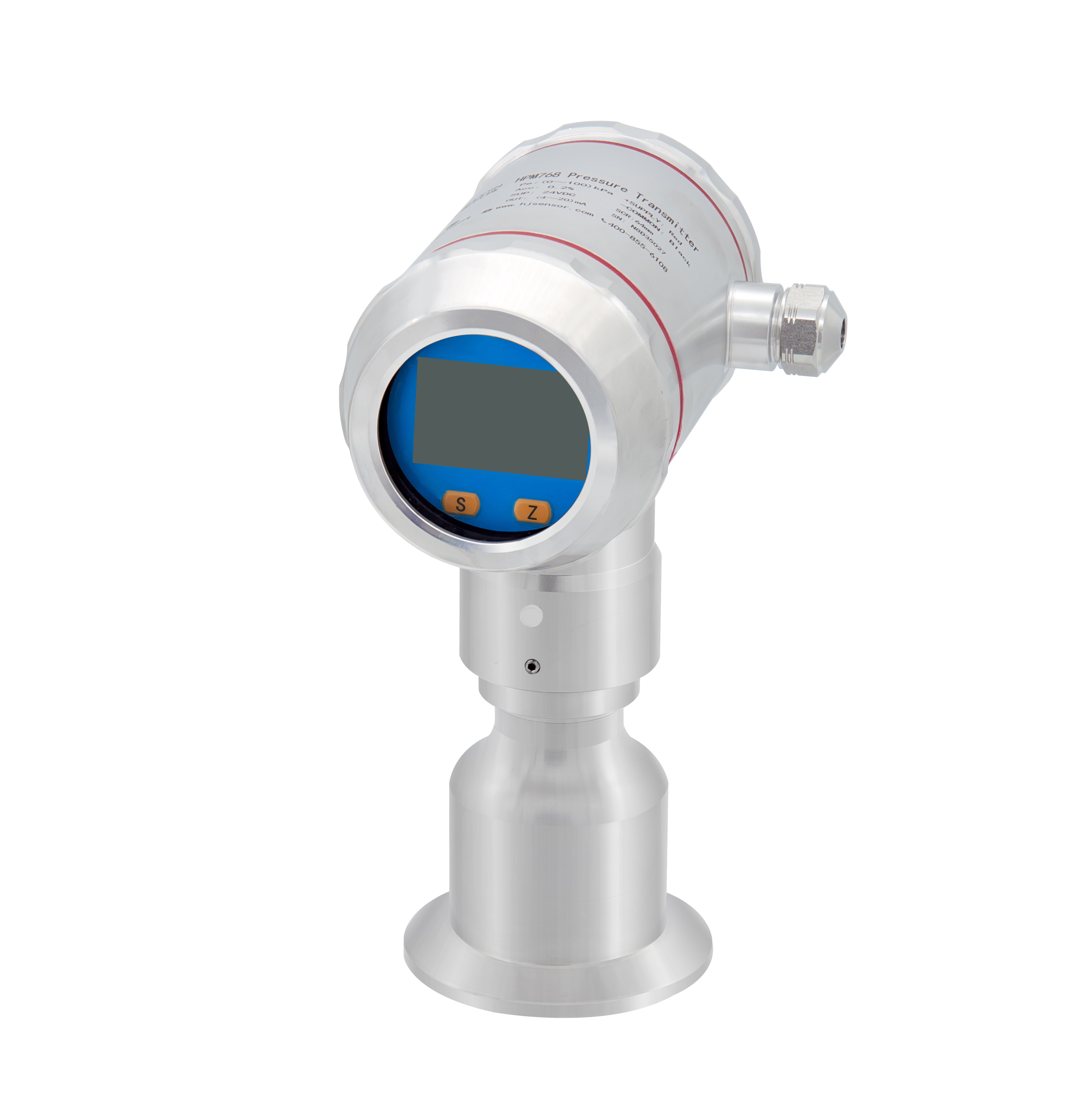
Material Selection: 316L Stainless Steel vs. Advanced Ceramics
For the vast majority of standard dairy, brewing, and general food processing applications, the 316L Stainless Steel Hygienic Pressure Transmitter stands as the established industry baseline. The low carbon composition minimizes carbide precipitation during welding processes, preserving the alloy inherent corrosion resistance.
The defining advantage of 316L over standard commercial stainless steel is the strategic addition of molybdenum. This specific content significantly elevates the Pitting Resistance Equivalent Number, equipping it with a robust defense against mild acidic washes. In practical terms, instruments like the HPM710 series can be highly electropolished to a mirror-like surface finish of Ra less than 0.4 micrometers. This prevents bacterial adhesion and ensures high-velocity fluids wash away residual contaminants effortlessly. However, when a processing facility implements high-concentration chloride sanitizers, the molybdenum content is no longer sufficient to maintain the passive oxide layer.
Specifically, when operational conditions push stainless steel past its chemical limits, process engineers transition to advanced ceramics. The Corrosion-Resistant Ceramic Sanitary Pressure Transmitter utilizes a sensing diaphragm constructed from high-purity aluminum oxide, refined to 99.9 percent purity. Unlike metallic sensors that rely on an internal fill fluid, modern ceramic configurations operate as dry cells leveraging capacitive measurement technology.
High-purity ceramic remains fundamentally inert when exposed to almost all known acids, aggressive alkalis, and chloride-based disinfectants. It does not rely on a fragile oxide layer. Consequently, instruments like the HPM768 effortlessly withstand highly concentrated nitric acid and boiling caustic soda without any risk of pitting or stress cracking. If the process media itself is abrasive, the ceramic diaphragm will resist the scratching that would otherwise destroy a metallic sensor.
Feature | 316L Stainless Steel HPM710 Series | 99.9% Al2O3 Ceramic HPM768 Series |
|---|---|---|
Chemical Resistance | Excellent for mild caustics and standard washes | Immune to highly concentrated acids and chlorides |
Sensor Technology | Oil-filled piezoresistive | Dry capacitive cell - zero oil leak risk |
Abrasion Resistance | Moderate | Extremely high scratch-proof surface |
Best Application | Dairy, brewing, standard food processing | Pharmaceuticals, aggressive chemical dosing |
Essential Process Connections for Zero Contamination
A highly accurate sensing element is rendered useless if its physical connection to the pipe creates a biological hazard. In sanitary engineering, a dead leg refers to any branch or microscopic crevice where fluid stagnates because it sits outside the main turbulent flow path. During a cleaning cycle, chemicals and high-velocity rinse water cannot adequately penetrate these dead zones. Consequently, bacteria and chemical residues survive the sanitation process.
To systematically eliminate dead legs, the food and pharmaceutical industries rely heavily on specific hygienic connections. Specifying a Tri-Clamp Sanitary Pressure Transmitter ensures a seamless, flush mount directly with the process line. The Tri-Clamp system utilizes two flanged ends secured by a hinged mechanical clamp, with a specialized sanitary gasket compressed tightly between them. Instruments like the HPM720 series feature this architecture to create a perfectly smooth internal transition from the pipe wall directly to the sensor diaphragm. From an operational standpoint, it allows technicians to perform rapid installation and removal for manual inspection. Engineers must rigorously verify that the chosen gasket material is equally compatible with the specific chemicals and peak temperatures to prevent seal degradation.
Managing High-Temperature SIP Thermal Shock
While standard cleaning focuses primarily on chemical interactions to remove residues, Sterilization-in-Place introduces an entirely different physical hurdle. Extreme thermal stress is a major factor. Sterilization protocols abandon chemicals in favor of pressurized live steam to achieve complete microbial eradication. These cycles frequently push system temperatures up to 150 degrees Celsius for extended holding periods.
The transition from a standard operating temperature to a high-temperature sterilization phase occurs violently. This sudden influx of high-pressure steam creates severe thermal shock. When a standard pressure sensor is exposed to these conditions, the internal transmission fluid undergoes rapid thermal expansion. This phenomenon causes the sensor to report a false positive pressure spike.
In contrast, a CIP-Compatible Ceramic Pressure Transmitter is engineered with specific thermodynamic safeguards. Manufacturers isolate sensitive electronic components from extreme process temperatures using elongated cooling necks. The HPM718-H, for instance, leverages ambient air to dissipate heat through physical extensions. This ensures that while the wetted diaphragm reaches sterilization temperatures, the internal circuitry remains safely below its operational threshold. Furthermore, these robust transmitters withstand the powerful vacuum created during the rapid post-sterilization cooling phase without permanent diaphragm deformation.
Industry Trends: The Shift Toward Smart Instrumentation
Recent market analyses reveal a distinct pivot in industrial procurement strategies regarding hygienic measurement. Facilities are rapidly abandoning the traditional one-size-fits-all approach to instrumentation. Driven by stricter compliance audits and a relentless push to maximize production uptime, plant managers are prioritizing application-specific materials over generic stainless steel.
The prevailing trend leans heavily toward integrating advanced, high-purity ceramics or specialized alloys to combat the increasingly concentrated sanitizers being used to shorten overall cleaning cycle times. In addition, the industry is fully embracing digital transformation. The integration of IO-Link communication protocols into sanitary transmitters is becoming standard practice. This connectivity allows automated systems to continuously monitor sensor health, detect early signs of thermal drift, and facilitate predictive maintenance long before a chemical breach occurs. Smart automation relies entirely on the continuous, real-time feedback loop provided by reliable field instrumentation to adjust pump speeds and optimize chemical dosing.
Actionable Buyer Guide for Plant Engineers
Selecting the optimal sensor requires a systematic evaluation of your facility process conditions. Plant engineers should follow this objective framework to specify the correct instrument.
Identify Media and Chemical Concentrations
The chemical composition of your cleaning media dictates the required diaphragm material. Document every chemical used in your process. If your facility utilizes standard alkaline washes and mild acids, a 316L stainless steel diaphragm is generally sufficient. Conversely, if your protocol involves high-concentration chlorides or abrasive media, upgrading to a 99.9 percent pure ceramic diaphragm is an absolute engineering necessity.
Determine Peak Temperature and Vacuum Risks
Engineers must calculate both the standard operating temperature of the product and the absolute peak temperature reached during steam sterilization. Ensure the chosen transmitter features the necessary thermal decoupling, such as integrated cooling necks, to protect its sensitive electronics. Verify the absolute vacuum resistance specifications to accommodate sudden cooling phases.
Select the Correct Hygienic Connection
Evaluate your existing pipework infrastructure. Threaded connections are strictly prohibited. Specify a Tri-Clamp or similar hygienic connection that matches your current setup to ensure a flush, dead-leg-free installation. Pay close attention to the sealing elastomers to ensure chemical compatibility.
Conclusion
Choosing the correct sensor ensures complete process safety and operational efficiency. Standard industrial sensors will inevitably fail when subjected to harsh chemical environments and extreme thermal shocks. To protect your product and your bottom line, you must carefully match diaphragm materials to your specific cleaning chemicals.
While high-grade stainless steel remains highly effective for basic daily cleaning cycles, advanced ceramic sensors are uniquely capable of handling aggressive acids and concentrated chlorides without sustaining structural damage. Proper sensor selection stops leaks, prevents severe batch contamination, and optimizes automated cleaning cycles. Ultimately, this smart investment significantly reduces your overall maintenance costs while maximizing production uptime. For reliable, field-tested instrumentation tailored to your specific processing environment, explore the complete range of hygienic measurement solutions at HJ Sensor to find the perfect fit for your facility.
FAQ
Can I use a standard industrial pressure transmitter for cleaning applications?
No. Standard industrial pressure transmitters are fundamentally incompatible with hygienic processes. They utilize threaded process connections which inherently create dead legs. These are small crevices where process media and bacteria become trapped. Spray velocities cannot reach inside these threads to clean them. Furthermore, standard industrial sensors lack the surface finish required to prevent microbial adhesion.
Which is better for aggressive environments: 316L Stainless Steel or Ceramic?
The optimal choice depends entirely on the chemical composition of your media. 316L Stainless Steel is the industry standard and performs exceptionally well in general food and beverage applications where mild caustics are used. However, 316L is susceptible to chloride-induced pitting. If your process utilizes highly aggressive acids, high concentrations of chlorides, or abrasive suspended solids, a high-purity ceramic diaphragm is vastly superior, offering near-total chemical immunity.
What does flush diaphragm mean on a hygienic pressure transmitter?
A flush diaphragm refers to a structural design where the pressure-sensing element is positioned perfectly level with the internal wall of the pipe or processing tank. Unlike traditional sensors that have a recessed port, a flush design ensures there are no indentations or dead zones. This allows viscous products to flow smoothly past the sensor and ensures that cleaning fluids can mechanically scrub the entire surface area.
How often should I calibrate a sanitary pressure transmitter exposed to daily cleaning cycles?
Calibration frequency depends heavily on the severity of the thermal shock and the sensor material. For traditional oil-filled stainless steel sensors exposed to high-temperature steam sterilization daily, engineers typically recommend a calibration check every 6 to 12 months due to potential thermal drift. However, advanced dry ceramic capacitive sensors offer superior long-term stability and can often extend calibration intervals to 18 or 24 months, significantly reducing maintenance overhead.
What is the difference between CIP and SIP compatibility for pressure sensors?
CIP compatibility primarily refers to a sensor ability to withstand corrosive chemicals like caustics and acids, requiring chemically inert wetted materials like 316L stainless steel or ceramic. SIP compatibility, on the other hand, refers to a sensor ability to survive extreme thermal stress and rapid temperature changes caused by live steam. An SIP-compatible sensor must feature specialized cooling necks to protect electronics and robust vacuum resistance to handle the sudden pressure drops during the post-sterilization cooling phase.


