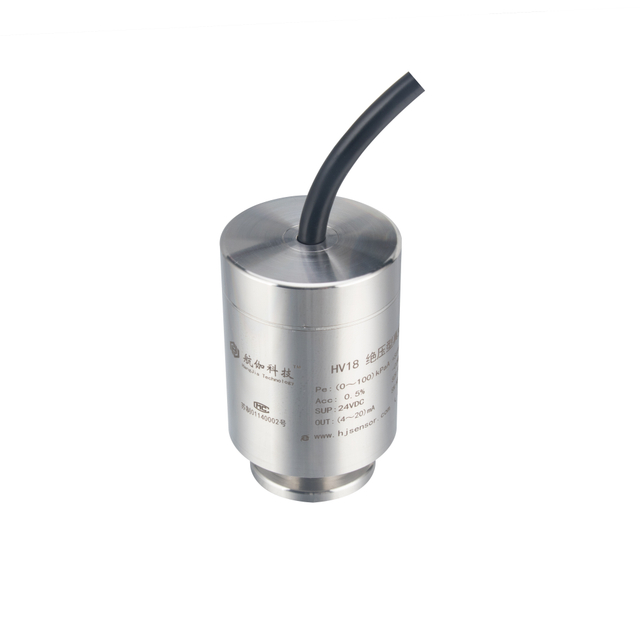
Capacitance Manometer Vacuum Gauge for Use in Vacuum Drying Process Monitoring
Views: 0 Author: Site Editor Publish Time: 2026-05-07 Origin: Site
Vacuum drying processes, including lyophilization, botanical extraction, and pharmaceutical drying, live or die by precise pressure control. Relying on the wrong vacuum measurement principle during active vapor off-gassing leads directly to degraded products and inefficient cycle times. Legacy thermal conductivity sensors often struggle in these critical stages. They measure heat loss, which fluctuates wildly when solvent or water vapor replaces dry atmospheric air, severely skewing the data. Conversely, absolute pressure measurement provides a steadfast reference point for operators.
Implementing a Capacitance Manometer Vacuum Gauge delivers gas-independent, absolute pressure truth. Throughout this guide, you will learn how this specific technology enables advanced process controls and protects high-value batches. We will explore how eliminating waste and shortening drying cycles brings immediate operational benefits without relying on outdated measurement methods.
Key Takeaways
Gas Independence: Capacitance manometers measure physical diaphragm deflection, making them immune to the false readings caused by water vapor, ethanol, or terpene off-gassing.
Strategic Pairing: Using a capacitance gauge alongside a Pirani gauge enables the "Convergence Test" to perfectly pinpoint the end of primary drying.
Evaluation Mandates: Heated models (45°C to 200°C) are critical in drying applications to prevent vapor condensation and sensor contamination.
Defending ROI: The upgrade cost of an absolute gauge is typically recouped within 12–24 months via protected yields and optimized operational SOPs.
The Cost of False Data: Why Legacy Gauges Fail in Vacuum Drying
Thermal conductivity gauges, such as Pirani or thermocouple gauges, operate by measuring heat loss from a heated wire. When dry atmospheric air surrounds the wire, heat dissipates at a highly predictable rate. However, vacuum drying introduces heavy solvent vapors or water vapor into the processing chamber. These complex molecules transfer heat entirely differently than standard nitrogen or oxygen. Consequently, the gauge outputs wildly inaccurate readings when exposed to these gases.
This vapor load problem creates a severe operational pain point. During active drying phases, Pirani gauges frequently experience measurement drift exceeding 20 percent. Such massive errors force facility operators into making bad decisions based on phantom data. We call this the pain of inaccuracy. If the system reads a falsely low pressure, you might terminate the cycle prematurely. This action leaves residual moisture inside the product, ruining its shelf stability. Conversely, if the gauge reads falsely high, you might prolong vacuum exposure unnecessarily. Over-drying physically degrades sensitive pharmaceutical compounds and strips away volatile botanical terpenes.
Compliance standards also demand reliable, unimpeachable data. Facilities operating under stringent GMP or ISO 17025 regulations require strict traceability for every batch. Relying on gas-dependent, fluctuating data causes frequent failures during standard system leak testing and quality assurance audits. You simply cannot guarantee batch repeatability if your baseline measurement shifts every time a different solvent off-gasses into the system. Quality auditors look for absolute consistency, which legacy gauges cannot provide under heavy vapor loads.
How the Capacitance Manometer Vacuum Gauge Secures Process Truth
Understanding absolute measurement starts with the core mechanics of the sensor. A capacitance manometer features two distinct chambers separated by an extremely thin, flexible diaphragm. One side houses a permanently sealed, ultra-high vacuum reference cavity. The other side exposes the diaphragm directly to your active process gas. As the chamber pressure changes, it physically deflects the Alumina (ceramic) or Inconel diaphragm. This microscopic deflection alters the electrostatic capacitance between the diaphragm and a fixed internal electrode. The sensor electronics then convert this capacitance change into a highly accurate, linear voltage signal.
Because it measures physical force rather than thermal properties, it achieves complete gas independence. You get strict accuracy, typically within 0.1% to 0.5% of the reading. It does not matter if your chamber is full of water vapor, ethanol, butane, or residual air. The physical pressure reading remains the absolute truth. This precise physical measurement protects your batches from the dangerous assumptions made by thermal gauges.
Many engineers confuse this technology with other industrial sensors. We must clarify the distinction between an absolute capacitance gauge and a Differential Pressure Transmiter. A standard differential transmitter measures the delta between two variable environments. Facilities often use them for cleanroom HVAC balancing, filter monitoring, or duct airflow measurement. In stark contrast, an absolute capacitance manometer references a sealed, unchanging high-vacuum cavity. This specific design provides the definitive, absolute pressure data required during highly sensitive drying phases.
Advanced Process Monitoring: The CDG and Pirani Convergence Test
Upgrading your measurement strategy does not mean throwing away older equipment. Leading facilities employ a high-level strategy that utilizes both technologies synergistically. Instead of discarding the Pirani gauge entirely, you can leverage its inherent weakness as a powerful diagnostic tool. Moving beyond zero-sum choices allows you to extract deeper process insights.
We call this approach the Convergence Test. It requires pairing an absolute capacitance gauge with a thermal conductivity gauge to track sublimation accurately. Here is the step-by-step methodology used in advanced drying facilities:
Baseline Setup: Start with a dry, cold, and empty system before loading the product. Both gauges should read identically, establishing a verified baseline.
Primary Drying Phase: As sublimation begins, the frozen product releases heavy water vapor. The Pirani gauge reads artificially high due to the vapor's unique thermal properties. Meanwhile, the capacitance manometer stays absolutely accurate. A significant data gap quickly appears between the two sensors.
End-Point Detection: Sublimation eventually finishes. The vapor clears from the chamber. The Pirani reading drops rapidly, converging back to match the absolute gauge reading.
This dual-gauge approach unlocks immense process value. It provides an automated, indisputable indicator that primary drying is completely finished. Operators no longer need to guess or run arbitrarily long cycles just to be safe. You can safely accelerate cycle times, increase daily throughput, and guarantee batch consistency.
Convergence Test Data Expected Behaviors
Process Phase | Pirani Gauge Reading (Thermal) | Capacitance Gauge Reading (Absolute) | System Status Indicator |
|---|---|---|---|
Baseline (Dry/Empty) | Matches Absolute Gauge | True Vacuum Baseline | System ready for batch loading. |
Active Sublimation | Artificially High (Due to vapor) | True Process Pressure | Primary drying is actively occurring. |
End of Primary Drying | Drops rapidly to match Absolute | Remains Stable | Convergence achieved. Safe to proceed. |
Evaluation Criteria: Selecting the Right Capacitance Gauge for Drying
Choosing the correct sensor requires careful evaluation of your specific drying environment. The first major decision involves the temperature configuration of the gauge. Selecting the wrong temperature profile will ruin your sensor rapidly.
Ambient models offer a cost-effective solution for highly benign, dry environments. However, they remain exceptionally vulnerable to vapor condensation. When hot solvent vapors hit a cold ambient sensor, they condense immediately on the internal diaphragm. This condensation causes instant zero-drift, measurement errors, and long-term chemical contamination.
Heated configurations solve this critical issue completely. Manufacturers offer gauges internally heated to 45°C, 80°C, 100°C, and even up to 200°C. Keeping the sensor safely above the dew point of process vapors prevents condensation entirely. For botanical extraction, solvent recovery, or pharmaceutical freeze-drying, a heated model is strictly essential.
Next, you must evaluate the internal sensor material. The two primary options dominate the market: Alumina (ceramic) and Inconel (metal). Alumina provides superior corrosion resistance and excellent long-term signal stability. It handles aggressive off-gassed solvents beautifully without degrading. Inconel offers rugged physical durability for standard industrial applications but may corrode faster under harsh, acidic chemical loads.
Finally, you must understand the physical limitations of measurement ranges. A single capacitance gauge typically covers only four decades of measurement accurately. For example, a 1000 Torr full-scale (F.S.) gauge accurately reads down to roughly 0.1 Torr. It cannot measure ultra-high vacuum levels. You must define your critical drying phase pressures and select a full-scale range tailored precisely to those specific bounds.
Sensor Selection Matrix
Phase 1 - General Evaporation: Select a 1000 Torr F.S. gauge. Ideal for monitoring initial pump-down and bulk solvent removal.
Phase 2 - Primary Sublimation: Select a 10 Torr F.S. gauge. Provides extreme precision for the most critical freeze-drying hours.
Phase 3 - Secondary Drying: Select a 0.1 Torr F.S. gauge. Captures the finest residual moisture measurements before cycle termination.
Implementation Risks, Calibration, and Best Practices
Even the finest sensors fail if installed incorrectly. You must manage specific implementation risks to secure reliable data over time. The most common mistakes occur during initial mechanical setup and routine maintenance.
Gravity significantly affects highly sensitive, low-range capacitance diaphragms. The internal measurement membrane is microscopic in thickness. If mounted improperly, gravity causes microscopic membrane sag. This physical sag permanently shifts the zero point of the gauge. You must install these low-range devices in the exact vertical or horizontal orientation specified by the manufacturer.
Contamination mitigation forms your next critical line of defense. Violent gas splashing or particulate generation often occurs during initial rapid pump-down phases. We highly recommend integrating protective baffles or pneumatic isolation valves. These physical barriers shield the delicate sensor from flying debris while allowing gas molecules to pass freely into the measurement cavity.
Modernizing your hardware requires updating your Standard Operating Procedures (SOPs). You must establish strict acceptance criteria for system leak testing. A standard industry best practice targets a leak rate of less than 1×10⁻⁶ mbar·L/s. Always perform these baseline leak tests using your absolute gauges before initiating a new batch. This rigorous approach ensures you can separate genuine atmospheric leaks from normal product off-gassing during the active run.
Common Calibration Mistakes to Avoid
Cross-Calibration Errors: Never calibrate a Pirani gauge to match a capacitance manometer while vapor is present. This defeats the entire purpose of the convergence test.
Improper Zeroing: Only perform zero-point adjustments when the system pressure is at least one decade below the gauge's minimum resolution. Zeroing under a poor vacuum ruins accuracy across the entire scale.
Ignoring Warm-up Times: Heated gauges require stabilization. Always allow the sensor to reach its target temperature (e.g., 45°C) for at least two hours before relying on its data.
Conclusion
Precise vacuum drying remains impossible without gas-independent measurement. Legacy thermal gauges simply cannot handle the dynamic vapor loads generated during active sublimation or solvent evaporation. They provide skewed data that ruins product quality. The capacitance manometer acts as the ultimate anchor for absolute process truth.
Upgrading your measurement infrastructure protects high-value products and drastically shortens cycle times. You eliminate the guesswork from end-point detection. We strongly advise engineering and lab managers to audit their current vacuum measurement strategies today. Assess your vulnerability to vapor condensation and false data drift. Transition your critical quality-control endpoints to heated absolute gauges. Doing so secures your yield, guarantees regulatory compliance, and optimizes your operational workflows for long-term success.
FAQ
Q: Why do Pirani gauges show a different pressure than my capacitance manometer during active drying?
A: Pirani gauges measure heat transfer, which fundamentally changes when water or solvent vapor is present in the chamber. Vapors cool the sensor wire differently than dry air, causing artificial readings. Capacitance gauges measure physical force against a diaphragm, remaining absolutely true regardless of the vapor composition.
Q: Do I need a heated or ambient capacitance manometer for freeze-drying?
A: A heated gauge, typically set to 45°C or higher, is highly recommended for freeze-drying and solvent extraction. Maintaining a high sensor temperature prevents process vapors from condensing on the delicate internal diaphragm, which would otherwise cause severe zero-drift and contamination.
Q: Can one capacitance gauge measure from atmosphere down to ultra-high vacuum?
A: No. A single unit is physically limited to roughly four decades of pressure measurement. Covering the entire spectrum from atmosphere to high vacuum requires either multiple discrete gauges tailored to different ranges or a modern combination gauge setup.