How Flow Meters Improve Efficiency in Steam Measurement Applications
Views: 128 Author: Site Editor Publish Time: 2025-08-07 Origin: Site
Steam is one of the most widely used energy carriers in industrial production. It plays a crucial role in heat transfer, power generation, and driving mechanical equipment across industries such as power plants, chemical manufacturing, pharmaceuticals, textiles, and food processing. Because steam is highly versatile and efficient for transferring energy, it is a fundamental utility in modern factories.
However, measuring steam flow accurately presents unique challenges. Steam exists at high temperatures and pressures, and its properties can fluctuate due to condensation, phase changes, and load variations in the distribution network. Inaccurate measurement can lead to energy waste, process inefficiencies, and higher operational costs.
This is where high-performance flow meters come into play. By providing accurate and reliable steam measurement, they help manufacturers optimize steam usage, reduce fuel consumption, lower costs, and enhance process control. Modern flow meters with advanced output options, such as 4-20mA or RS485 signals, also enable seamless integration into automated control systems for real-time monitoring and improved energy management.
1. Importance of Accurate Steam Measurement
Steam is a valuable and costly utility, and its inefficient use can significantly impact production costs. For example, overestimating steam flow can lead to excess fuel consumption in boilers, while underestimating flow can cause insufficient steam supply, leading to poor process performance or quality issues.
Accurate steam measurement offers several benefits:
Improved boiler efficiency: Real-time flow data helps operators fine-tune boiler performance, reducing excess fuel usage.
Better energy management: Accurate flow data enables detailed energy audits and cost allocation for different production units.
Enhanced process control: Stable steam supply improves product quality and consistency in processes like sterilization, heating, and drying.
Compliance and reporting: Many industries require precise energy consumption data to meet environmental regulations and sustainability goals.
Without reliable steam flow measurement, companies risk higher operational costs, inefficient energy use, and missed opportunities for process optimization.
2. Types of Flow Meters for Steam Measurement
2.1 Vortex Flow Meters
Vortex flow meters are among the most widely used technologies for steam measurement. They operate based on the Kármán vortex street effect, where vortices are generated as steam passes around a bluff body in the meter. The frequency of these vortices is proportional to the flow rate.
Advantages:
Ideal for both saturated and superheated steam.
Can handle high temperatures and pressures.
No moving parts, resulting in low maintenance and high durability.
Applications:
Boiler outlets to monitor steam production.
Steam distribution pipelines to track usage across different units.
Heat exchange systems where accurate steam control is essential.
2.2 Differential Pressure Flow Meters (Orifice Plate, Venturi)
Differential pressure (DP) flow meters work by measuring the pressure drop created by an obstruction, such as an orifice plate or venturi tube, placed in the steam flow.
Advantages:
Lower cost compared to some advanced technologies.
Suitable for large pipe diameters and high flow rates.
Limitations:
Creates a significant pressure loss in the system.
Requires regular maintenance and recalibration due to wear and deposits.
DP flow meters are still widely used in older installations but are increasingly being replaced by vortex flow meters for better accuracy and lower maintenance needs.
2.3 Other Advanced Flow Meters
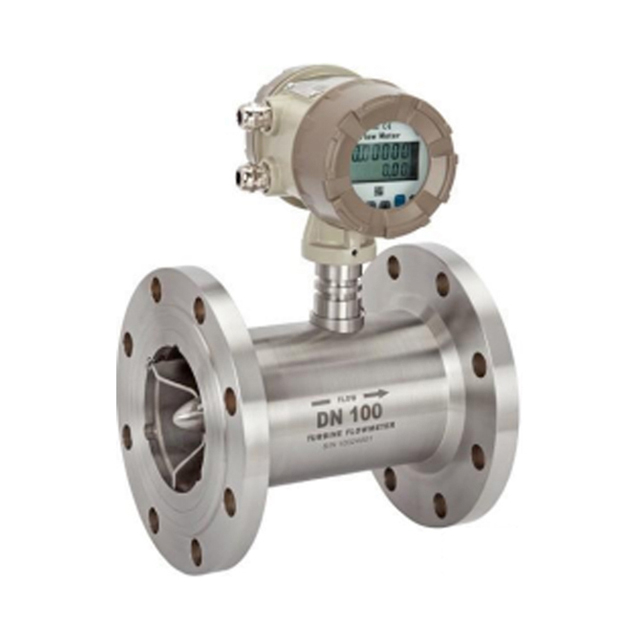
Turbine Flow Meters: Suitable for clean, dry steam applications. They provide good accuracy but contain moving parts that require maintenance.
Ultrasonic Flow Meters: Use transit-time or Doppler principles to measure flow without direct contact. While they are more commonly used for liquids, some models are designed for steam applications.
Although these alternatives have specific use cases, vortex flow meters remain the preferred choice for most industrial steam measurement applications due to their durability and versatility.
3. Benefits of Using Flow Meters in Steam Applications
Steam is one of the most important utilities in industrial production, but it is also one of the most expensive. Without accurate measurement, companies risk wasting energy, overloading boilers, and driving up operational costs. The use of high-precision flow meters allows businesses to gain full control over steam usage, helping them optimize energy consumption, reduce unnecessary losses, and achieve higher overall process efficiency.
3.1 Improved Energy Efficiency
Accurate steam flow measurement gives operators the ability to precisely match steam generation with actual demand, ensuring that boilers are not producing more steam than required. When boiler output exceeds demand, the excess steam often condenses in the pipes, leading to energy waste and reduced efficiency. Conversely, underproduction can disrupt processes and reduce product quality.
With real-time flow data, operators can continuously monitor steam usage, adjust boiler settings, and identify areas where energy is being lost—such as leaks, poor insulation, or inefficient heat transfer. Flow meters also provide valuable information for energy audits, enabling companies to track consumption trends, compare actual performance to targets, and make data-driven improvements.
By installing flow meters, companies can reduce fuel consumption, lower greenhouse gas emissions, and achieve sustainability goals while maintaining stable production. In industries where steam represents a major operational cost, these savings can have a significant impact on profitability.
3.2 Process Optimization and Cost Reduction
Flow meters make it possible to precisely allocate steam to each part of the production process, ensuring that every machine or system receives the right amount at the right time. This level of control prevents both over-supply, which leads to wasted energy and higher costs, and under-supply, which can slow down production or affect product quality.
Accurate measurement also improves the performance of heat exchangers and other steam-powered equipment. When steam flow is optimized, heat transfer becomes more efficient, reducing condensate buildup and minimizing the risk of water hammer or other operational issues.
These benefits translate into lower operational costs, improved productivity, and extended equipment life. By monitoring steam usage across different departments or production lines, companies can also allocate energy costs more accurately, improving cost transparency and supporting more effective budget management.
3.3 Integration with Automation Systems
Modern industrial facilities increasingly rely on automated control systems to optimize operations. Flow meters equipped with 4-20mA or RS485 outputs can be seamlessly integrated with PLCs (Programmable Logic Controllers) and SCADA (Supervisory Control and Data Acquisition) systems, creating a fully connected and intelligent steam management network.
This integration allows operators to:
Remotely monitor steam usage in real time across multiple areas of the facility.
Automatically adjust boiler settings, valves, and pumps to maintain optimal performance without manual intervention.
Generate detailed energy reports for compliance, audits, and performance tracking.
By enabling better connectivity and data sharing, flow meters support smart manufacturing and Industry 4.0 initiatives. They provide the foundation for predictive maintenance, continuous process optimization, and more sustainable resource management, ensuring that steam is used as efficiently as possible.
4. Key Application Scenarios
Steam is used in a wide variety of industrial applications, and flow meters provide significant value in every stage of its generation and use. Below are some of the most common areas where accurate steam measurement is essential.
4.1 Boilers and Steam Distribution Networks
Boilers are the heart of any steam system, and their efficiency has a direct impact on fuel costs and overall energy consumption. Flow meters installed at boiler outlets provide real-time data on steam production, enabling operators to monitor fuel-to-steam ratios and optimize boiler performance.
In steam distribution networks, flow meters help track how much steam is being used in different areas of the plant. This makes it easier to identify leaks, pressure drops, or areas of excessive consumption. By pinpointing inefficiencies, companies can take corrective actions quickly, improving energy efficiency and reducing operational costs.
4.2 Heat Exchangers and Process Heating
Heat exchangers are widely used in industrial processes such as sterilization, drying, cooking, and chemical reactions. Steam must be supplied at the correct flow rate and pressure to ensure stable temperature control and efficient heat transfer.
Flow meters help operators fine-tune steam delivery to heat exchangers, reducing energy waste and avoiding process instability. By maintaining consistent steam flow, companies can improve product quality, increase throughput, and reduce maintenance costs associated with inefficient heat exchanger operation.
4.3 Industrial Manufacturing Plants
Many industries—including food and beverage, pharmaceuticals, chemicals, textiles, and electronics—rely heavily on steam for their daily operations. For example:
Pharmaceutical plants use steam for sterilizing equipment and maintaining strict hygiene standards.
Food processing facilities depend on steam for cooking, pasteurization, and cleaning.
Chemical and textile factories require steam for heating reactors, dyeing fabrics, and drying products.
In all these industries, flow meters play a critical role in ensuring consistent product quality, optimized steam usage, and lower operational costs. By providing accurate, real-time measurement data, they allow companies to manage steam as efficiently as possible, helping them stay competitive in demanding global markets.
Conclusion
Accurate steam flow measurement is essential for improving energy efficiency, process reliability, and cost control in industrial applications. Vortex flow meters, in particular, provide a reliable and low-maintenance solution for saturated and superheated steam, while differential pressure and other advanced flow meters serve specific niche applications.
By integrating flow meters with 4-20mA or RS485 outputs into automated systems, facilities can achieve real-time monitoring, improved process control, and detailed energy reporting. This capability helps companies reduce operational costs, enhance sustainability, and ensure consistent production quality.
Nanjing Hangjia Electronic Technology Co., Ltd. offers a wide range of high-performance flow meters designed for steam measurement applications. With durable SS316 construction, advanced communication options, and proven measurement accuracy, these flow meters are ideal for industrial environments that demand precision and reliability.