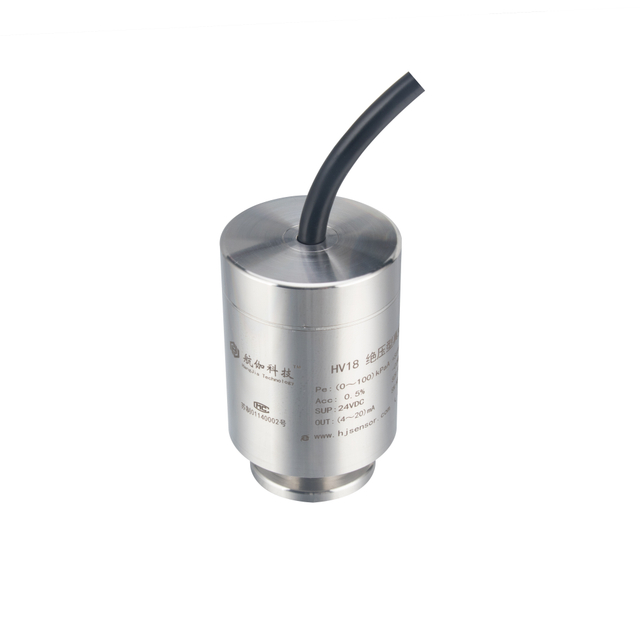
How to Choose a Capacitance Manometer Vacuum Gauge?
Views: 0 Author: Site Editor Publish Time: 2026-05-04 Origin: Site
In high-precision manufacturing environments like semiconductor fabrication, physical vapor deposition, and metrology, yield rates rely heavily on accurate pressure measurements. Process stability demands repeatable data. Standard indirect vacuum gauges often introduce unacceptable variables whenever process gas compositions change. A Capacitance Manometer Vacuum Gauge solves this core issue through direct mechanical measurement. However, selecting the wrong configuration presents substantial engineering risks. Over-specifying leads to unnecessary system complexity. Under-specifying invites premature sensor failure or severe zero-drift. We designed this evidence-backed, step-by-step engineering framework to help you navigate these complex choices. You will learn how to evaluate thermal management needs, select the correct diaphragm materials, and configure the ideal communication interfaces. Ultimately, this guide will empower you to specify the exact gauge configuration your specific vacuum system demands.
Key Takeaways
Gas Independence is Key: CDGs measure direct physical force, ensuring accurate readings (typically 0.1% to 0.5% of reading) regardless of the gas mixture.
Match Heating to Process Risk: Selecting between ambient and heated models (45°C to 200°C) is critical to preventing condensation and particulate deposition in chemical processes.
Material Dictates Lifespan: Choosing between Alumina Ceramic and Inconel diaphragms determines corrosion resistance and long-term zero stability.
Plan for Limited Dynamic Range: Because a single CDG typically covers only 3 to 4 decades of pressure, full-scale vacuum coverage requires either multi-gauge arrays or modern combination transducers.
Establish the Baseline: When to Specify a Capacitance Manometer Vacuum Gauge
You must first understand the fundamental differences between direct and indirect pressure measurement. Indirect vacuum gauges evaluate pressure through proxy variables. Pirani gauges measure thermal transfer. Ionization gauges measure electrical conductivity. Both methods rely heavily on the specific gas type inside your chamber. If your gas mixture changes, indirect gauges require complex conversion factors to remain accurate.
A direct gauge operates differently. It measures physical mechanical deflection. Inside the sensor, an elastic diaphragm bends under the exact physical force exerted by the vacuum. This deflection alters the capacitance between the diaphragm and a fixed electrode. The gauge converts this changing capacitance into a highly precise electrical signal. Because it relies entirely on physical force, the measurement remains completely independent of your gas composition.
This structural difference gives direct gauges a massive accuracy advantage. Indirect gauges often state their accuracy as a percentage of the full scale. Direct gauges state accuracy as a percentage of the actual reading. A high-quality unit often achieves a 0.25% reading accuracy. This precision makes the Capacitance Manometer Vacuum Gauge up to one hundred times more accurate than equivalent Pirani gauges operating in the same vacuum tier.
Engineers specify these precise instruments for highly demanding primary use cases. Processes like Atomic Layer Deposition (ALD), plasma etching, and commercial freeze-drying require absolute pressure stability. You should also specify direct measurement when establishing baseline calibration reference standards for other secondary gauges in your facility.
Feature | Direct Gauge (Capacitance Manometer) | Indirect Gauge (Pirani / Ionization) |
|---|---|---|
Measurement Principle | Mechanical diaphragm deflection | Thermal transfer / Gas ionization |
Gas Dependency | None (Gas-independent) | High (Requires correction factors) |
Accuracy Standard | % of Reading (Highly precise across range) | % of Full Scale (Less precise at lower ends) |
Ideal Applications | ALD, Etch, CVD, Calibration Standards | Load locks, general roughing lines, UHV |
Step 1: Define the Pressure Range and Target Accuracy
Selecting the optimal Full-Scale (F.S.) range is your most critical early decision. You must identify the maximum absolute pressure your process realistically requires. Gauges typically utilize measurements in Torr, mbar, or Pascal.
The physical thickness of the internal diaphragm restricts every sensor. A thicker diaphragm withstands higher pressures but loses sensitivity at low vacuums. A thinner diaphragm detects minute vacuum changes but saturates quickly as pressure rises. This physical reality limits any single sensor's dynamic range to roughly four decades of pressure. For example, a gauge with a 0.1 Torr Full-Scale rating effectively bottoms out around 10⁻⁴ Torr.
Addressing Range Gaps
Modern vacuum systems often stretch from atmospheric pressure down to ultra-high vacuum (UHV). Because one sensor cannot cover this massive span, you must select an architectural strategy to bridge the range gaps.
The Traditional Approach: Engineers stack two or three individual gauges of varying full scales on the same chamber. A controller seamlessly switches active readings between a 1000 Torr gauge, a 10 Torr gauge, and a 0.1 Torr gauge as the pump-down progresses.
The Modern Paradigm: Facilities increasingly utilize hybrid combination transducers. These advanced units integrate a direct capacitance sensor alongside a MEMS Pirani and a Piezo sensor within a single compact housing. The internal electronics automatically hand off the measurement between sensors.
Impact of Gravity on Low Ranges
You must account for the effects of gravity when specifying highly sensitive, low-range units. Gauges rated for less than 1 Torr Full-Scale utilize exceptionally thin, delicate diaphragms. The sheer mass of the diaphragm itself reacts to gravitational pull. You must always calibrate and zero these highly sensitive instruments in their final, permanent mounting orientation.
Step 2: Mitigate Contamination with Thermal Management
Chemical processes present a severe threat to internal sensor components. In semiconductor manufacturing applications like Chemical Vapor Deposition (CVD), process byproducts frequently condense upon contact with cold surfaces. If these byproducts deposit onto the gauge diaphragm, they permanently alter its elasticity. This deposition causes severe zero-drift and degrades measurement linearity.
You mitigate this deposition threat by properly selecting between ambient and heated sensor models.
Ambient (Unheated) Models: These sensors operate at room temperature. You should specify ambient models only for highly clean environments. They work perfectly for load locks, metrology chambers, and inert gas backfilling operations.
Heated Models: These sensors feature internal heating jackets. Manufacturers typically offer standard temperature configurations at 45°C, 80°C, 100°C, and occasionally up to 200°C. You must require heated models for aggressive chemical processes.
The core engineering rule is simple. Your gauge temperature must consistently exceed the condensation point of the specific process gases inside your chamber. When you install a heated Capacitance Manometer Vacuum Gauge, you prevent particulate buildup completely.
However, thermal management introduces operational trade-offs. Heated instruments require significantly longer warm-up times. A 100°C model might require up to four hours to reach complete thermal equilibrium before you can execute a reliable zeroing procedure. They also draw more electrical power from your facility infrastructure.
Step 3: Evaluate Sensor Material for Corrosion and Safety
The material composition of your sensor diaphragm dictates both operational lifespan and facility safety. Industry standards currently rely on two primary material categories: Inconel and Alumina Ceramic.
Inconel (Nickel-Based Alloys)
Inconel provides exceptional structural resilience. Manufacturers utilize an all-welded construction technique when building Inconel sensors. This welding creates an impenetrable boundary. Engineers specify Inconel primarily for extreme safety requirements. Even in the highly rare event of a sudden diaphragm rupture, the all-welded housing ensures toxic process gases cannot leak into the surrounding cleanroom environment.
Alumina Ceramic (Al₂O₃)
Ceramic diaphragms deliver superior chemical resistance. They easily withstand harsh halogens and highly corrosive gases that would quickly degrade lesser metals. Ceramic also offers outstanding physical rigidity. This rigid nature yields an exceptionally fast recovery time following sudden atmospheric pressure spikes. The ceramic material snaps back into its original shape instantly without suffering permanent deformation.
Material Comparison Chart | ||||
Material Type | Primary Advantage | Corrosion Resistance | Atmospheric Recovery | Best For |
|---|---|---|---|---|
Inconel (Nickel Alloy) | All-welded safety boundary | Good | Moderate | Toxic gas environments, general vacuum |
Alumina Ceramic | Extreme rigidity and stability | Excellent (Halogen-resistant) | Exceptionally Fast | Aggressive Etch/CVD, frequent venting |
Step 4: System Integration, Interface, and Footprint
Integrating the sensor into your control architecture requires selecting the right form factor, communication protocol, and physical hardware fittings.
Form Factor Evolution
You must decide between a traditional split setup or a modern integrated transducer. A traditional split setup separates the passive gauge head from the remote controller unit. You must specify a split setup for high-radiation environments, as radiation destroys active electronics. Conversely, modern integrated transducers combine the active gauge and the processing electronics into a single footprint. This integration saves valuable tool space and drastically reduces wiring complexity.
Communication Protocols
Your facility's data acquisition system dictates your protocol choice.
Legacy/Analog: These output simple 0-10V DC or 4-20mA signals. They remain easy to troubleshoot. Unfortunately, analog signals are highly susceptible to voltage drops and electromagnetic interference over long cable runs.
Digital/Fieldbus: Modern facilities rely on digital protocols like RS232, RS485, EtherCAT, Profibus, or DeviceNet. Digital interfaces allow direct PLC integration. They also provide advanced onboard diagnostics, letting you monitor internal sensor temperatures and health status remotely.
Flange and Fittings
Always verify physical compatibility before ordering. Common low-vacuum lines use standard KF16 or KF25 elastomer seal flanges. High-vacuum applications might require copper-sealed DN16CF flanges. If you operate ultra-clean semiconductor gas delivery lines, you will almost certainly require VCR Female fittings to maintain extreme leak-tight integrity.
Step 5: Maintenance Realities and Operational Longevity
You must understand standard maintenance realities to prevent unnecessary operational downtime. Operational longevity depends heavily on correct zeroing procedures and proper installation habits.
Zero-Drift vs. Calibration Failure
Operators frequently misunderstand zero-drift. A routine zero-offset is an expected behavioral trait of precise instrumentation. Temperature fluctuations and minor physical settling cause the baseline reading to wander slightly over time. You can easily correct this zero-offset electronically. You simply pump the vacuum system down at least one full decade below the gauge's minimum resolution. Once the pressure stabilizes, you execute a one-button electronic zero push.
Do not confuse a simple zero-offset with structural linearity failure. If the instrument fails to measure accurately across its entire middle range after a proper zeroing procedure, it has suffered a structural linearity failure. This rare scenario requires physical factory recalibration or complete replacement.
Atmospheric Shock Resistance
Evaluate a sensor's rated ability to withstand millions of pressure cycles. Rapid venting to the atmosphere puts immense mechanical stress on thin diaphragms. Choosing a rigid ceramic sensor greatly improves resilience against sudden atmospheric shocks, preventing permanent sensor damage.
Physical Installation Best Practices
How you mount the instrument directly impacts its survival. You should ideally mount the unit vertically. We highly recommend installing a 90-degree elbow between the chamber and the sensor. This elbow prevents falling particulates from landing directly onto the delicate diaphragm surface. Furthermore, you must position the instrument perpendicular to any inlet purge flow. Direct gas flows can induce false pressure readings and push debris into the sensor cavity.
Conclusion
Selecting the ideal Capacitance Manometer Vacuum Gauge requires balancing your extreme precision needs against active environmental threats like corrosion and chemical condensation. By following a structured evaluation process, you eliminate guesswork and ensure reliable process yields.
Start with the range: Identify the exact process pressure span to determine your required Full-Scale rating and dynamic limits.
Evaluate the chemistry: Determine the necessity of thermal heating based purely on the condensation temperatures of your process gases.
Select the material: Choose Alumina Ceramic for extreme corrosion resistance and fast recovery, or choose Inconel for all-welded safety boundaries.
Finalize the interface: Match your communication protocol (Analog vs Digital Fieldbus) to your facility's PLC architecture.
Take action: Consult with an application engineer to review your specific process gas sheets. They will verify your optimal full-scale range and thermal configuration before procurement.
FAQ
Q: Why is a Capacitance Manometer better than a Pirani gauge?
A: CDGs are direct mechanical gauges, meaning their readings are completely gas-independent. They measure physical force directly. Pirani gauges rely on thermal conductivity, requiring complex conversion factors if the gas composition changes. This makes the CDG vastly more accurate for variable gas processes.
Q: How often does a Capacitance Manometer need to be zeroed?
A: It varies by process, but zeroing is routinely required to maintain peak accuracy. It must be done only when the system base pressure is pumped down at least one decade below the gauge's minimum resolution limit. Never attempt to zero a gauge at atmospheric pressure.
Q: Can a Capacitance Manometer measure ultra-high vacuum (UHV)?
A: No. While highly accurate, CDGs typically bottom out around 10⁻⁴ to 10⁻⁵ Torr due to the physical limitations of the diaphragm thickness. For UHV environments (10⁻⁹ Torr and below), you must utilize indirect ionization gauges like Cold or Hot Cathode sensors.
Q: Does mounting orientation affect my vacuum gauge?
A: Yes, particularly for low-range CDGs (e.g., 0.1 Torr or below). The physical mass of the exceptionally thin diaphragm is sensitive to gravity. Therefore, the gauge must always be zeroed and calibrated in the exact physical orientation it will be operated in.