Views: 196 Author: Site Editor Publish Time: 2025-08-26 Origin: Site
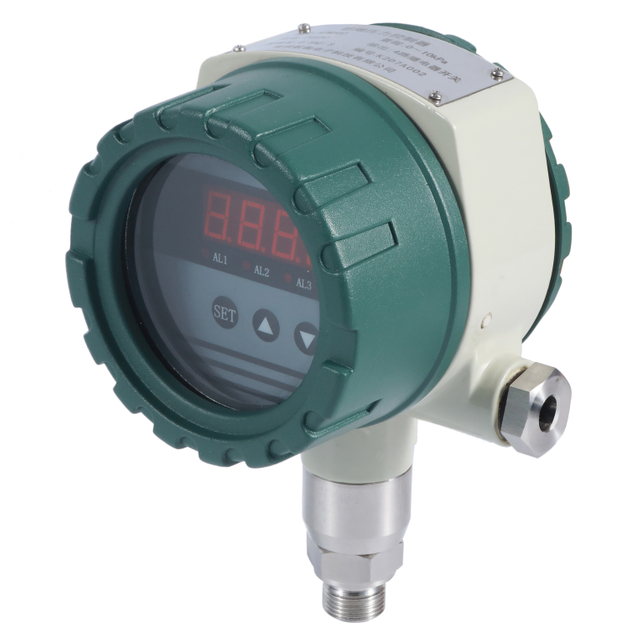
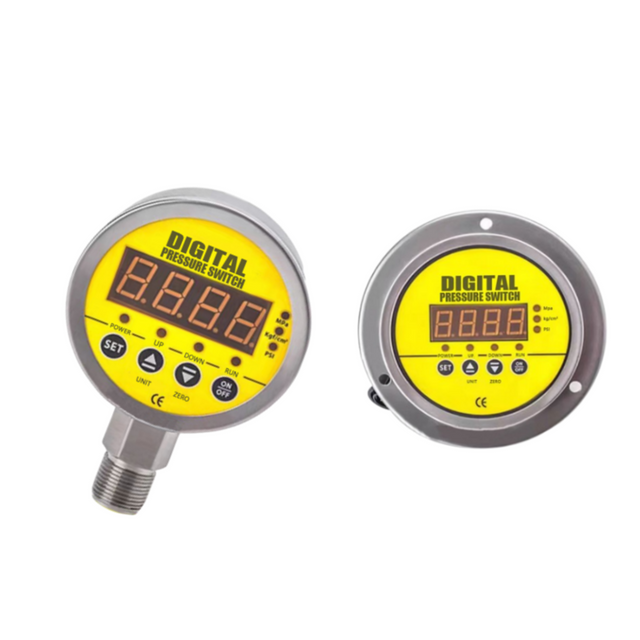
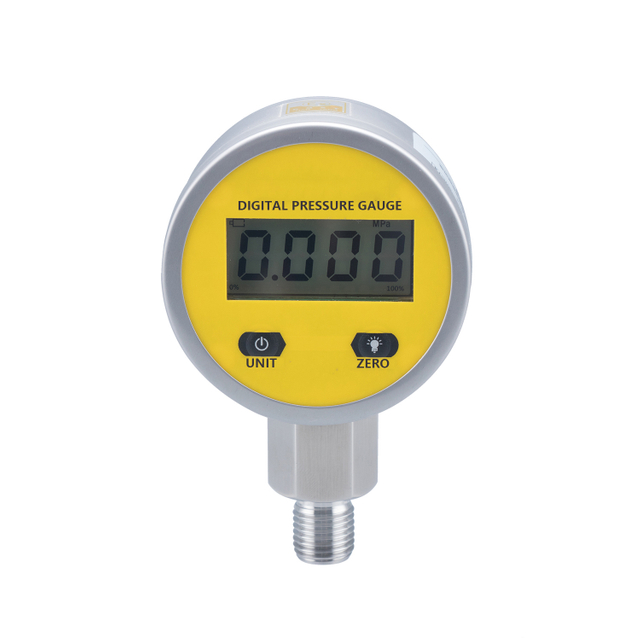
Pressure sensors play a critical role in modern industries, providing precise data on pressure variations in gases, liquids, and steam. Whether in food processing, chemical engineering, pharmaceuticals, or HVAC systems, these devices enable accurate monitoring and control, ensuring efficiency and safety. At their core, pressure sensors are designed to measure the force exerted by a fluid (liquid or gas) against a surface, then convert that physical measurement into an electrical signal that can be easily monitored, transmitted, or analyzed. This fundamental principle underpins countless applications, from maintaining stable processes in industrial automation to safeguarding delicate medical equipment.
Understanding how a pressure sensor works involves delving into its physical structure, working principles, and the electronics behind signal processing. It is not just about the basic conversion of mechanical energy to electrical energy, but also about how sensors achieve long-term stability, high accuracy, and resistance to environmental challenges such as high temperature, vibration, and contamination. With the rapid advancement of sensor technology, devices now integrate flush-mount diaphragms and advanced transmitters that allow seamless operation even in demanding hygienic environments, ensuring cleanliness and accuracy without compromising durability.
By exploring the mechanics, applications, and advantages of pressure sensors, readers can better appreciate how these indispensable tools power modern automation and industrial monitoring. The following sections will provide a detailed look into how pressure sensors operate, their types, signal conversion, applications, and common questions.
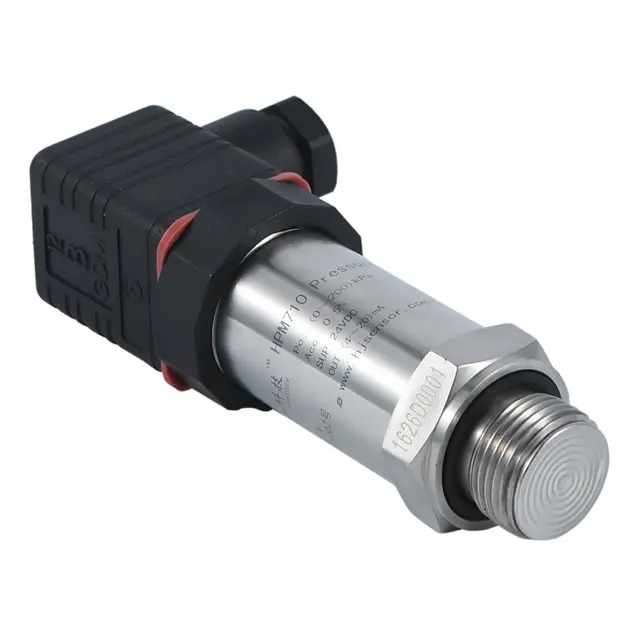
The central question—how does a pressure sensor work?—is answered by examining the transformation of physical pressure into an interpretable output. At its most fundamental level, a pressure sensor consists of a diaphragm that deflects when subjected to pressure from a fluid medium. This diaphragm is usually constructed from stainless steel or other durable alloys, designed to withstand both static and dynamic pressures. As the diaphragm deflects, it alters the physical property of an embedded sensing element such as a strain gauge, piezoelectric crystal, or capacitive plate.
Strain Gauge Principle: One of the most common methods involves strain gauges attached to the diaphragm. When the diaphragm bends due to pressure, the strain gauges stretch or compress, changing their electrical resistance. This resistance change is then measured and converted into an output signal proportional to the applied pressure.
Capacitive Principle: Another widely used method relies on capacitors. The diaphragm forms one plate of a capacitor, and when pressure changes the distance between plates, the capacitance shifts. This variation is processed into a measurable signal.
Piezoelectric Principle: In some sensors, piezoelectric crystals generate an electrical charge in response to mechanical stress. This charge is directly proportional to the pressure exerted, offering high sensitivity.
These signals, often in the millivolt range, are too weak for direct use. Therefore, pressure sensors incorporate electronic circuits such as amplifiers and signal conditioners to enhance and stabilize the data. The result is a standardized output (commonly 4–20 mA or 0–10 V) that can be interpreted by controllers, displays, or monitoring systems.
Ultimately, the precise function of a pressure sensor depends on both its mechanical design and the choice of sensing principle. Modern flush-mounted designs eliminate cavities where media could accumulate, making them especially valuable in hygienic applications such as food, beverage, or pharmaceutical industries.
Pressure sensors are not one-size-fits-all; they are engineered to meet the requirements of specific applications. Below is an overview of common sensor types:
| Type of Pressure Sensor | Measurement Focus | Typical Applications |
|---|---|---|
| Absolute Pressure Sensor | Measures pressure relative to a perfect vacuum | Meteorology, aerospace testing |
| Gauge Pressure Sensor | Measures pressure relative to atmospheric pressure | Tire monitoring, hydraulic systems |
| Differential Pressure Sensor | Measures the difference between two points | Filtration monitoring, flow measurement |
| Sealed Pressure Sensor | Measures relative to a fixed sealed reference | Harsh environments, refrigeration |
Each type has its unique operating environment. For instance, absolute sensors are essential in weather forecasting, while gauge sensors dominate automotive and industrial uses. Differential sensors are vital for ensuring filters and pumps are operating efficiently by comparing inlet and outlet pressures.
Flush-mounted hygienic pressure transmitters take these designs a step further by providing contamination-free measurement. Their smooth surfaces prevent residue buildup, ensuring sterility and ease of cleaning in food and pharmaceutical processes. High-temperature resistance also expands their usability in demanding conditions such as steam sterilization or chemical processing.
In summary, the variety of sensor types ensures that every industrial sector can rely on accurate pressure data tailored to its needs.
While the diaphragm and sensing elements provide raw data, the real magic of a pressure sensor lies in its ability to convert these signals into standardized, reliable outputs. The weak analog signals generated by strain gauges or capacitive plates cannot be used directly. Instead, the internal electronics amplify, filter, and condition them to remove noise and improve stability.
Once processed, the signals are transformed into universally accepted formats. Two of the most common are:
4–20 mA Current Loop: A highly robust method resistant to electrical interference, ideal for long-distance transmission in industrial environments.
0–10 V Voltage Signal: More common in shorter-range applications where ease of integration is important.
Some advanced sensors also offer digital outputs, such as RS485 or Modbus, enabling integration with smart monitoring systems and Industry 4.0 platforms. By delivering precise and stable data, pressure sensors allow operators to maintain tight control over industrial processes, ensuring both quality and safety.
It is also important to note that modern devices incorporate temperature compensation. Since diaphragm deflection and material properties can change under temperature fluctuations, built-in compensation ensures accurate results even in high-temperature environments. This capability is essential for applications where steam sterilization or heating is part of the process.
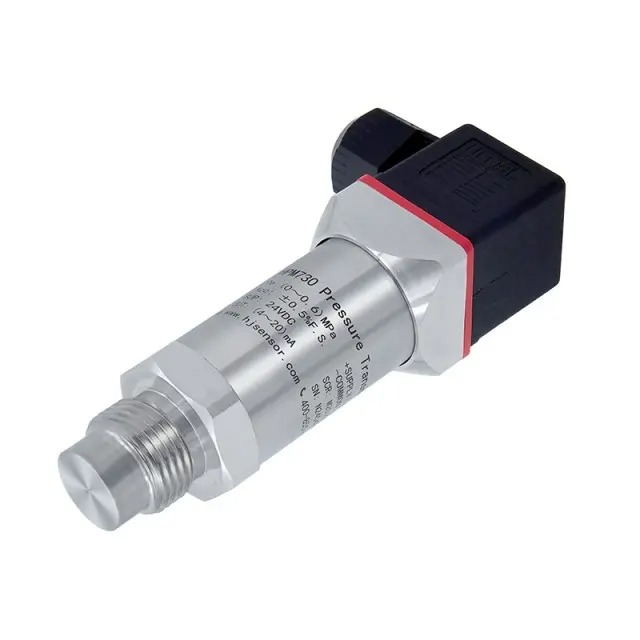
Pressure sensors provide numerous advantages that go beyond simple measurement. Some of the most significant benefits include:
High Accuracy and Reliability – Advanced designs can measure even the slightest changes in pressure, ensuring process control with minimal deviation.
Durability in Harsh Environments – With stainless steel diaphragms and sealed electronics, sensors withstand vibration, corrosion, and extreme temperatures.
Hygienic Operation – Flush-mounted designs ensure no dead space for material buildup, meeting strict hygiene standards in food and pharmaceutical industries.
Ease of Integration – Standardized output signals make them compatible with a wide range of monitoring and control systems.
Process Optimization – By providing real-time, accurate data, sensors help reduce waste, improve efficiency, and ensure consistent quality in production lines.
In industries where downtime or contamination can lead to costly setbacks, the use of advanced pressure sensors is not just a technological advantage but a necessity.
Q1: What is the difference between a pressure sensor and a pressure transmitter?
A pressure sensor detects and converts pressure into an electrical signal, while a pressure transmitter amplifies and conditions that signal for easy transmission and integration with control systems.
Q2: Can pressure sensors withstand high temperatures?
Yes, certain pressure sensors are designed specifically for high-temperature environments. They use robust diaphragms and advanced temperature compensation techniques to maintain accuracy under challenging conditions.
Q3: Why is flush-mounting important in hygienic industries?
Flush-mounting eliminates cavities where bacteria, food particles, or residues could accumulate, ensuring that cleaning and sterilization are effective. This design is essential for maintaining hygiene compliance.
Q4: How often do pressure sensors need calibration?
The frequency of calibration depends on the application, but typically, sensors should be calibrated annually or as recommended by the manufacturer to ensure accuracy.
Q5: Can one pressure sensor be used for multiple types of media?
Yes, as long as the diaphragm material is compatible with the medium (e.g., liquid, gas, or steam). For highly corrosive or specialized environments, specific sensor materials may be required.
Understanding how pressure sensors work reveals their significance in ensuring precision, safety, and efficiency across industries. By converting the physical force of fluids into measurable and standardized outputs, these devices enable operators to make informed decisions, prevent accidents, and optimize processes. Modern designs, particularly hygienic and high-temperature resistant models, highlight the ongoing evolution of sensor technology, ensuring compatibility with the strictest industrial requirements.
From absolute and differential pressure sensors to advanced flush-mount transmitters, these devices have become indispensable tools in modern industrial operations. Their ability to provide accurate, reliable, and hygienic measurement makes them essential for industries striving for both productivity and compliance. As technology continues to advance, pressure sensors will remain at the heart of automation and monitoring, quietly powering the systems that keep industries running smoothly.