Submersible Level Transmitter – The Ultimate Guide to Reliable Liquid Level Measurement
Views: 286 Author: Site Editor Publish Time: 2026-04-17 Origin: Site
Submersible Level Transmitter – The Ultimate Guide to Reliable Liquid Level Measurement
Introduction
Accurate liquid level measurement is critical in countless industrial applications – from monitoring groundwater levels and wastewater treatment plants to measuring fuel in storage tanks and controlling chemical dosing systems. Among the various technologies available, the submersible level transmitter (also known as a hydrostatic level sensor or dip-level probe) stands out for its simplicity, reliability, and direct measurement principle.
In this blog, we’ll cover:
How a submersible level transmitter works
Typical applications
Key selection criteria (materials, output, range, etc.)
Installation best practices
Maintenance tips
By the end, you’ll know exactly what to look for when choosing the right submersible level sensor for your project.

1. How Does a Submersible Level Transmitter Work?
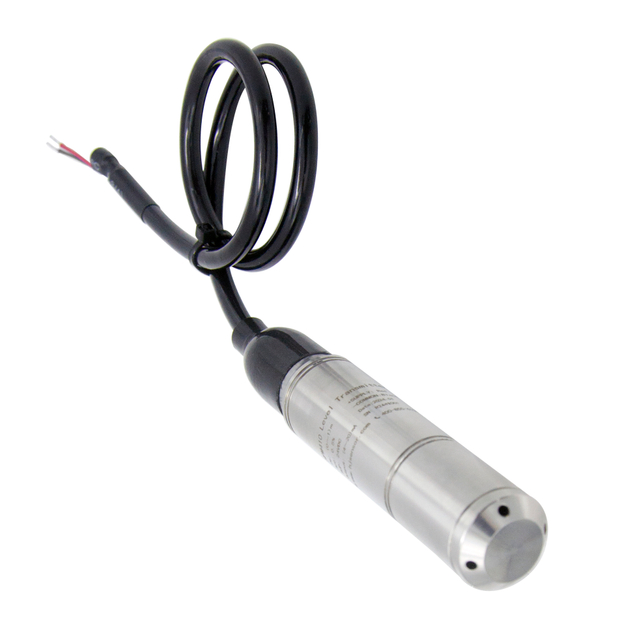
A submersible level transmitter measures the hydrostatic pressure exerted by a column of liquid above it. The sensor is lowered into the tank, well, or open channel, and the pressure at the probe’s diaphragm is proportional to the liquid height (level).
Basic working principle:
Pressure (P) = Density (ρ) × Gravity (g) × Height (h)
The sensor converts the measured pressure into a standard analog or digital signal – typically 4‑20 mA, 0‑10 V, Modbus RS485, or HART – which is sent to a PLC, display, or SCADA system.
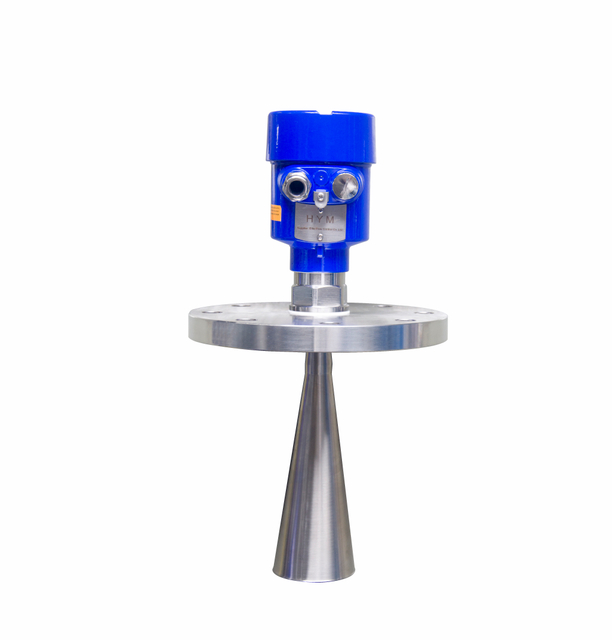
Because the probe is installed at the bottom of the liquid, the reading is not affected by vapor, foam, dust, or surface turbulence, making it far more reliable than ultrasonic or radar sensors in many challenging environments.
2. Key Applications
Submersible level transmitters are used across a wide range of industries:
Industry | Typical Use |
|---|---|
Water & Wastewater | Pump station level control, river/lake monitoring, lift stations |
Oil & Fuel | Tank farm inventory, diesel storage, hydraulic oil monitoring |
Chemical | Acid/alkali tanks, solvent level control (with corrosion‑resistant materials) |
Food & Beverage | Syrup tanks, CIP solution vessels, juice storage (sanitary versions) |
Environmental | Groundwater monitoring, borehole level measurement |
Marine & Shipbuilding | Ballast tanks, bilge water monitoring |
Any application that requires continuous, submersible level measurement in a liquid can benefit from this technology.
3. How to Choose the Right Submersible Level Transmitter
Selecting the correct sensor for your application ensures long‑term stability and accuracy. Consider the following factors:
3.1 Measuring Range (Full Scale)
Choose a range slightly higher than your maximum expected level. Standard ranges: 0‑1 mH₂O up to 0‑200 mH₂O (0‑0.1 bar to 0‑20 bar). Never exceed the sensor’s overload limit.
3.2 Output Signal
4‑20 mA (2‑wire) – Most common, works over long distances, loop‑powered.
0‑10 V / 0‑5 V – For local controllers with voltage inputs.
Modbus RS485 – For digital communication and multi‑drop networks.
HART – For smart configuration and diagnostics.
3.3 Wetted Materials
The parts that contact the liquid (housing, diaphragm, cable jacket) must be compatible:
Liquid | Recommended Material |
|---|---|
Fresh water, wastewater | SS304 / SS316L |
Seawater, mild chemicals | SS316L + PVDF or PTFE cable |
Strong acids/alkalis | PTFE / ceramic diaphragm + FEP cable |
Food / drinking water | SS316L + FDA‑approved elastomers |
3.4 Accuracy
General industrial applications: ±0.5% FS is sufficient.
High‑precision monitoring (e.g., reservoir management): ±0.25% FS or better.
3.5 Protection & Cable
Ingress Protection (IP) – Must be at least IP68 (continuous immersion).
Cable – Polyurethane (PUR) for abrasion resistance, PE for water, FEP/PTFE for chemicals.
Vent tube – For vented gauge sensors (to compensate for atmospheric pressure changes). A vented cable with desiccant is essential for most outdoor or tank applications.
3.6 Additional Features
Lightning protection – For outdoor installations in thunderstorm‑prone areas.
Temperature compensation – Built‑in sensor for accurate readings across varying liquid temperatures.

4. Installation Best Practices
Proper installation dramatically affects performance and lifespan.
DO:
Install the probe vertically at the lowest point of the tank or well.
Use a sink weight (if not integrated) to keep the probe submerged and stable.
Protect the cable from sharp edges using a cable clamp or conduit.
Place a desiccant filter on the vent tube if the sensor is vented gauge type.
Keep the transmitter housing (electronics) above the maximum liquid level – only the probe and cable are submersible.
DON’T:
Do not hang the probe by the cable alone – use a dedicated support cable.
Do not bend the cable sharply near the probe head.
Do not install near pump inlets or agitators that cause excessive turbulence (may cause signal noise).
Do not exceed the maximum submergence depth or temperature rating.
5. Maintenance & Troubleshooting
Submersible level transmitters are generally maintenance‑free, but periodic checks are recommended:
Issue | Possible Cause | Solution |
|---|---|---|
Drifting or unstable reading | Clogged diaphragm or moisture in vent tube | Clean gently; replace desiccant |
No output | Power supply failure or cable damage | Check wiring; perform continuity test |
Inaccurate level | Wrong density setting (if using mA scaling) | Re‑calibrate or adjust scaling factor |
Slow response | Blocked pressure port | Remove and clean with soft brush |
Calibration check: Once a year, compare the sensor reading against a known reference level or use a dead‑weight tester.
6. Why Choose Our Submersible Level Transmitters?
As a dedicated manufacturer of sensors and transmitters, we offer:
316L stainless steel construction for superior corrosion resistance.
IP68 protection – rated for continuous immersion up to 200 meters.
Multiple output options – 4‑20 mA, 0‑10 V, RS485 Modbus, HART.
Customizable – cable length, measuring range, process connection, and even special diaphragm materials (Hastelloy, Tantalum).
CE, RoHS, ISO9001 certified – quality you can trust.
Fast delivery – stock models ready to ship within 7 days.
Whether you need a standard water level sensor for a lift station or a chemically resistant probe for an aggressive acid tank, we have a solution for you.
Final Thoughts
A submersible level transmitter is often the most cost‑effective and reliable choice for continuous liquid level monitoring, especially in demanding environments where other technologies fail. By understanding the key selection criteria and following proper installation practices, you can ensure accurate readings and long service life.
Need help selecting the right model for your application? Contact our engineering team – we’ll help you choose the perfect sensor based on your liquid, tank depth, and output requirements.