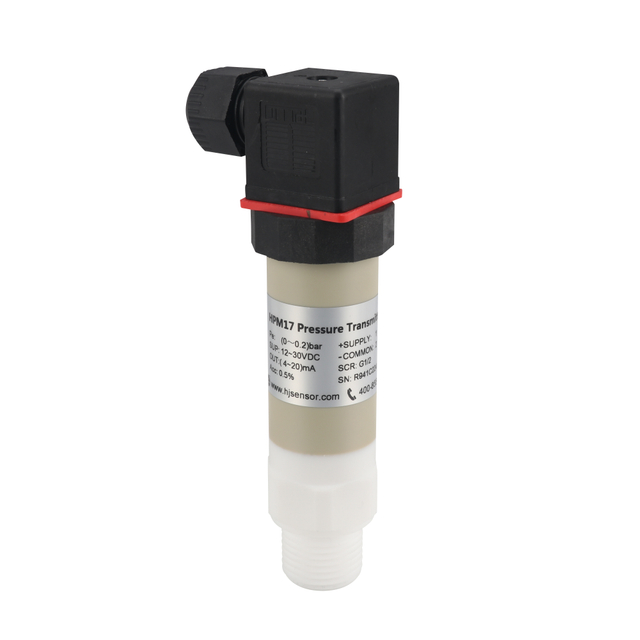
What Is A Submersible Level Transmitter?
Views: 199 Author: Site Editor Publish Time: 2025-10-07 Origin: Site
Introduction
Ever wondered how we measure liquid levels beneath the surface? Submersible level transmitters are the answer. These devices are crucial for accurate water management, ensuring precise monitoring even in challenging environments. In this post, you'll learn about their functionality, importance, and applications in various industries.
Understanding Submersible Level Transmitters
Definition and Functionality
A submersible level transmitter is a specialized pressure sensor designed to measure liquid levels by being submerged directly in the fluid. It works by detecting hydrostatic pressure—the pressure exerted by the liquid column above the sensor. This pressure increases as the liquid level rises and decreases as it falls.
The transmitter converts this pressure into an electrical signal, usually a 4-20mA output, which can be sent to monitoring or control systems. This continuous signal allows operators to track liquid levels in real time, ensuring precise management in various applications such as wells, tanks, or open water bodies.
Because it is immersed in the liquid, the device must be waterproof and resistant to corrosion or chemical attack. It often includes a vent tube that equalizes atmospheric pressure, ensuring the pressure reading corresponds only to the liquid column height, not atmospheric changes.
Key Components and Design Features
Submersible level transmitters typically consist of these main parts:
● Sensing Element: Usually a diaphragm-based pressure sensor that detects hydrostatic pressure.
● Electronics: Convert the pressure signal into a usable electrical output.
● Housing: Made from corrosion-resistant materials like stainless steel or specialized plastics to withstand harsh environments.
● Cable: Includes both electrical conductors and a vent tube for atmospheric pressure reference; often made from durable, chemical-resistant materials like polyurethane reinforced with Kevlar.
● Nose Cone or Weight: A weighted tip helps the transmitter sink and stay stable at the bottom of the liquid column, preventing cable tangling and aiding installation in narrow spaces.
● Termination Box: A weatherproof enclosure at the cable’s end protects the vent tube and electronics from moisture ingress and electrical noise.
Design focuses on durability and accuracy. For example, a narrow profile helps install the transmitter in tight spaces such as narrow well casings. The cable’s vent tube must be protected by a desiccant filter to avoid moisture buildup, which could skew readings.
Some models include built-in surge protection and electromagnetic compatibility (EMC) features to prevent damage from electrical interference like lightning strikes or pump noise. This ensures reliable operation even in challenging industrial or environmental conditions.
How Submersible Level Transmitters Work
Hydrostatic Pressure Measurement
Submersible level transmitters measure liquid levels by detecting hydrostatic pressure. When the transmitter is placed at the bottom of a tank, well, or body of water, the pressure it senses is due to the weight of the liquid column above it. This pressure increases as the liquid level rises and decreases as it falls.
The principle is straightforward: pressure (P) equals the height of the liquid column (h) multiplied by the liquid’s density (ρ) and gravity (g). Expressed as:
P = h × ρ × g
For example, 1 meter of water column corresponds roughly to 100 millibars of pressure. The transmitter’s sensing element, usually a diaphragm, detects these pressure changes and converts them into an electrical signal. This signal, often a 4-20mA output, represents the liquid level and is sent to control or monitoring systems for real-time data.
Because the transmitter is submerged, it must be sealed against water ingress and resistant to corrosion or chemical attack. Its design ensures reliable performance even in harsh environments.
Role of Vent Tube in Accurate Readings
An important feature of submersible level transmitters is the vent tube integrated into the cable. This tube connects the transmitter’s internal reference side of the pressure sensor to atmospheric pressure outside the liquid.
Why is this necessary? The pressure sensor measures absolute pressure, which includes both the hydrostatic pressure from the liquid column and the atmospheric pressure above the liquid surface. To isolate the hydrostatic pressure alone, the sensor must "know" the atmospheric pressure. The vent tube equalizes the sensor’s internal reference chamber to the surrounding atmosphere, allowing it to subtract atmospheric pressure from the total measured pressure.
Without this venting, changes in atmospheric pressure would cause inaccurate liquid level readings. For example, a sudden drop in atmospheric pressure would falsely appear as a rise in liquid level if the sensor were sealed and unvented.
The vent tube is carefully protected against moisture ingress, often by a desiccant filter housed in a termination box at the cable’s end. This prevents water vapor from entering the tube, which could distort pressure readings. The cable and vent tube materials are selected for durability and chemical resistance to maintain long-term accuracy.
Tip: Always ensure the vent tube is properly installed and protected by a desiccant filter to maintain accurate and stable level measurements over time.
Applications of Submersible Level Transmitters
Submersible level transmitters play a crucial role in many industries by providing accurate and reliable liquid level measurements. Their design allows them to be submerged directly in liquids, making them ideal for challenging environments. Here are some common applications where these devices excel:
Water Treatment Facilities
In water treatment plants, maintaining precise water levels is essential for efficient processing. Submersible level transmitters monitor tanks, clarifiers, and reservoirs continuously. Their waterproof and corrosion-resistant design ensures long-term operation despite exposure to chemicals and varying water qualities. Operators rely on real-time data from these transmitters to control inflows, outflows, and treatment stages, helping maintain water quality and comply with regulations.
Monitoring Wells and Production Wells
Monitoring groundwater levels in wells is critical for resource management and environmental protection. Submersible transmitters are installed near the bottom of wells to measure the hydrostatic pressure caused by the water column above. This data helps track aquifer levels, detect drawdowns, and prevent over-pumping. In production wells, placing the transmitter just above the pump allows operators to monitor water depth accurately, ensuring pumps run efficiently and avoid damage from running dry.
Vented Tank Levels and Open Pit Areas
Submersible level transmitters are well-suited for vented tanks and open pit water bodies. For example, in open pits prone to flooding, a submersible device with a threaded adapter can be mounted at the tank bottom. It measures the water level accurately while compensating for atmospheric pressure changes through the vent tube. The vent tube is connected to a desiccant filter in a termination box, preventing moisture ingress and preserving measurement accuracy over time.
Leachate Monitoring in Landfills
Landfills generate leachate that must be carefully managed to prevent environmental contamination. Submersible transmitters monitor leachate levels inside protective liners to ensure timely pumping and treatment. A second transmitter outside the liner tracks groundwater levels, alerting operators to potential liner breaches. Since leachate can be chemically aggressive, transmitters used here often feature 316L stainless steel bodies and polyurethane cables for chemical resistance and durability.

Benefits of Using Submersible Level Transmitters
Submersible level transmitters offer several advantages that make them a preferred choice for liquid level measurement in various industries. Their design and technology provide reliability, accuracy, and resilience in demanding environments.
High Reliability and Accuracy
These transmitters deliver consistent and precise measurements by directly sensing the hydrostatic pressure at the sensor’s location. Because they are submerged, they measure the actual pressure from the liquid column above, providing real-time level data. Many models offer accuracy better than ±0.25% of full scale, ensuring dependable monitoring for critical applications like groundwater wells or water treatment plants. The continuous 4-20mA output signal integrates easily with control systems, enabling automated process control and alerts.
Their accuracy remains stable over time thanks to durable sensing elements and electronics designed to resist drift. Additionally, built-in features such as surge protection and electromagnetic compatibility (EMC) shielding help maintain measurement integrity even in electrically noisy industrial environments.
Suitability for Harsh Environments
Submersible transmitters excel in harsh conditions where other sensors might fail. Their sealed, waterproof housings protect internal components from water ingress, dirt, and contaminants. Materials like stainless steel or specialized plastics withstand corrosion, abrasion, and chemical attack. This makes them ideal for use in wastewater treatment, open pits, and chemical tanks.
The weighted nose cone and narrow profile enable deployment in tight spaces such as narrow well casings or pipes. The vent tube design compensates for atmospheric pressure changes, ensuring accurate readings despite weather fluctuations. Moreover, the termination box with desiccant filter prevents moisture buildup inside the vent tube, maintaining sensor reliability over long periods.
Chemical Compatibility and Resistance
In applications involving aggressive or corrosive liquids, material compatibility is crucial. Submersible transmitters are available with housings and cables made from chemically resistant substances such as 316L stainless steel, PVDF, or polyurethane reinforced with Kevlar. These materials resist degradation from acids, alkalis, and other harsh chemicals.
This chemical resistance extends the transmitter’s service life and reduces maintenance needs. It also prevents contamination of the liquid being measured, which is vital in environmental monitoring and industrial processes. Selecting the right transmitter materials based on the specific liquid chemistry ensures optimal performance and safety.
Challenges and Considerations
Potential Damage from Lightning and Pump Noise
Submersible level transmitters often operate in environments prone to electrical disturbances. Lightning strikes can induce high-energy surges, potentially damaging sensitive electronics inside the transmitter. While some models include built-in surge protection capable of withstanding pulses up to 500 V or 250 A, a direct lightning strike usually causes irreversible damage.
Pump noise and electromagnetic interference (EMI) from nearby electrical equipment can also affect signal accuracy. Noise can enter through the cable and distort the transmitter’s output, leading to unreliable readings or control system errors. To counteract this, many transmitters feature electromagnetic compatibility (EMC) protection and use shielded cables. These measures help block interference, maintaining signal integrity even in electrically noisy settings.
Space Constraints in Installation
Many submersible level transmitters are installed in tight spaces such as narrow well casings or slim pipes. For example, production wells may have PVC pipes as small as 1 inch in diameter. Installing bulky or wide-profile transmitters in these confined areas can be challenging or impossible.
To address this, manufacturers design transmitters with a narrow profile and a weighted nose cone. The slim design eases insertion and prevents the sensor from getting stuck. The weighted nose cone helps guide the transmitter through narrow pipes and keeps the cable from tangling. Custom-length cables also assist in fitting the transmitter precisely where needed without excess slack that could cause problems.
Importance of EMC Protection and Shielded Cables
Electromagnetic interference is a common issue in industrial and water management environments. Without proper protection, EMI can cause erratic sensor behavior or corrupt output signals. This compromises the reliability of level measurements, which could lead to poor process control or safety risks.
EMC protection involves designing the transmitter’s electronics to resist interference from external electromagnetic fields. Shielded cables include a conductive layer around the conductors that blocks electromagnetic noise from entering the signal lines. Combined, these features ensure stable, accurate data transmission from the submerged sensor to the control system.
Additionally, the termination or junction box at the cable’s end plays a vital role. It protects the vent tube and electronics from moisture ingress and electrical noise. Incorporating surge protection devices inside this box further safeguards the system against transient voltage spikes.
Comparing Submersible Level Transmitters with Other Technologies
When choosing liquid level measurement solutions, understanding how submersible level transmitters compare to other technologies helps select the best fit for your application. Here, we look at radar level sensors, ultrasonic level sensors, and float and capacitive sensors, highlighting their strengths and limitations relative to submersibles.
Radar Level Sensors
Radar sensors use microwave signals to measure the distance to the liquid surface. They send electromagnetic waves that reflect off the surface and return to the sensor. The time delay translates to liquid level.
Advantages:
● Non-contact measurement avoids sensor fouling and corrosion.
● Performs well in harsh conditions like vapor, dust, or foam.
● High accuracy and repeatability, often better than ±0.25% of full scale.
● Suitable for pressurized or sealed tanks.
Limitations:
● More expensive than submersible sensors.
● Installation and setup can be complex.
● May require clear line-of-sight and can be affected by tank internals or obstructions.
Radar sensors excel where contact with the liquid is undesirable or impossible, but their cost and complexity may not suit all applications.
Ultrasonic Level Sensors
Ultrasonic sensors emit sound waves that bounce off the liquid surface. The sensor measures the time taken for echoes to return, converting it into a level reading.
Advantages:
● Non-contact, reducing maintenance and contamination risks.
● Easy installation and cost-effective.
● Works well in many clean liquid applications.
Limitations:
● Affected by vapor, foam, turbulence, or dust, which can scatter sound waves.
● Accuracy typically around ±1% of full scale, less precise than submersibles.
● Performance degrades in noisy or windy environments.
Ultrasonic sensors are good for simple, low-cost applications with clean liquids and minimal surface disturbances.
Float and Capacitive Sensors
Float sensors detect level by the position of a buoyant element that moves with the liquid surface. Capacitive sensors measure changes in capacitance caused by liquid presence near a probe.
Float Sensors:
● Simple, reliable, and cost-effective.
● Provide point-level detection or continuous measurement with multiple floats.
● Mechanical parts may wear or stick, requiring maintenance.
Capacitive Sensors:
● Compact and inexpensive.
● Sensitive to liquid dielectric properties; may need calibration.
● Prone to fouling and affected by buildup on the probe.
Both float and capacitive sensors suit basic level detection tasks but lack the accuracy and durability of submersible transmitters in demanding environments.
How Submersible Level Transmitters Stand Out
● Provide direct, continuous measurement by sensing hydrostatic pressure.
● High accuracy and stability, often ±0.25% full scale or better.
● Waterproof and corrosion-resistant, suitable for harsh or chemically aggressive liquids.
● Compact design fits into narrow wells, tanks, or open water.
● Less affected by foam, vapor, or surface turbulence compared to ultrasonic sensors.
However, they require immersion in the liquid, which may not be feasible in some applications.
Conclusion
Submersible level transmitters measure liquid levels by detecting hydrostatic pressure. They are waterproof, corrosion-resistant, and provide accurate real-time data. These transmitters excel in harsh environments and are ideal for industries like water treatment and landfill management. Future trends suggest advancements in durability and accuracy. Nanjing Hangjia Electronic Technology Co., Ltd. offers submersible level transmitters with unique features, ensuring reliable performance and value in challenging conditions.
FAQ
Q: What is a Submersible Level Transmitter?
A: A Submersible Level Transmitter is a pressure sensor designed to measure liquid levels by being submerged in the fluid, converting hydrostatic pressure into an electrical signal.
Q: How does a Submersible Level Transmitter work?
A: It measures hydrostatic pressure from the liquid column above, converting it into an electrical signal for real-time monitoring.
Q: Why use a Submersible Level Transmitter?
A: They provide accurate, reliable measurements in harsh environments, ensuring efficient liquid level management.
Q: What are the benefits of using a Submersible Level Transmitter?
A: They offer high accuracy, reliability, and durability in harsh or chemically aggressive environments.