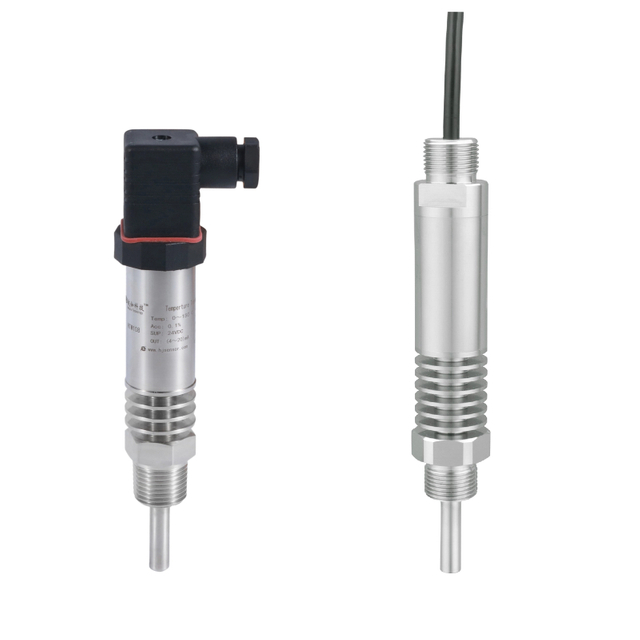
The Difference between A Temperature Sensor And A Temperature Transmitter
Views: 0 Author: Site Editor Publish Time: 2026-03-20 Origin: Site
Temperature measurement plays a crucial role in various industrial applications, ensuring processes run efficiently. However, many people confuse temperature sensors with temperature transmitters, unaware of how they differ and the specific roles each device plays. In this article, we will explore these differences and help you understand when to use each one, so you can make informed decisions for your temperature monitoring needs.
What is a Temperature Sensor?
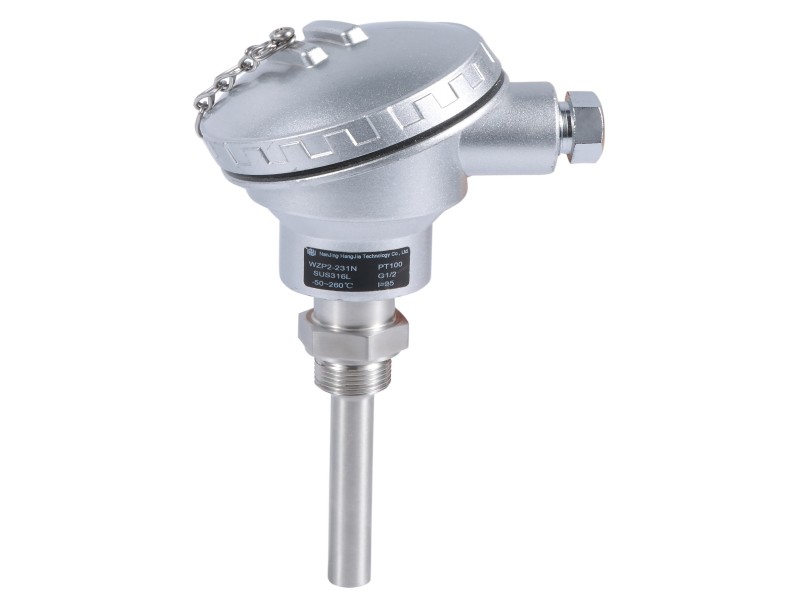
Temperature sensors are critical devices used to measure the temperature of an object or environment. These sensors convert physical temperature variations into electrical signals, which can then be measured and analyzed by instruments such as controllers, monitors, and data loggers. The conversion of temperature into a measurable signal is what makes temperature sensors indispensable across various industries, including manufacturing, healthcare, food production, and more.
Function and Types
The primary function of a temperature sensor is to detect temperature changes in its environment and convert these changes into a usable electrical signal. Different sensors are used depending on the application and the temperature range needed. Here's a breakdown of the three most common types of temperature sensors:
● Thermocouples: These sensors consist of two dissimilar metal wires joined at one end. The temperature difference between the junction and the free ends of the wires generates a voltage that can be measured. Thermocouples are widely used because of their broad temperature range, from -200°C to 1750°C, and their relatively low cost.
● RTD (Resistance Temperature Detector): RTDs, often made of platinum, operate by measuring the change in electrical resistance of the material with temperature. The PT100 RTD, for example, has a resistance of 100 ohms at 0°C, which increases with rising temperatures. RTDs offer high accuracy and stability, making them suitable for applications requiring precise measurements.
● Thermistors: These sensors have a resistance that changes dramatically with temperature, making them highly sensitive. While thermistors provide excellent precision, their temperature range is typically limited compared to thermocouples and RTDs. They are commonly used in applications like motor protection and HVAC systems, where temperature variation is more controlled.
Table 1: Temperature Sensor Types and Characteristics
Sensor Type | Temperature Range | Key Features | Applications |
Thermocouple | -200°C to 1750°C | Low cost, fast response, wide range | Industrial, Aerospace, Manufacturing |
RTD (PT100) | -200°C to 850°C | High accuracy, stable, reliable | Chemical, Oil & Gas, Pharmaceuticals |
Thermistor | -50°C to 150°C | High sensitivity, good precision at lower temperatures | HVAC, Medical, Consumer Electronics |
How Temperature Sensors Work
Temperature sensors operate on a variety of physical principles. The most common mechanisms include resistance changes (as seen in RTDs), voltage generation (in thermocouples), and resistance-temperature curves (in thermistors). These sensors interact with their environment to detect temperature variations, which are then translated into electrical signals that can be processed.
For example, thermocouples produce a voltage based on the temperature gradient between the two metals, while RTDs measure changes in resistance as the temperature fluctuates. The relationship between temperature and the electrical signal can often be complex and non-linear, which is why many sensors include signal conditioning systems to convert raw readings into usable values.
Signal Characteristics and Interference
Temperature sensor signals are typically weak and susceptible to noise and interference. For instance, the low voltage produced by thermocouples can easily be distorted by electrical noise, especially when long wires are involved. Similarly, RTDs, which rely on resistance changes, can be influenced by the resistance of connecting cables, causing measurement errors. To counter these issues, temperature sensors often require additional components, such as signal amplifiers or compensation circuits, to ensure accurate data is transmitted for further analysis.
What is a Temperature Transmitter?
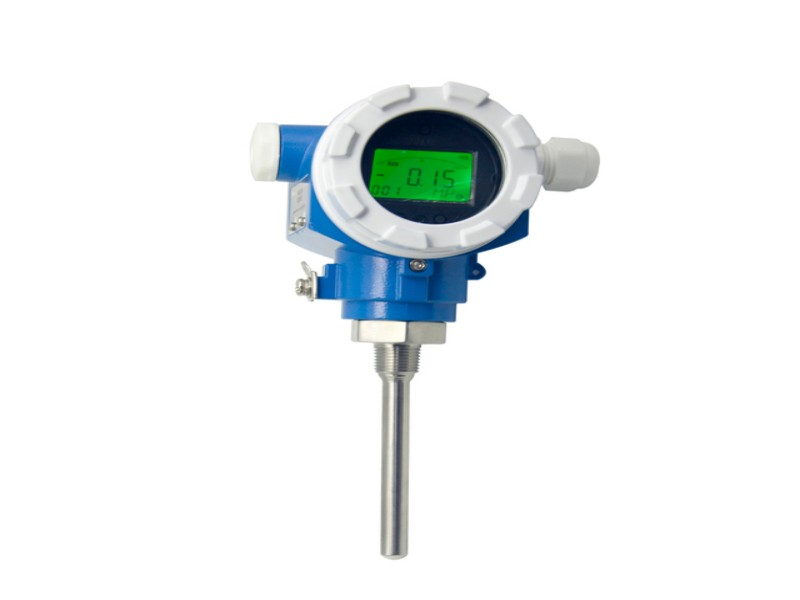
A temperature transmitter is a crucial device in industrial temperature monitoring systems. It works in conjunction with temperature sensors to convert the sensor's raw signal into a standardized, readable format that can be transmitted over long distances to control systems such as PLCs (Programmable Logic Controllers) or SCADA systems. By doing so, temperature transmitters ensure that temperature data is accurately relayed to operators or automated systems for further analysis and action.
Function and How It Works
The primary function of a temperature transmitter is to take the raw, often non-linear or weak signal produced by a temperature sensor (such as a thermocouple, RTD, or thermistor) and convert it into a standardized output. Common output signals include 4-20mA, 0-10V, or digital protocols like Modbus, depending on the application. These standardized signals are far more suitable for long-distance transmission and can be directly interpreted by control systems, enabling seamless integration into industrial processes.
Temperature transmitters typically include several essential processes to ensure the accuracy and reliability of the signal:
● Amplification: The raw signal from the sensor is often too weak to be used directly. The transmitter amplifies this signal to a usable level.
● Linearization: Many sensors, such as thermocouples and RTDs, output non-linear signals. The transmitter linearizes the signal, ensuring that it accurately corresponds to the measured temperature.
● Noise Filtering: Industrial environments are prone to electrical noise, which can distort sensor signals. Temperature transmitters include noise filtering capabilities to ensure the integrity of the transmitted signal.
Advantages of Using a Temperature Transmitter
Temperature transmitters offer several distinct advantages over using raw sensors alone, making them essential for many industrial applications.
● Stable Signal Over Long Distances: Unlike sensors, which may experience signal degradation over long distances, transmitters ensure that the signal remains stable and accurate over large distances. This is particularly important in large industrial plants where control systems might be located far from measurement points.
● High Immunity to Interference: Temperature transmitters are designed to be resistant to electrical noise and other environmental interferences, ensuring that the signal remains clear and reliable even in electrically noisy environments.
● Easy Integration with Control Systems: Temperature transmitters provide standardized outputs (such as 4-20mA), making it easier to integrate them with PLCs, DCS (Distributed Control Systems), and SCADA (Supervisory Control and Data Acquisition) systems. This reduces the need for additional signal conditioning equipment, simplifying the overall system design and reducing installation costs.
● Reduced Need for Additional Signal Conditioning: By converting the sensor's raw signal to a standard output, temperature transmitters eliminate the need for extra equipment, such as amplifiers or signal conditioners, that would otherwise be necessary when using sensors alone.
Key Differences Between Temperature Sensors and Temperature Transmitters
Temperature sensors and temperature transmitters are both integral parts of modern temperature measurement systems, but they serve different roles and offer distinct advantages. Understanding these differences is crucial for selecting the right equipment for your application. Below, we’ll explore the key distinctions between the two, focusing on functionality, signal output, installation, and cost considerations.
Functionality and Signal Output
The primary difference between temperature sensors and temperature transmitters lies in their functionality and the type of signal they produce.
● Temperature Sensors: These devices are designed to directly measure temperature changes and convert these changes into raw electrical signals, such as changes in voltage, resistance, or current. For example, thermocouples generate a small voltage proportional to temperature changes, while RTDs (Resistance Temperature Detectors) produce a change in resistance with temperature fluctuations. However, these raw signals are often weak, non-linear, and susceptible to noise, requiring additional signal conditioning to be usable in industrial systems.
● Temperature Transmitters: In contrast, temperature transmitters process and convert the raw signal from a sensor into a standardized, conditioned signal that is suitable for integration with control systems. The most common output for transmitters is a 4-20mA current signal, which is ideal for long-distance transmission and is compatible with a wide range of industrial control systems. By amplifying, linearizing, and filtering the signal, transmitters ensure accurate, stable data that can be sent over long distances without degradation.
Installation and Cost Considerations
Another significant difference between temperature sensors and temperature transmitters is the installation process and associated costs.
● Temperature Sensors: Installation of temperature sensors is relatively simple, especially in applications where the distance between the sensor and the control system is short. However, because sensors produce raw signals, they often require additional signal conditioning equipment, such as amplifiers and compensators, to ensure accurate readings over longer distances. This adds to the complexity of the overall system, particularly in larger setups where multiple sensors are used.
● Temperature Transmitters: While temperature transmitters have a higher initial cost due to the added electronics, they simplify installation and system design. Since transmitters convert raw signals into standardized outputs, there is no need for extra signal conditioning equipment. They can easily integrate with PLCs, SCADA systems, and other control systems, making them ideal for long-distance applications where signal integrity is crucial.
When to Choose a Temperature Sensor vs. a Temperature Transmitter
Choosing the right temperature measurement device—whether a temperature sensor or a temperature transmitter—depends largely on the specific needs of your application. Understanding when to use each is critical to optimizing performance, accuracy, and cost.
Choosing a Temperature Sensor
Temperature sensors are ideal for applications where simplicity and short-distance measurement are key. Here are scenarios where you would typically choose a temperature sensor:
● Short-Distance Measurement: When the distance between the sensor and the control system is relatively short (typically within a few meters), temperature sensors are suitable. In these cases, signal degradation is minimal, and sensors can directly output raw signals.
● Simple Applications: For straightforward temperature monitoring where high precision is not critical, temperature sensors are sufficient. This includes applications like basic equipment temperature monitoring or HVAC systems, where signals do not need to travel long distances or require heavy processing.
● Existing Signal Conditioning Systems: If your system already has the necessary signal processing infrastructure, a sensor alone may be the best choice. Sensors can be integrated with existing amplifiers, compensators, or analog-to-digital converters (ADCs) to condition the signal as needed.
Choosing a Temperature Transmitter
On the other hand, temperature transmitters are required in more complex or large-scale systems. Consider choosing a temperature transmitter in the following situations:
● Long-Distance Measurement: When temperature signals need to be transmitted over long distances—sometimes hundreds of meters or more—a temperature transmitter is essential. It ensures that the signal remains stable and free from degradation.
● High Precision Requirements: For applications where accurate temperature readings are critical, such as in process control, chemical manufacturing, or laboratories, a temperature transmitter ensures the signal is linearized, amplified, and noise-free.
● Integration with Industrial Control Systems: Temperature transmitters are best suited for environments where the measurement data must be integrated with PLCs, SCADA systems, or other control systems. They output standardized signals like 4-20mA, which are compatible with most industrial setups, making them ideal for automated control.
Conclusion
In conclusion, temperature sensors and temperature transmitters serve different purposes in temperature measurement systems. Sensors provide raw signals, while transmitters condition and standardize these signals for long-distance transmission and integration with control systems. Choosing the right device depends on factors like distance, accuracy, and budget. At Nanjing Hangjia Electronic Technology Co.,Ltd. , we offer high-quality temperature transmitters and sensors, designed to improve accuracy and efficiency in your industrial temperature monitoring systems.
FAQ
Q: What is the role of a temperature transmitter in industrial applications?
A: A temperature transmitter converts raw signals from a sensor into standardized output, ensuring stable signal transmission over long distances and easy integration with control systems.
Q: How does a temperature sensor differ from a temperature transmitter?
A: A temperature sensor detects temperature and generates raw electrical signals, while a temperature transmitter conditions and standardizes these signals for reliable data transmission and integration.
Q: When should a temperature transmitter be used instead of a sensor?
A: A temperature transmitter should be used when long-distance signal transmission or high signal accuracy is required, particularly in complex industrial systems with remote monitoring.