
Which Sanitary Pressure Transmitter Handles High Pressure?
Views: 0 Author: Site Editor Publish Time: 2026-10-21 Origin: Site
Can your process sensors survive a massive pressure spike without compromising the sterility of your entire batch? In demanding sectors like dairy, beverage, and biopharmaceutical manufacturing, plant engineers constantly walk a tightrope. On one side of the facility, standard industrial transmitters easily handle high pressure but harbor dangerous bacteria in hidden threads and dead legs. On the side, typical sanitary sensors remain perfectly clean but frequently fail or drift out of calibration when slammed by heavy mechanical stress.
To navigate this daily operational paradox, facility managers must rigorously evaluate their instrumentation. Standard low-pressure liquid level sensors simply will not survive here. In this comprehensive guide, we will break down the critical engineering factors involved in selecting a durable sanitary pressure transmitter. You will learn exactly how purpose-built instrumentation withstands punishing high-pressure surges and intense thermal washdown cycles without sacrificing hygienic integrity.
Key Takeaways
Specialized Structural Reinforcement: A standard hygienic sensor is not universally built for extreme mechanical stress. You need specific models engineered with thickened flush diaphragms to prevent membrane rupture during sudden pump surges.
Advanced Wetted Materials: Utilizing premium alloys or ceramics provides vital resistance against aggressive cleaning chemicals and high overpressure conditions, preventing permanent sensor deformation.
Thermal-Pressure Dynamics: High-pressure processes in sanitary facilities inherently generate intense heat. Specialized thermal isolation is absolutely critical for surviving standard Clean-in-Place and Sterilization-in-Place thermal cycles.
Strict Compliance: Any instrumentation deployed in food or pharma applications must meet strict industry standards like 3-A, EHEDG, and FDA guidelines. This guarantees zero process contamination.
The Challenge: Combining High Pressure with Hygienic Standards
Engineers operating in sanitary sectors face a unique mechanical dilemma. They are tasked with measuring extreme system pressures while simultaneously maintaining a completely sterile, crevice-free environment. A compromise on either front leads directly to catastrophic batch losses or critical safety failures.
In sanitary applications, high pressure refers to processes that far exceed standard fluid transport levels. Consider a dairy homogenization plant. To effectively break down fat molecules, liquids are forced through microscopic valve gaps at pressures ranging from 150 to 400 bar. Similarly, high-pressure pumps utilized in pharmaceutical cross-flow filtration skids generate immense dynamic mechanical force. Standard sensors are typically calibrated for low-pressure tank level monitoring. Consequently, they will quickly fail or suffer severe calibration drift when exposed to these intense, pulsating loads.
Furthermore, traditional high-pressure industrial sensors are undeniably robust, yet they are entirely unsuitable for sterile environments. They frequently feature threaded connections, recessed sensing ports, or narrow dead legs. These specific design elements create microscopic dead zones where process media stagnates. This stagnation provides a breeding ground for bacterial colonies. Moreover, standard industrial instrumentation may utilize non-food-grade elastomer seals or internal fill fluids that pose a severe contamination risk should a diaphragm rupture occur.
Top Technologies: Which Sensor Architecture Wins?
Selecting the correct sensing technology is paramount for long-term reliability. Different diaphragm materials and internal sensor architectures react uniquely to mechanical stress, high-frequency vibration, and abrasive media.
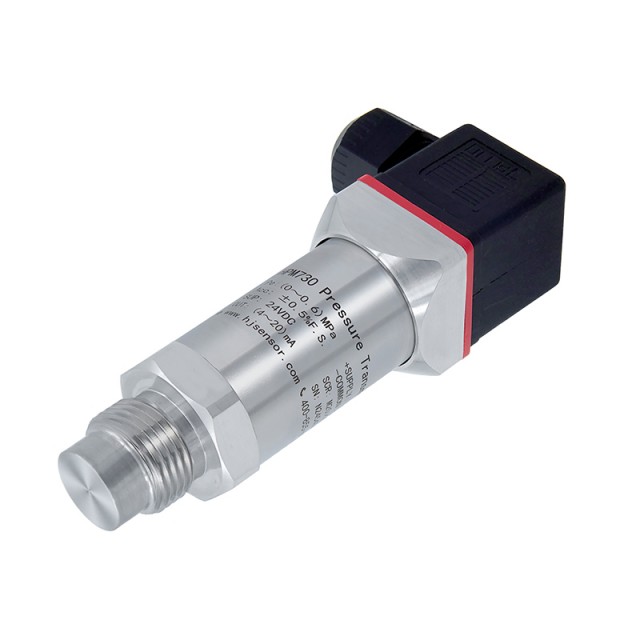
Bridging the gap between ruggedness and sterility requires a purpose-built High-Pressure Hygienic Pressure Transmitter. This specialized class of instrumentation merges heavy-duty industrial durability with uncompromising sanitary compliance. For instance, advanced models are engineered to handle extreme ranges up to 100 MPa while maintaining a perfectly flush sensing face. By incorporating structurally reinforced internal architectures, these transmitters deliver precise high-pressure readings without introducing the slightest contamination risk to the process line.
The defining characteristic of any hygienic sensor is its flush diaphragm. This perfectly flat surface aligns seamlessly with the inner wall of the pipe, actively preventing sticky media buildup. For highly intensive applications, a High-Range Flush Diaphragm Pressure Transmitter is designed with uniquely thickened membranes. Utilizing premium 316L stainless steel and specialized G1 or G1/2 flush threads, this deliberate geometric reinforcement allows the metal membrane to absorb sudden pressure spikes. It easily handles aggressive water hammer effects without losing structural integrity or shifting its measurement baseline.
Behind the flush metal membrane, many high-performance sanitary transmitters rely on piezoresistive silicon chips. The microscopic gap between the external flush diaphragm and the internal silicon chip is filled with a minimal volume of FDA-approved system fluid, such as synthetic Neobee oil. When process fluid pushes against the flush diaphragm, the internal oil transfers that exact force to the highly sensitive silicon chip. This specific technology delivers exceptional accuracy, minimal hysteresis, and lightning-fast response times in rapidly fluctuating high-pressure systems.
Managing Heat: The Thermal-Pressure Dynamic
In modern pharmaceutical and food processing facilities, pressure and temperature are inextricably linked. High-pressure process lines, particularly those utilized in pasteurization or steam sterilization, inherently involve extreme thermal loads that can easily destroy standard electronics.
When specifying a sensor for high-pressure environments, plant engineers must simultaneously account for thermal dynamics. Process media under immense pressure naturally generates heat through friction and compression. Beyond the process itself, the aggressive cleaning protocols required to maintain strict hygiene subject the sensors to severe thermal shock.
To maintain absolute sterility without the costly downtime of dismantling piping systems, facilities rely heavily on automated washdown protocols. These cycles flush the infrastructure with caustic chemicals and high-pressure steam, frequently holding temperatures at 150°C for extended durations. To survive this brutal environment, a High-Temperature Hygienic Pressure Transmitter is absolutely essential. These sophisticated units feature integrated cooling fins machined directly into the sensor neck. This physical extension distances the delicate electronic circuitry from the extreme heat of the process connection. Furthermore, they utilize specialized high-temperature food-grade fill oils engineered to resist boiling or expanding under intense thermal loads.
During a standard steam sterilization cycle, a sensor might experience a brutal temperature shift, jumping from an ambient 20°C to 150°C in mere seconds. A standard sensor will exhibit severe output drifting under this rapid thermal shock, leading to false pressure readings. Premium sanitary transmitters are equipped with advanced microprocessors that automatically compensate for these sudden temperature gradients. This ensures the output signal remains stable, accurate, and reliable throughout the entire cleaning cycle.
Key Features to Look for in High-Pressure Sanitary Instruments
When evaluating specification sheets, decision-makers must look far beyond the basic operating range. Several critical technical parameters dictate exactly how well a sensor will perform when subjected to a high-pressure, sterile environment.
First, it is vital to understand the crucial distinctions between standard operating pressure, overpressure, and burst pressure. When a technician rapidly closes a sanitary valve, it induces a fluid surge that can momentarily triple the system pressure. Buyers must verify that the sensor overload limits comfortably exceed the maximum potential pressure spike of their specific pump system.
Specification | Definition | Importance for High-Pressure Systems |
|---|---|---|
Operating Pressure | The normal, calibrated measurement range of the sensor. | Ensures accurate day-to-day process control and precise pump monitoring. |
Overpressure Limit | The maximum pressure the sensor can withstand without permanent damage or calibration shift. | Protects the sensor against unexpected surges, water hammers, or rapid valve closures. |
Burst Pressure | The absolute maximum pressure before the sensor physically ruptures or leaks process media. | Critical for facility safety, preventing hazardous leaks and catastrophic system failures. |
In addition, hygiene is heavily dependent on the microscopic smoothness of the wetted parts. The surface roughness, denoted as the Ra value, must be strictly controlled. For most standard sanitary applications, an Ra value below 0.8 µm is mandatory. For ultra-pure biopharmaceutical processes, electropolished surfaces with an Ra below 0.4 µm are the industry standard. This extreme smoothness actively prevents bacterial adhesion, even when sticky media is forced against the surface under high flow rates.
High pressure fundamentally dictates the type of mechanical connection that can be safely used. While standard Tri-Clamps are ubiquitous across the food industry, they are highly prone to yielding or gasket blowout under extreme pressure exceeding 40 bar. For high-pressure sanitary systems, engineers specify heavy-duty high-pressure clamps, DIN 11851 threaded connections, or specialized flush threaded connections sealed with FDA-compliant elastomer O-rings to guarantee a leak-proof seal.
Industry Trends: The Shift Toward Smart, High-Overload Instrumentation
The landscape of industrial instrumentation is rapidly evolving. Driven by demands for higher operational efficiency and stricter safety regulations, we are seeing a significant shift in how process plants approach instrumentation procurement. Facility managers are no longer just buying hardware. Instead, they are investing in precise data points to optimize variable frequency drives on high-pressure pumps.
By utilizing highly accurate pressure transmitters with lightning-fast response times, modern control systems can dynamically throttle pump speeds. This prevents over-pressurization, reduces overall energy consumption, and minimizes mechanical wear on the infrastructure. Furthermore, the integration of IO-Link connectivity is rapidly becoming a standard requirement. This digital protocol allows for continuous condition monitoring and predictive maintenance. Plant operators can now detect sensor fatigue or minor calibration drifts long before a catastrophic high-pressure failure occurs, drastically reducing unscheduled downtime.
Industry Applications for High-Pressure Sanitary Sensors
High-pressure sanitary sensors are deployed across multiple sectors where hygienic integrity and robust mechanical performance are equally critical. In these demanding environments, standard industrial sensors would introduce severe contamination risks, while basic sanitary sensors would simply fail under the mechanical strain.
The food and beverage industry relies heavily on high-pressure processes to ensure product stability, extend shelf life, and improve mouthfeel. Homogenization is a prime example. In dairy processing facilities, massive homogenizers force milk through narrow valves at pressures typically ranging from 150 to 400 bar. This intense mechanical action shatters fat globules, preventing cream separation. Monitoring this violent process requires a sensor capable of withstanding relentless dynamic pressure pulsations while maintaining a flush, crevice-free surface. Additionally, High-Pressure Processing utilizes extreme hydrostatic pressure to inactivate pathogens without degrading nutritional profiles, demanding highly durable flush sensors on the feed lines.
In biopharmaceutical manufacturing, maintaining a sterile operational envelope is non-negotiable. High-pressure sanitary sensors are integral to liquid chromatography skids, where expensive buffer solutions and complex biological mixtures are pumped through densely packed resin columns. Precise pressure monitoring prevents costly column damage and ensures optimal separation efficacy. Tangential Flow Filtration systems also require continuous differential pressure measurements. These systems operate at elevated pressures to force permeates through semi-permeable membranes, necessitating sensors that offer high accuracy and strict adherence to current Good Manufacturing Practice guidelines.
Buyer’s Guide: Actionable Steps for Engineers
Navigating the procurement process requires a systematic, detail-oriented approach. You must ensure the selected instrument meets both severe mechanical demands and stringent regulatory requirements.
Step 1: Determine the True Maximum Pressure Range
Do not base your selection solely on the nominal operating pressure. Calculate the maximum potential unexpected spike, such as pump start-up surges or sudden valve closures. Ensure the proof pressure rating of the sensor comfortably exceeds this calculated maximum to prevent premature diaphragm fatigue.
Step 2: Choose the Right Diaphragm Material
Evaluate the chemical composition of your process media and cleaning agents. For standard food processing, 316L Stainless Steel provides excellent flexibility and corrosion resistance. However, if daily operations involve highly abrasive media or environments prone to extreme pressure shocks, a Ceramic Flush Diaphragm Pressure Transmitter is the most durable choice. Ceramic is inherently harder than steel, offering exceptional wear resistance and remarkable overload limits without permanent deformation.
Step 3: Verify Certifications and Fill Fluids
A true sanitary instrument must be backed by verifiable documentation. Request material certificates and ensure the device fully complies with 3-A Sanitary Standards and FDA regulations regarding wetted materials. Crucially, verify that any internal fill fluid is food-grade to ensure absolute safety in the rare event of a membrane rupture.
Step 4: Evaluate the Total Cost of Ownership
Procurement teams must shift focus from the initial purchase price to the Total Cost of Ownership. Installing a cheaper, standard sensor in a high-pressure line inevitably leads to frequent recalibrations, diaphragm ruptures, and unscheduled downtime. Investing upfront in a robust, high-range flush diaphragm transmitter significantly reduces maintenance frequency and delivers a much lower cost over the lifecycle of the equipment.
Conclusion
Measuring extreme pressure in sterile environments requires highly specialized engineering. Standard industrial sensors introduce unacceptable contamination risks, while basic sanitary sensors frequently rupture under intense mechanical conditions.
To ensure operational success and safeguard your facility, you must select equipment specifically engineered for high-stress hygienic environments. Whether utilizing a heavily reinforced stainless steel flush diaphragm or advanced ceramic technology, making the correct instrumentation choice ensures absolute product safety and process efficiency. It empowers your plant to maintain strict regulatory compliance without the headache of constant sensor replacement.
Are you ready to upgrade your process monitoring? Always review technical datasheets carefully and calculate your maximum pressure spikes before making a final decision. Explore the full range of high-performance instrumentation at HJ Sensor today, and consult with our engineering team to specify the exact transmitter your high-pressure application demands.
FAQ
What is the maximum pressure a sanitary pressure transmitter can handle?
While standard sanitary transmitters typically handle operating pressures up to 40 or 60 bar, specialized high-pressure models are engineered for much more extreme conditions. Depending on the specific process connection, heavy-duty housing design, and reinforced diaphragm material, high-pressure variants can safely handle up to 400 bar, with some specialized models reaching up to 1000 bar. It is critical to consult the manufacturer datasheet to verify both the operating range and the overpressure limits for your specific setup.
Why choose a ceramic flush diaphragm over stainless steel?
Ceramic diaphragms, typically constructed from high-purity aluminum oxide, offer superior abrasion resistance compared to standard 316L stainless steel. They do not easily deform or suffer from metal fatigue under repeated, aggressive high-pressure spikes. Furthermore, ceramic is highly resistant to corrosive cleaning chemicals and acids, making these transmitters incredibly durable in harsh washdown environments where stainless steel might eventually pit or degrade.
Can a high-pressure hygienic transmitter survive CIP and SIP cleaning?
Yes, provided it is explicitly specified and designed as a high-temperature model. These specialized sensors are constructed with cooling extensions, thermal isolators, and high-temperature food-grade fill fluids that protect the sensitive internal electronics. This robust construction allows them to withstand the extreme heat—often reaching up to 150°C—associated with steam sterilization and chemical washdown processes without experiencing thermal drift or catastrophic failure.
What happens if a sanitary pressure transmitter experiences an overpressure event?
If the system pressure momentarily exceeds the maximum overpressure limit of the sensor, the thin isolation diaphragm may permanently deform or rupture entirely. A deformed diaphragm leads to severe calibration shifts and consistently inaccurate readings. Worse, a rupture can cause the internal fill fluid to leak into and contaminate the sanitary process media. This highlights exactly why calculating your maximum potential surge and selecting a sensor with a sufficiently high proof pressure rating is crucial for system safety.
What process connections are best for high-pressure sanitary applications?
While standard Tri-Clamps are ubiquitous in the food and beverage industry, they are often insufficient for high-pressure applications due to the severe risk of clamp yielding or gasket blowout. High-pressure applications typically require heavy-duty high-pressure clamps, specialized hygienic threaded connections like G1/2 or G1 flush threads equipped with specific FDA-compliant elastomer seals, or sanitary flange connections specifically designed to prevent leaks under extreme mechanical stress.
How often should high-pressure sanitary transmitters be calibrated?
Calibration frequency depends heavily on the severity of the application. In highly dynamic high-pressure environments, such as homogenization lines subjected to intense pulsations and frequent steam cleaning, engineers typically recommend verifying calibration every 6 to 12 months. However, utilizing a transmitter with a reinforced diaphragm or ceramic sensing element significantly reduces mechanical fatigue, often extending the required calibration interval compared to standard thin-membrane sensors.
What is the difference between a flush diaphragm and a standard diaphragm in high-pressure applications?
A standard diaphragm often sits recessed inside a threaded port or cavity, which works fine for standard industrial hydraulics but creates dead zones where bacteria thrive. A flush diaphragm is welded perfectly flat with the process connection, ensuring no media can accumulate. In high-pressure sanitary applications, this flush membrane must be specially thickened or corrugated to withstand mechanical force without warping, whereas a standard flush membrane would easily rupture under the same stress.


