
Which Sanitary Pressure Transmitter Works for Bioreactors?
Views: 0 Author: Site Editor Publish Time: 2026-10-28 Origin: Site
A microscopic dead zone can ruin an entire batch. In the high-stakes environment of bioprocessing, cultivating valuable pharmaceuticals or advanced cellular therapies means maintaining absolute sterility. It is not merely a goal. It is a strict regulatory mandate. Even a microscopic crevice within a vessel or its attached instrumentation can harbor resilient bacteria.
From an engineering perspective, conventional industrial sensors simply cannot handle these rigorous hygiene requirements. They routinely fail during high-temperature sterilization cycles. They degrade under the harsh chemical washdowns used in biopharma facilities. Consequently, a sanitary pressure transmitter emerges as the critical instrument designed specifically to measure pressure accurately while maintaining a completely sterile, crevice-free boundary.
In this guide, plant managers, process engineers, and procurement teams will learn how to select the exact type of instrumentation needed for their bioreactors. We will navigate everything from connection types to advanced digital displays, providing practical field insights to safeguard your production.
Key Takeaways
Zero Dead Legs are Crucial: Utilizing a flush-mounted design is mandatory to prevent biological media buildup and subsequent bacterial growth within the vessel.
Standardized Connections: The hygienic clamp fitting remains the industry baseline, providing engineers with quick, secure, and highly cleanable installation capabilities.
Thermal Shock Readiness: Bioreactor instrumentation must withstand extreme temperature fluctuations during cleaning and sterilization protocols without suffering from calibration drift.
Real-Time Visibility: Deploying digital display units allows plant operators to monitor critical internal pressure levels directly on the production floor.
Strict Compliance: A true pharmaceutical-grade transmitter must strictly adhere to global regulatory standards, utilizing 316L stainless steel and non-toxic fill fluids.
Understanding the Role of Sanitary Instrumentation in Bioreactors
Pressure monitoring serves as a foundational parameter in bioprocessing control systems. Within a bioreactor, pressure must be precisely regulated. This maintains optimal cellular growth conditions and ensures structural safety. Operators rely on continuous data to monitor headspace pressure and adjust sparger gas flow rates. This guarantees optimal oxygen transfer and verifies that the vessel does not over-pressurize during high-temperature sterilization. Even a minor deviation in this profile can alter dissolved oxygen levels. Ultimately, this impacts cell viability and reduces the yield of active pharmaceutical ingredients.
The distinction between typical industrial transmitters and sanitary designs lies primarily in their physical construction. Standard transmitters often feature threaded connections alongside recessed measuring ports. In a bioprocessing environment, these threads act as microscopic safe havens. They shield bacteria from cleaning agents and steam. In contrast, a sanitary design is meticulously engineered to be completely crevice-free. Featuring highly polished wetted surfaces that integrate seamlessly with the internal geometry of the bioreactor, the instrument remains fully cleanable and leaves absolutely no residue behind.
Selecting an inappropriate sensor carries severe financial and regulatory consequences. Imagine a high-density cell culture running for weeks, only to be contaminated by a poorly designed sensor port. The entire batch must be discarded. For high-value monoclonal antibodies, a single lost batch can result in millions of dollars in financial losses. Furthermore, recurring contamination incidents inevitably trigger rigorous regulatory investigations. This potentially leads to warning letters, extended facility downtime, and lasting damage to a manufacturer's reputation.
Why a Flush Diaphragm Design is Non-Negotiable
In piping and instrumentation terminology, a dead leg is a section of a system where fluid can stagnate. It sits outside the main flow path. Stagnant biological media provides an ideal breeding ground for microbial contamination. If a pressure sensor creates a dead leg, neither caustic chemical cleaning nor pressurized steam sterilization can effectively penetrate the area. The entire bioreactor becomes compromised.
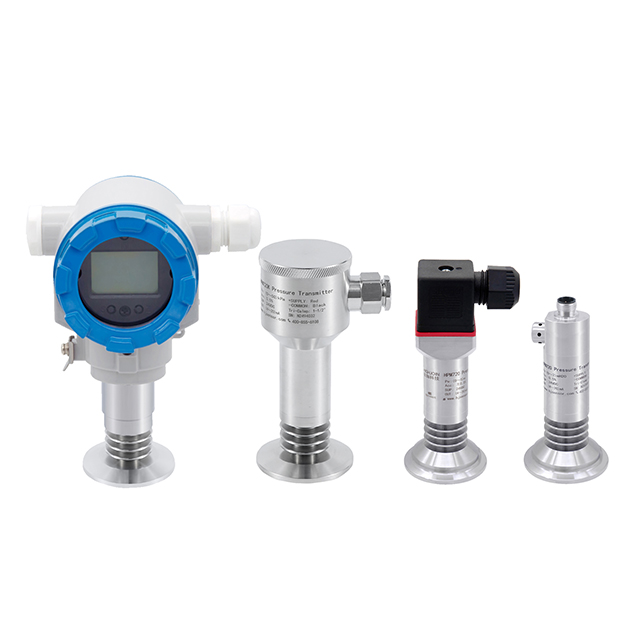
To directly combat this risk, biopharma facilities must utilize specialized instrumentation. A Flush Diaphragm Sanitary Pressure Transmitter is engineered so that the sensing element sits perfectly flush with the inner wall of the bioreactor. Because the diaphragm does not protrude or recess into a cavity, the process media flows smoothly past the sensor face. This continuous sweeping action prevents any pockets of sticky product residue from accumulating. During cleaning cycles, the flush surface allows fluids and steam to make direct, unimpeded contact. This ensures complete sterilization.
The physical construction of the diaphragm is just as critical as its placement. For standard bioprocessing, the diaphragm and wetted parts must be constructed from 316L stainless steel. This material offers excellent resistance to corrosion and pitting. Additionally, the surface roughness must meet strict criteria. The industry standard dictates a surface finish of Ra under 0.38 micrometers after electropolishing. This creates a mirror-like finish that is simply too smooth for microscopic pathogens to adhere to.
The Importance of Standardized Connections
The hygienic clamp fitting is the universally accepted standard for piping connections in the pharmaceutical sector. Its mechanics are straightforward yet highly effective. It consists of two flanged ferrules, a specialized elastomeric gasket, and an external mechanical clamp that compresses the assembly together. This creates a secure, leak-proof seal without the need for internal threads.
The primary advantage of a Tri-Clamp Sanitary Pressure Transmitter is its exceptional balance of hygiene and operational efficiency. Specifically, it allows process engineers to rapidly install, remove, and reposition sensors without specialized wrenches. This proves particularly beneficial during routine maintenance, manual calibration checks, or rapid changeovers between different production batches. When properly assembled, the gasket aligns perfectly with the inner diameter of the ferrules. It creates a smooth, uninterrupted transition that eliminates micro-gaps where contamination typically occurs.
These hygienic fittings are highly standardized but come in various dimensional sizes, such as 1.5-inch and 2-inch options. It is imperative that the transmitter's ferrule precisely matches the bioreactor's port size. A mismatch will compromise the sanitary seal, leading to gasket extrusion or the creation of an unintended dead leg.
Navigating Extreme Temperatures in Cleaning Cycles
Bioreactors must undergo rigorous cleaning and sterilization between every batch to maintain compliance with Good Manufacturing Practices. Picture the inside of a stainless steel vessel during the Clean-In-Place process. Highly caustic chemicals are circulated at elevated temperatures to strip away organic residue. Following this, the Sterilize-In-Place process introduces pure, high-temperature steam into the vessel. Sterilization temperatures routinely exceed 121 degrees Celsius and can reach up to 135 degrees Celsius for extended periods.
These extreme temperature fluctuations create severe thermal shock. Conventional pressure sensors will experience significant zero-drift, output instability, or complete electronic failure when exposed to steam. A genuine Pharmaceutical Hygienic Pressure Transmitter is specifically designed with thermal isolation mechanisms. High-performance models feature built-in cooling fins that dissipate heat rapidly before it reaches the sensitive electronic circuitry housed in the transmitter head.
Behind the flush metallic diaphragm lies a small volume of transmission fluid. This fluid transfers the external process pressure to the internal piezoresistive sensor chip. In bioprocessing, there is always a residual risk of diaphragm rupture due to accidental mechanical impact. Therefore, the fill fluid must be strictly non-toxic. Premium manufacturers utilize FDA-approved transmission fluids, such as pharmaceutical-grade mineral oil or safe synthetic derivatives. This ensures that an accidental rupture does not render the entire batch toxic.
Local Monitoring vs. Remote Control
Modern biopharmaceutical facilities rely heavily on centralized control architectures. They utilize SCADA systems and programmable logic controllers to monitor the entire plant. However, exclusive reliance on remote monitoring creates blind spots for personnel on the plant floor. Operators performing manual interventions, routine maintenance, or visual inspections of the bioreactor need immediate, localized data.
Integrating a Digital Display Hygienic Pressure Transmitter bridges this operational gap. These advanced units provide critical process visibility directly at the point of measurement. High-contrast, rotatable LCD screens allow a technician to read pressure values easily from a distance. Beyond simple readouts, digital displays offer localized control. Technicians can execute on-site calibration, perform zero and span adjustments, and diagnose issues directly on the unit.
Because the exterior of the bioreactor is subjected to the same rigorous cleaning protocols as the interior, the transmitter's housing must be exceptionally durable. The display enclosure should carry an IP67 or IP69K rating. An IP69K certification guarantees that the digital display and its internal electronics are fully protected against high-pressure, high-temperature water jets and harsh chemical washdowns.
Current Industry Trends Shaping Bioreactor Instrumentation
Recent industry analyses highlight a massive shift towards continuous bioprocessing and advanced digitalization. As facilities transition toward Industry 4.0, process engineers are moving away from basic analog sensors. There is a surging demand for smart instrumentation equipped with advanced communication protocols like IO-Link or HART. These smart transmitters do much more than just measure pressure. They provide predictive maintenance diagnostics, alerting plant operators to potential sensor degradation before a catastrophic failure occurs.
Furthermore, the rapid adoption of Single-Use Technologies is reshaping equipment design. While disposable bioreactors dominate certain sectors, the market is seeing a hybrid approach. Traditional stainless-steel bioreactors are being retrofitted with highly precise, digitalized hygienic sensors. This upgrade matches the agility of single-use systems while ensuring tighter compliance with increasingly strict data integrity regulations. Facilities are prioritizing sensors that offer seamless integration, verifiable traceability, and zero-drift performance over extended campaigns.
Bottom-of-Funnel Buyer's Guide: How to Select the Right Model
Procurement teams and process engineers must evaluate multiple technical parameters before finalizing a purchase. Using structured selection criteria ensures that the chosen instrumentation perfectly aligns with the bioreactor's specific operational demands. Here is a practical checklist based on field engineering standards.
First, determine the exact pressure range. You must understand both the normal operating pressure of the cell culture process and the maximum pressure experienced during steam sterilization cycles. The sensor must be rated to handle peak sterilization pressure without drifting. Many bioreactors also undergo vacuum conditions during cooling phases, so compound pressure ranges are often required.
Second, select the appropriate output signal. Choose an output protocol like 4-20mA with HART, or Modbus RS485 that seamlessly integrates with the facility's existing control architecture.
Third, verify the mechanical connection. Ensure the fitting precisely matches the existing vessel ports. Dimensional accuracy is critical for maintaining a sterile boundary.
Fourth, assess your accuracy requirements. Bioprocess control requires tight tolerances. For critical parameters, you should specify transmitters offering an accuracy of 0.25 percent or even 0.1 percent of the full scale.
Finally, evaluate the physical environment. Determine if localized data is necessary for floor operators. If manual interventions are frequent, investing in a digital display model with IP69K protection is highly recommended.
Selection Criteria | Key Considerations for Bioreactors |
|---|---|
Measurement Range | Must cover vacuum cooling phases to high positive pressure steam cycles |
Output Protocol | 4-20mA with HART for standard controllers; IO-Link for smart factories |
Surface Finish | Ra under 0.38 micrometers, electropolished to prevent bacterial adhesion |
Accuracy Class | Under 0.25 percent Full Scale for standard processes; under 0.1 percent for critical R&D |
Certifications | ASME BPE, 3-A, EHEDG, FDA-approved fill fluid |
Conclusion
Choosing the right sanitary pressure transmitter safeguards bioreactor sterility and overall compliance. It is not just about measuring pressure. It is about protecting the integrity of life-saving medicines. A flush diaphragm prevents costly downtime and batch product losses. Proper hygienic fittings ensure secure installation. Furthermore, high-temperature durability maintains accurate measurement during rigorous sterilization cycles.
If you are upgrading your facility's process control, consulting an instrumentation expert is the most effective next step. Explore the comprehensive range of hygienic solutions from HJ Sensor to find the exact model tailored to your bioreactor. Request a quote today to ensure absolute bioprocessing safety and regulatory compliance.
Frequently Asked Questions
What is the difference between a standard and a sanitary pressure transmitter?
Standard transmitters often use threaded connections that create dead legs where bacteria can grow and hide from cleaning agents. Sanitary transmitters use flush diaphragms and smooth, crevice-free connections to ensure complete cleanability and eliminate the risk of microbial contamination.
Can a sanitary pressure transmitter handle vacuum conditions in a bioreactor?
Yes. Many bioreactors undergo vacuum conditions during the cooling phases immediately following sterilization. It is crucial to select a transmitter specifically rated for absolute pressure or compound pressure. This prevents internal diaphragm damage or fluid outgassing.
Why is a flush diaphragm so important in pharmaceutical applications?
A flush diaphragm ensures there are no cavities, threads, or recesses at the measurement point. This prevents the accumulation of sticky biological media or cellular debris. It guarantees that cleaning processes are fully effective in stripping away contaminants.
How often should hygienic instrumentation be calibrated?
In highly regulated biopharmaceutical environments, calibration is typically performed annually or bi-annually. However, the exact frequency depends heavily on the criticality of the measurement, the severity of the thermal shocks during steam cycles, and the facility's specific standard operating procedures.
What do cleaning and sterilization acronyms mean for sensor durability?
Clean-In-Place utilizes caustic chemicals to clean the vessel. Sterilize-In-Place uses high-temperature steam up to 135 degrees Celsius for sterilization. The transmitter must be structurally built to withstand these harsh, high-temperature cycles without losing measurement accuracy, drifting, or suffering physical electronic damage.
How do you calibrate a sanitary pressure transmitter without breaking sterility?
Calibrating a sensor while maintaining a sterile boundary requires specialized block-and-bleed valve manifolds or sterile quick-disconnect fittings. In many modern facilities, engineers utilize smart transmitters with digital displays that allow for zero-point verification electronically. If a physical calibration is necessary, the sensor is typically removed, calibrated on a test bench, and the entire vessel undergoes another sterilization cycle before the next batch begins.
What is the difference between absolute and gauge pressure in bioreactor monitoring?
Gauge pressure measures the system pressure relative to the ambient atmospheric pressure. Absolute pressure measures the pressure relative to a perfect vacuum. In bioreactor applications, absolute pressure transmitters are often preferred because they remain unaffected by changes in local barometric pressure. This ensures highly stable and repeatable dissolved oxygen control throughout the fermentation process.


