Which Pressure Transmitter Types Suit Your Process Best?
Views: 0 Author: Site Editor Publish Time: 2026-11-09 Origin: Site
Choosing the wrong pressure transmitter can cause costly process errors. But which option truly fits your application? Different pressure transmitter types serve different measurement needs. This guide compares their functions, applications, and key selection factors. You will learn how to choose the right transmitter for reliable process control.
Which Pressure Transmitter Types Are Available for Industrial Processes?
Pressure transmitters are commonly classified by their pressure reference and measurement method. The main options include gauge, absolute, differential, and sealed gauge pressure transmitters.
Their structures and configurations can also differ. For example, a transmitter may use a flush diaphragm or include an integrated display. These features address different installation and monitoring needs.
Understanding each type is the first step toward correct selection. The following sections explain how they work and where they perform best.
Gauge Pressure Transmitters for Pipeline and Tank Pressure Monitoring
Gauge pressure transmitters measure pressure relative to the surrounding atmospheric pressure. They report the difference between process pressure and local atmospheric pressure. This makes them suitable for many general industrial applications.
They are commonly used in water supply systems, hydraulic equipment, air compressors, and industrial pipelines. Operators can monitor whether a pump maintains the required pressure. They can also identify abnormal pressure changes during operation.
Gauge pressure is usually the practical choice when atmospheric pressure is not part of the process measurement. It provides a direct reference for everyday equipment monitoring. However, it cannot provide true absolute pressure readings.
Tip: Check the normal operating pressure before selecting the measurement range. Include possible pressure surges during startup and shutdown.
Absolute Pressure Transmitters for Vacuum and Pressure-Sensitive Processes
Absolute pressure transmitters measure pressure relative to a perfect vacuum. Their readings do not use atmospheric pressure as the reference point. This makes them useful when atmospheric changes could affect measurement results.
Typical applications include vacuum packaging, vacuum processing, sealed vessels, and certain chemical processes. They help operators monitor pressure under reduced-pressure conditions. They are also useful when a process requires a stable absolute pressure reference.
The difference becomes important when equipment operates below atmospheric pressure. A gauge transmitter may show negative pressure, but its reading still depends on local atmospheric conditions. An absolute transmitter provides the reference needed for accurate vacuum measurement.
Note: Confirm whether the process specification requires absolute or gauge pressure. These two measurement references are not interchangeable.
Differential Pressure Transmitters for Flow, Level, and Filter Monitoring
Differential pressure transmitters measure the pressure difference between two separate points. They use high-pressure and low-pressure connections. The output represents the difference rather than pressure at one point.
One common application is flow measurement. When fluid passes through an orifice plate, a pressure difference develops across it. A differential pressure transmitter measures this difference, allowing the flow rate to be calculated.
They are also used for tank level monitoring and filter condition checks. For example, increasing pressure difference across a filter may indicate blockage. This helps maintenance teams identify problems before they affect production.
Tip: Check impulse line routing, connection orientation, and pressure port identification. Incorrect installation can cause measurement errors even when the transmitter itself works correctly.
Sealed Gauge and Flush Diaphragm Pressure Transmitters for Special Conditions
Sealed gauge pressure transmitters use a sealed reference rather than direct exposure to local atmospheric pressure. They are useful when the application requires a protected reference. Their suitability depends on the design and specified operating conditions.
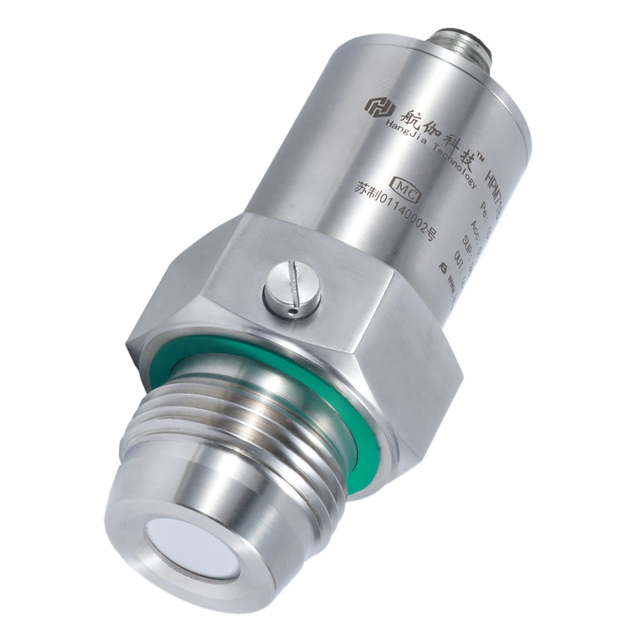
Flush diaphragm transmitters use a diaphragm positioned close to the process connection surface. This design reduces cavities where viscous or sticky materials may accumulate. It can also make cleaning easier in suitable sanitary applications.
The two terms describe different design considerations. Sealed gauge refers to the pressure reference, while flush diaphragm describes the sensing interface. A transmitter may combine these features when its design supports them.
For example, the flush diaphragm sanitary pressure transmitter uses a process-facing diaphragm. Its listed configurations include different pressure ranges and electrical outputs. These options help buyers evaluate installation and signal compatibility.
Note: A flush diaphragm does not automatically guarantee sanitary compliance. Check the process connection, wetted materials, surface finish, and cleaning requirements.
How Do Different Pressure Transmitter Types Compare?
Different transmitters may measure the same process at different reference points. Their outputs can therefore serve different control purposes. Comparing their functions helps prevent incorrect purchasing decisions.
It is also important to separate measurement type from product configuration. A display is an additional monitoring feature. A diaphragm design addresses the contact between the sensor and process medium.
The following comparisons focus on practical differences. They help engineers narrow down suitable pressure transmitter types before checking detailed specifications.
Gauge vs. Absolute Pressure Transmitters: Measurement Reference and Accuracy
The main difference is their pressure reference. Gauge transmitters use atmospheric pressure as the reference. Absolute transmitters use a perfect vacuum as the reference.
For example, a gauge transmitter may read zero when a vessel is at atmospheric pressure. An absolute transmitter will still show atmospheric pressure under the same condition. Their readings therefore cannot be compared directly without conversion.
Gauge measurement suits ordinary pipeline and equipment monitoring. Absolute measurement is more appropriate for vacuum systems and processes requiring absolute pressure values. The process specification should determine the correct choice.
Differential vs. Gauge Pressure Transmitters: Single-Point and Two-Point Measurement
A gauge transmitter measures pressure at one process point. A differential transmitter compares pressure at two points. This difference determines their application range.
Gauge transmitters are common in pump outlets, compressed air lines, and hydraulic circuits. They help operators monitor local operating pressure. Differential transmitters are more suitable for flow calculations and filter monitoring.
Differential measurement also requires additional installation planning. Both pressure connections must be correctly identified and connected. Engineers should consider impulse lines, elevation differences, and potential blockages.
Display-Type vs. Remote-Reading Pressure Transmitters: Local Monitoring and Control
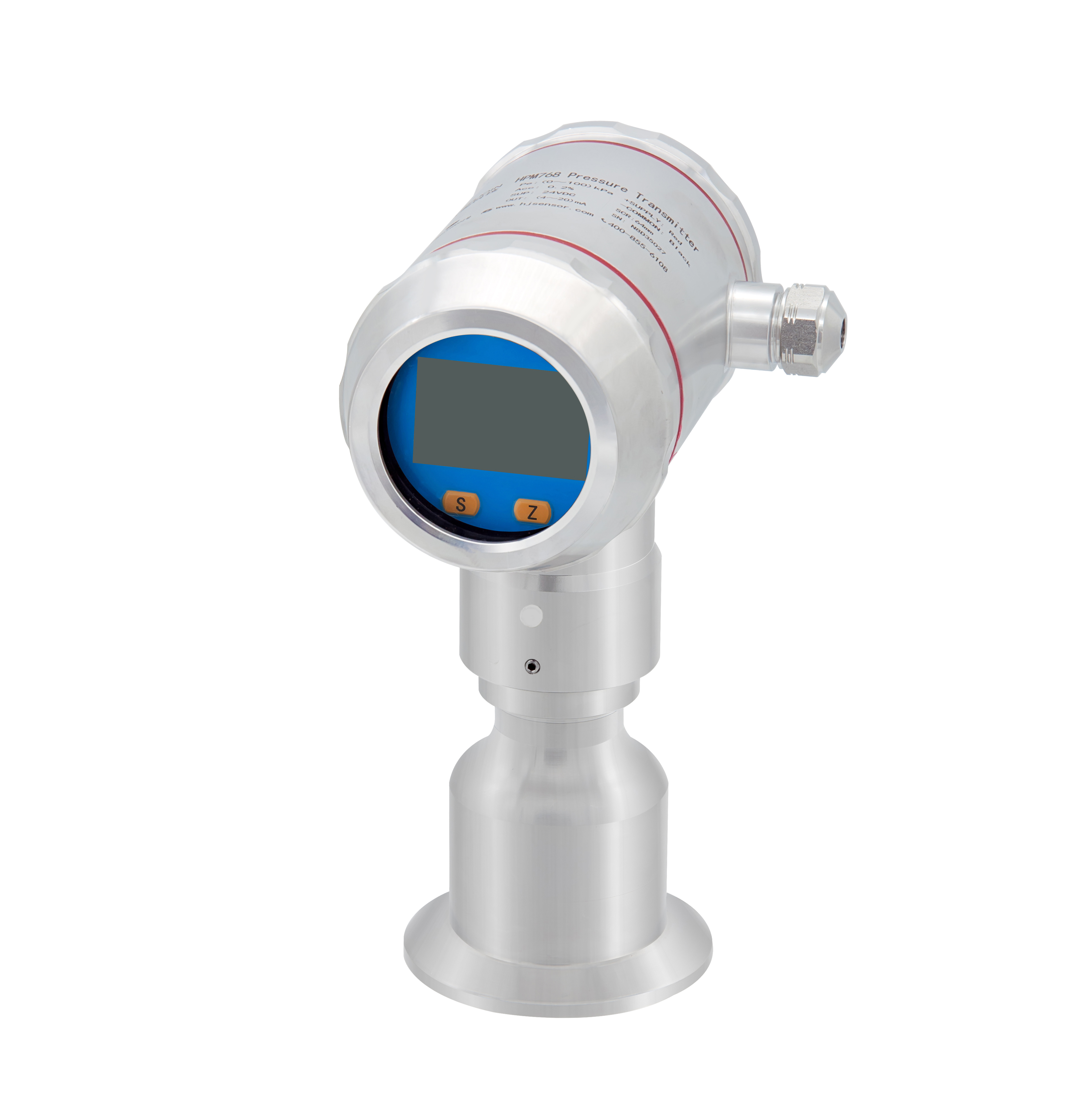
A display-type pressure transmitter provides local readings. Operators can check pressure without accessing a separate control system. This is useful during commissioning, routine inspection, and equipment maintenance.
A remote-reading transmitter sends its measurement signal to a PLC, DCS, or other monitoring equipment. This allows operators to monitor pressure from a control room. It also supports centralized process management.
Some transmitters combine both functions. For example, the LCD display pressure transmitter provides local visual monitoring. Its product specifications list ±0.5% FS accuracy and a measuring range extending to 2.5 MPa. Actual suitability still depends on the selected configuration.
Tip: Confirm whether the display is readable from the normal inspection position. Also check whether the output signal matches your control system.
Which Pressure Transmitter Types Suit Different Process Applications?
The best transmitter depends on the actual process conditions. Different industries have different measurement priorities. Some require stable pipeline pressure readings, while others need corrosion resistance or hygienic connections.
The process medium also affects transmitter selection. Liquids, gases, steam, and viscous materials place different demands on the sensing structure. Engineers should evaluate these conditions before choosing a model.
Water Supply and Hydraulic Systems
Gauge pressure transmitters are commonly used in water supply and hydraulic systems. They monitor pump discharge pressure, pipeline pressure, and equipment operating conditions. These measurements help operators maintain stable system performance.
Pressure range is an important selection factor. A transmitter should cover normal operating pressure without using an unnecessarily wide range. It should also withstand expected pressure surges.
Connection compatibility matters as well. Check the thread size, sealing method, and installation orientation. These details help prevent leakage and reduce installation problems.
Chemical, Petrochemical, and Pharmaceutical Processes
Chemical processes may involve corrosive liquids, gases, or high-temperature media. Material compatibility is therefore a major selection requirement. A transmitter must withstand direct contact with the process medium.
Stainless steel 316L is used in many industrial pressure measurement applications. However, it is not suitable for every chemical. More aggressive media may require Hastelloy or another compatible material.
Pharmaceutical and food processes may also require hygienic designs. Flush diaphragms can reduce material accumulation around the pressure connection. For corrosive applications, a ceramic anti-corrosion pressure transmitter may be worth evaluating. Its listed configuration uses an alumina ceramic sensing element.
Note: Material selection must consider the exact chemical concentration, temperature, and cleaning agents. Do not select materials based only on the medium's general name.
Steam, Gas, and Vacuum Systems
Steam applications require careful temperature evaluation. The transmitter must operate within its specified temperature limits. Engineers may also need cooling or isolation arrangements to protect the sensing element.
Gas systems often require stable pressure monitoring. Gauge transmitters suit ordinary pipeline pressure measurement. Absolute transmitters are more appropriate when vacuum or absolute pressure control is required.
Vacuum systems need particular attention to the measurement reference. A gauge transmitter can indicate pressure below atmospheric pressure. However, an absolute transmitter provides a direct vacuum-related measurement.
Industrial Equipment and Mobile Machinery
Industrial machinery may operate under vibration, shock, moisture, and changing loads. The transmitter must withstand these environmental conditions. Mechanical protection and secure electrical connections are important.
Differential pressure measurement can support specific machinery functions. It may monitor pressure differences across hydraulic components or other equipment sections. The exact application determines the required pressure range and connection design.
Protection ratings also need careful review. IP67, for example, indicates a defined level of dust and water protection under standardized test conditions. It does not automatically mean the transmitter suits every outdoor or submerged installation.
Tip: Check vibration resistance, connector protection, and cable routing during equipment design. These factors can affect long-term measurement reliability.
What Factors Should You Check Before Selecting a Pressure Transmitter?
Selecting a suitable transmitter requires more than comparing product prices. Engineers must consider measurement performance, process compatibility, and installation requirements. These factors directly affect operating reliability.
A transmitter may have excellent accuracy but still be unsuitable for a particular application. Its pressure range, materials, and output signal must match the existing system.
Before placing an order, review the following technical requirements. They provide a practical checklist for pressure transmitter selection.
Operating Pressure Range, Overload Capacity, and Accuracy
Start by identifying the normal operating pressure. The selected measurement range should cover the expected working conditions. Avoid choosing an unnecessarily wide range.
Overload capacity is another important specification. It indicates how much pressure the transmitter can withstand beyond its rated range. Startup surges and sudden pressure changes should be considered.
Accuracy also affects measurement quality. Manufacturers may specify accuracy as a percentage of full scale (FS). For example, ±0.5% FS on a 1 MPa range represents ±5 kPa under the stated accuracy conditions.
Tip: Compare accuracy at the actual operating range. A wider measurement range may reduce the useful resolution for low-pressure applications.
Process Medium, Wetted Materials, and Diaphragm Design
Identify the process medium before choosing materials. Consider its chemical properties, temperature, viscosity, and possible contamination. These factors determine which sensing structures are suitable.
Wetted components include diaphragms, process connections, and sealing materials. Stainless steel 304 and 316L suit many general applications. More aggressive chemicals may require specialized alloys or ceramic materials.
Diaphragm design also affects performance. Conventional pressure connections suit many clean fluids and gases. Flush diaphragms are useful when material buildup or cleaning access is a concern.
Output Signals, Power Supply, and Control System Compatibility
The transmitter output must match the receiving equipment. Common industrial options include 4–20 mA and voltage signals. Some models also support digital communication.
A 4–20 mA signal is widely used in industrial control systems. It supports reliable transmission over suitable cable distances. HART communication can add configuration and diagnostic functions over the same current loop.
Other options include 0–5 VDC, 0–10 VDC, I2C, and RS485. Their suitability depends on the control architecture. Always verify wiring, signal type, power supply, and communication requirements.
Note: Do not assume every transmitter supports every output. Check the exact model configuration and datasheet before ordering.
Installation Environment and Protection Rating
Installation conditions influence the transmitter's service life. Outdoor equipment may face rain, dust, temperature changes, and condensation. Industrial machinery may also generate vibration and mechanical shock.
Protection ratings help buyers compare enclosure performance. IP65 and IP67 provide different levels of dust and water protection. The required rating depends on the installation environment.
Mechanical connections deserve equal attention. Confirm the mounting thread, flange dimensions, cable entry, and available installation space. These details reduce modification work during commissioning.
What Common Mistakes Should You Avoid When Choosing Pressure Transmitter Types?
Incorrect selection often results from overlooking basic process requirements. Buyers may focus on price or advertised accuracy. However, a technically incompatible transmitter can create greater operating costs.
The following mistakes are common in industrial procurement. Reviewing them before ordering can reduce installation issues and maintenance risks.
Selecting Gauge Pressure When Absolute Pressure Is Required
Gauge and absolute pressure transmitters use different reference points. Selecting the wrong one can produce misleading process readings. This is especially important in vacuum applications.
For example, a vacuum system may require absolute pressure monitoring. A gauge transmitter measures pressure relative to the surrounding atmosphere. Its reading changes when atmospheric pressure changes.
Always confirm the pressure reference in the engineering specification. Check whether the required value is gauge, absolute, or sealed gauge pressure. Do not rely only on the product name.
Choosing an Incorrect Pressure Range
An excessively wide range can reduce measurement usefulness. Small pressure changes may become harder to distinguish. This can affect monitoring in low-pressure applications.
A range that is too narrow creates another problem. Pressure spikes may exceed the transmitter's rated capacity. Repeated overload can affect measurement stability or damage the sensing element.
Review normal pressure, maximum operating pressure, and possible transient conditions. Also check the specified overload and burst pressure. These values describe different performance limits.
Ignoring Medium Compatibility and Diaphragm Requirements
Material compatibility is essential for long-term operation. Corrosive media can damage unsuitable wetted components. Sticky materials may also accumulate around conventional pressure connections.
This can cause unstable readings or additional cleaning work. In some processes, contamination may affect product quality. A suitable flush diaphragm can help reduce material buildup.
However, diaphragm design alone does not determine compatibility. Check the contact materials, seals, and process connection. Verify all specifications against the actual medium.
Overlooking Signal and Installation Compatibility
A transmitter may measure pressure correctly but still fail to integrate with the control system. This can happen when its output signal is incompatible. Incorrect supply voltage can also prevent normal operation.
Installation dimensions create similar problems. A different thread or connector may require additional adapters. These changes can increase installation time and introduce potential leakage points.
Confirm the complete electrical and mechanical specifications before purchasing. Include cable connections, mounting dimensions, and protection ratings. This makes equipment integration more predictable.
How Can You Match a Pressure Transmitter to Your Specific Process?
A systematic selection process helps engineers compare different models objectively. It also makes supplier communication more efficient. Buyers can provide clear technical requirements instead of relying on general product descriptions.
Start with the measurement objective. Then evaluate operating conditions and technical compatibility. Finally, verify the configuration before confirming the purchase.
Define the Actual Measurement Objective
First, identify what the process needs to measure. Is it pipeline pressure, vacuum pressure, or a pressure difference? The answer determines the basic transmitter category.
Gauge transmitters suit many general pressure monitoring tasks. Absolute transmitters support vacuum and absolute pressure applications. Differential transmitters measure pressure differences across two points.
Also distinguish pressure measurement from flow and level measurement. Differential pressure can support both calculations. However, the complete system may require additional instruments and process data.
Match the Transmitter Specifications to Operating Conditions
Prepare a technical specification sheet before comparing suppliers. Include normal pressure, maximum pressure, medium, and operating temperature. These details help identify suitable models.
Next, confirm wetted materials and mechanical connections. Check the required diaphragm design and sealing method. Consider environmental conditions such as moisture and vibration.
The following checklist can help organize your requirements:
Selection Item | Information to Confirm |
|---|---|
Measurement type | Gauge, absolute, or differential |
Pressure range | Normal and maximum operating pressure |
Process medium | Liquid, gas, steam, or viscous material |
Accuracy | Required measurement tolerance |
Wetted materials | Stainless steel, ceramic, or special alloys |
Diaphragm | Conventional or flush diaphragm |
Output signal | 4–20 mA, voltage, or digital |
Protection rating | IP65, IP67, or other requirements |
Connection | Thread, flange, and electrical connector |
This checklist makes product comparisons more practical. It also helps suppliers recommend suitable configurations. Always verify the final specifications against the actual process conditions.
Verify Communication, Calibration, and Customization Requirements
Check how the transmitter will communicate with existing equipment. Confirm signal compatibility and available power supply. Digital communication may also be required for configuration or diagnostics.
Calibration requirements should be discussed before delivery. Ask about calibration procedures, accuracy specifications, and available documentation. These records support commissioning and future maintenance.
Some applications require customized configurations. These may include pressure ranges, process connections, materials, and output signals. Confirm customization availability and technical limits before placing an order.
Tip: Send suppliers your operating conditions and complete technical requirements. This reduces repeated specification changes during procurement.
Conclusion
Choosing the right pressure transmitter depends on measurement needs, media, and operating conditions. Gauge, absolute, and differential types serve different industrial applications.
Nanjing Hangjia Electronic Technology Co., Ltd. offers versatile pressure transmitters, including flush diaphragm, ceramic, and LCD display models. Their flexible configurations support reliable measurement and easier system integration.
FAQ
Q: What are the main pressure transmitter types?
A: Gauge, absolute, differential, and sealed gauge types serve different measurement needs.
Q: How do I choose pressure transmitter types?
A: Match pressure range, medium, accuracy, and output requirements.
Q: What is the difference between gauge and absolute pressure?
A: Gauge uses atmospheric pressure; absolute uses a vacuum reference.
Q: Why use differential pressure transmitters?
A: They measure pressure differences for flow, level, and filter monitoring.
Q: Which pressure transmitter suits corrosive media?
A: Ceramic or compatible alloy models help resist chemical corrosion.
Q: Do display-type pressure transmitters support remote monitoring?
A: Yes. Some models offer 4–20 mA and HART communication.