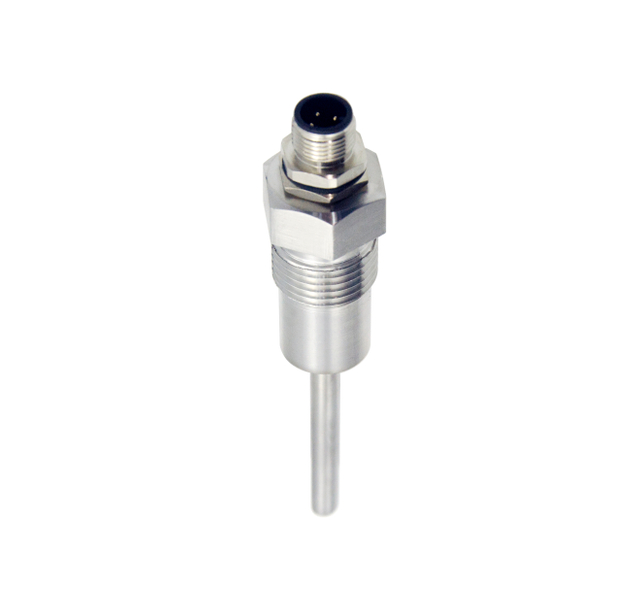
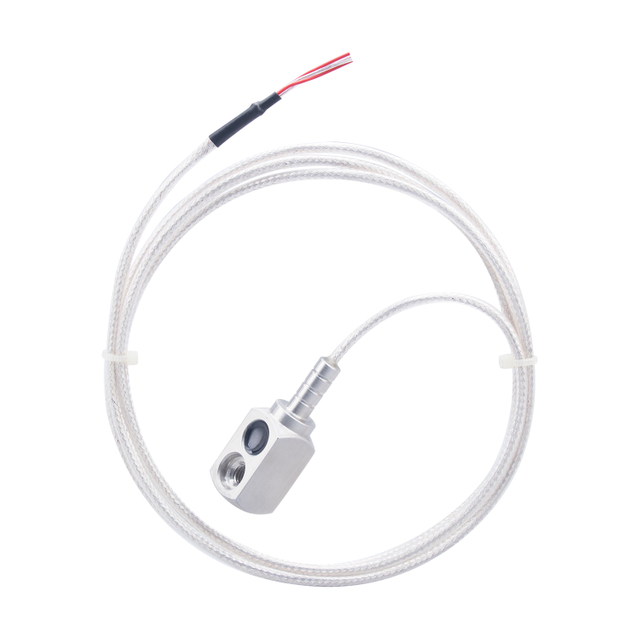
How does a 4/20mA temperature sensor work?
Views: 0 Author: Site Editor Publish Time: 2026-03-21 Origin: Site
Introduction
In industrial settings, accurate temperature measurement is critical. Have you ever wondered how temperature sensors maintain reliability over long distances and in noisy environments? The 4/20mA temperature sensor offers a solution by converting temperature into a stable current signal. In this article, we’ll explore how these sensors work, their benefits, and why they’re so essential in industrial applications, especially for process control and automation.
How Does a 4/20mA Temperature Sensor Work?
The Basic Principle of 4/20mA Signal
A 4/20mA temperature sensor works by converting a measured temperature into a corresponding electrical current signal, typically ranging from 4 mA to 20 mA. The concept of 4/20mA signaling is central to many industrial applications, especially when reliability and long-distance data transmission are required.
In this system, 4 mA represents the lowest temperature in the sensor's measurable range, while 20 mA represents the highest temperature. The current signal is proportional to the temperature being measured, which creates a linear relationship. For instance, if the sensor measures a temperature of 50°C in a range of 0-100°C, the corresponding current signal would be 12 mA, which is the midpoint between 4 mA (0°C) and 20 mA (100°C).
One key advantage of using current instead of voltage to represent temperature is that current-based signals are much more resistant to interference and signal degradation over long distances. Voltage signals, in contrast, can suffer from "voltage drops" when transmitted through long cables, especially in environments with electrical noise. However, current remains constant throughout the loop, regardless of cable length or resistance, making it a much more reliable option for industrial sensors.
4/20mA signals are used because they are the industrial standard, providing a balance of simplicity, reliability, and performance. The concept of "live zero" at 4 mA also makes it easier to detect faults in the system. If the signal drops below 4 mA, it typically indicates an issue, such as a broken wire or power failure. This "live zero" capability is one reason why this standard is widely adopted in various industrial applications.
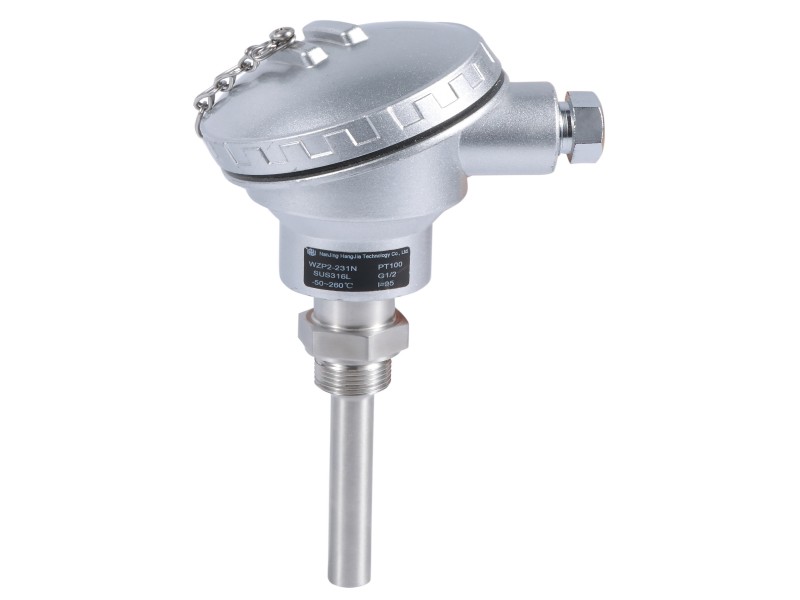
Conversion of Temperature to Current Signal
The process of converting temperature into a 4/20mA current signal involves the sensor measuring the temperature and passing that measurement to a transmitter, which then translates the temperature value into an electrical current. The temperature range is typically mapped linearly to the current range, where the 4 mA signal represents the minimum value (e.g., 0°C), and the 20 mA signal represents the maximum value (e.g., 100°C).
For example, if the sensor is designed to measure temperatures from 0°C to 100°C, the sensor would output 4 mA when the temperature is at 0°C and 20 mA when the temperature reaches 100°C. The intermediate values are scaled linearly. So, at 50°C, the signal would be 12 mA. This provides a straightforward, proportional relationship between temperature and current.
The conversion process typically relies on a temperature-sensing element, such as a thermocouple or a resistance temperature detector (RTD). These sensing elements convert the physical temperature into a resistance change or voltage, which is then translated by the transmitter into a current signal. This conversion process is highly accurate, ensuring that the temperature readings are reliably reflected in the transmitted current.
Here is a simple example to illustrate this conversion:
Temperature (°C) | Corresponding Current (mA) |
0°C | 4 mA |
25°C | 10 mA |
50°C | 12 mA |
75°C | 16 mA |
100°C | 20 mA |
This table shows the linear mapping of temperature to current, making it easy to interpret the sensor's output at any given temperature point. The table demonstrates how the sensor produces a corresponding current signal that can then be interpreted by industrial controllers, such as PLCs (Programmable Logic Controllers) or DCS (Distributed Control Systems), which read the current and convert it into a temperature value for further processing.
Key Components of a 4/20mA System
Sensor and Transmitter
In a 4/20mA system, the sensor plays a crucial role in measuring the temperature. Common temperature sensors used in this system include resistance temperature detectors (RTDs) and thermocouples. RTDs measure temperature by correlating the resistance of a material, usually platinum, to the temperature, while thermocouples generate a small voltage when there is a temperature difference across their junctions. Both sensors provide accurate temperature readings but differ in the method of measurement.
Once the sensor captures the temperature, the transmitter takes over by converting this temperature reading into a proportional electrical current signal. The transmitter uses the temperature-to-current mapping (e.g., 4 mA at 0°C, 20 mA at 100°C) to ensure the signal sent to the receiver is accurate. In some systems, a microprocessor or analog circuitry within the transmitter adjusts the signal based on the specific sensor type and calibration to maintain the linearity of the temperature-to-current relationship.
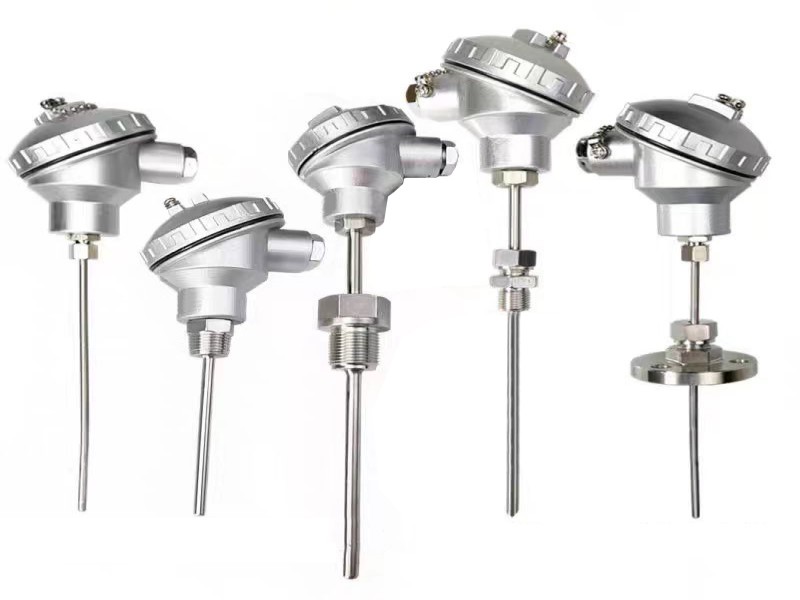
Power Supply and Wiring
The power supply is the heart of any 4/20mA system, providing the necessary energy to drive the current through the loop. Typically, the power supply is a 24V DC source, though it can vary depending on the setup. The power supply ensures that the transmitter, sensor, and receiver all receive sufficient voltage for proper operation.
Wiring in a 4/20mA system connects all the components in a loop, ensuring the current flows smoothly from the sensor to the receiver. One of the main advantages of current loop systems is that the current remains stable throughout the circuit, ensuring no significant signal degradation, even over long distances. This is in contrast to voltage-based systems, where the signal is more susceptible to voltage drops. As long as the wiring is properly connected and maintained, the 4/20mA signal will remain consistent, even if the wire runs are lengthy (up to 1,000 meters or more in some cases).
One potential issue with wiring in longer setups is resistance. Even though current is relatively immune to voltage drops, high resistance in wires can cause small variations in signal transmission. It’s essential to choose wires with proper resistance characteristics and ensure the power supply is sufficient to overcome any resistance in the circuit.
Receiver and Signal Interpretation
The receiver in a 4/20mA system is typically a Programmable Logic Controller (PLC) or a Distributed Control System (DCS). These systems read the current flowing through the loop and interpret it as a temperature measurement. The key here is that the current signal directly correlates with the temperature, so a simple reading of the current (e.g., 12 mA) can be easily converted into an actual temperature value (e.g., 50°C in the example of a 0-100°C range).
The process of converting current to a more usable form often involves the use of a load resistor. This resistor is placed in the loop and is used to convert the current signal into a corresponding voltage signal, as most industrial controllers work with voltage inputs. For instance, a current of 4 mA through a 250-ohm resistor results in a voltage of 1V, while 20 mA results in a voltage of 5V. This method allows for the easy use of standard analog-to-digital converters (ADC) in PLCs or DCS systems, making the data interpretation process seamless.
Current (mA) | Voltage across 250 Ohm Resistor (V) |
4 mA | 1V |
12 mA | 3V |
20 mA | 5V |
This table demonstrates how the 4/20mA signal is converted into a voltage range that controllers can easily interpret and process. By using this simple conversion, the system can ensure accurate temperature measurement and control, even in environments with long wiring runs or electrical noise.
The receiver then sends this interpreted data to the control system, where it can be used for process adjustments, alarms, or further processing to optimize operations.
Advantages of Using 4/20mA Temperature Sensors
Noise Immunity and Stability
One of the biggest reasons engineers choose a 4/20mA temperature sensor is signal stability in demanding environments. Industrial sites are full of electrical noise from motors, variable frequency drives, relays, pumps, and heavy equipment. In a voltage-based system, that interference can distort the signal and make readings less trustworthy. A current-based signal is much less vulnerable because the measurement is represented by current flowing through the loop rather than by a small voltage level that can be more easily disturbed.
This makes 4/20mA especially valuable in plants where accurate temperature data must remain consistent over time. Whether the sensor is mounted near a production line, inside a mechanical room, or next to electrically noisy equipment, the control system can still receive a stable reading. That consistency reduces false alarms, prevents unnecessary troubleshooting, and helps operators make decisions based on cleaner data instead of fluctuating inputs.
Long-Distance Transmission
Another major advantage is reliable transmission across long cable runs. In real installations, the sensor is often far from the PLC, DCS, or display panel. A 4/20mA loop can carry the signal over long distances without the same level of degradation commonly associated with voltage signals. As long as the loop is designed correctly and the power supply can support the total load, the current remains proportional to the measured temperature throughout the circuit.
This is why 4/20mA temperature sensors are widely used in large factories, water treatment systems, oil and gas sites, and building automation projects where instruments may be spread across multiple rooms or outdoor areas. They are well suited for:
● remote temperature monitoring across long plant layouts
● field instruments installed far from the control cabinet
● outdoor sensing points exposed to industrial interference
● centralized monitoring systems that collect data from many distant locations
Fault Detection with Live Zero
The “live zero” principle is another practical strength. In a 4/20mA system, 4mA does not mean fault; it means the measured value is at the low end of the configured range. That creates a clear difference between a valid low reading and a broken loop. If the signal drops to 0mA, operators know the issue is not simply a cold process condition but a wiring break, power loss, or device failure somewhere in the loop.
Signal Condition | Likely Meaning | Maintenance Value |
4mA | Valid minimum measurement | Confirms the loop is alive |
4–20mA | Normal operating range | Indicates proportional temperature output |
0mA | Open circuit or power failure | Speeds up fault isolation |
Below 4mA or above 20mA | Abnormal device or loop condition | Helps identify sensor or configuration issues |
Because the loop itself helps reveal faults, technicians can diagnose problems faster and keep the monitoring system more reliable, especially in critical applications where missed temperature alarms could affect safety or process quality.
Applications of 4/20mA Temperature Sensors
Industrial Process Control
In industrial plants, temperature is rarely a standalone number. It affects reaction speed, product quality, equipment life, and operational safety at the same time. That is why 4/20mA temperature sensors are widely used in chemical processing, oil and gas facilities, power systems, and other demanding environments where measurements must remain dependable even when wiring runs are long and electrical conditions are harsh. By converting temperature into a stable current signal, these sensors allow control systems to receive consistent data from tanks, pipelines, heat exchangers, furnaces, and processing lines without the signal becoming unreliable along the way.
Their value becomes even clearer in automated process control. A PLC or DCS can continuously read the current signal, compare it with the target setpoint, and adjust heaters, valves, cooling units, or alarms in real time. This supports tighter control and faster response when process conditions shift. In practice, operators rely on these sensors to:
● track temperature changes continuously during production
● trigger alarms before overheating or underheating affects safety
● support closed-loop control for more stable output quality
● reduce manual inspection in hazardous or hard-to-reach areas
Because the signal is easy for industrial controllers to interpret, 4/20mA temperature sensors fit naturally into large monitoring systems where uptime and predictability matter more than technical complexity.
HVAC and Environmental Monitoring
In HVAC systems, 4/20mA temperature sensors help maintain a balanced indoor environment across commercial buildings, factories, warehouses, and large facilities. They are commonly installed in air ducts, chilled water lines, boiler loops, and equipment rooms to provide continuous temperature feedback. Building management systems use that data to regulate fans, dampers, compressors, and heating or cooling output, helping maintain comfort while avoiding unnecessary energy use. Compared with less robust signal formats, the 4/20mA approach is especially useful when sensors are installed far from the control cabinet.
In environmental monitoring, these sensors also support energy and sustainability goals by making temperature control more accurate and measurable. Facilities can use them to monitor storage conditions, ventilation performance, and outdoor or enclosed-space temperature trends as part of broader efficiency programs.
Application Area | Typical Use of 4/20mA Temperature Sensors | Main Benefit |
Chemical and oil & gas processes | Monitoring reactors, pipes, and thermal equipment | Safer control in complex operations |
Production lines | Real-time feedback for automated adjustments | Better product consistency |
Commercial HVAC | Duct, water loop, and room temperature monitoring | Improved comfort and energy efficiency |
Environmental management | Tracking controlled spaces and ventilation conditions | Stronger compliance and resource control |
When facilities need reliable temperature data for both process performance and day-to-day energy management, 4/20mA sensors remain a practical choice because they integrate easily into control platforms and continue to perform well in real operating conditions.
Conclusion
A 4/20mA temperature sensor converts temperature into a stable current signal for accurate, low-noise, long-distance monitoring. Its reliability makes it essential in modern industrial control and automation. Nanjing Hangjia Electronic Technology Co.,Ltd. provides dependable sensor solutions with strong signal stability, practical performance, and professional service, helping customers improve measurement accuracy, system safety, and operating efficiency.
FAQ
Q: How does a 4/20mA temperature sensor output temperature?
A: A 4/20mA temperature sensor converts temperature into a linear current signal, usually 4mA at the low end and 20mA at the high end.
Q: Why is a 4/20mA temperature sensor used in industrial systems?
A: A 4/20mA temperature sensor is preferred because current signals resist electrical noise and stay accurate over long cable runs.
Q: What does 4mA mean in a current loop?
A: In a 4/20mA temperature sensor, 4mA is the live zero, showing the loop is powered while representing the minimum measured temperature.