What Is A Vibration Sensor For?
Views: 0 Author: Site Editor Publish Time: 2025-12-17 Origin: Site
Vibration sensors are integral components in various industrial systems, providing real-time monitoring and early detection of mechanical issues. Whether you're operating a manufacturing line, a power plant, or managing large-scale infrastructure, vibration sensors can play a critical role in ensuring the continuous operation and safety of equipment. These sensors detect vibrations and convert them into electrical signals, enabling you to monitor and analyze the condition of machinery, structures, and systems.
In this article, we will explore the primary purpose of vibration sensors, their applications in various industries, the types available, and the key factors to consider when selecting the right sensor for your needs. By understanding how vibration sensors work and their value in predictive maintenance and equipment health management, you can improve the reliability, safety, and efficiency of your operations.
1. What is a Vibration Sensor?
Definition and Function
A vibration sensor is a device designed to measure mechanical vibrations or accelerations in an object or structure. It works by detecting movement caused by the vibrations and converting this motion into an electrical signal, which can then be processed and analyzed. These sensors are critical in monitoring equipment health, diagnosing faults, and preventing breakdowns by identifying problems before they lead to failure.
Vibration sensors are typically used to detect conditions like misalignment, unbalanced machinery, bearing failures, or even structural defects that can occur over time due to wear and tear. By monitoring vibrations, the sensor can help identify early signs of failure, enabling predictive maintenance and reducing unplanned downtime.
How Vibration Sensors Work
Vibration sensors function by using different sensing technologies, such as piezoelectric, capacitive, or electromagnetic systems. These technologies detect the mechanical displacement caused by vibrations and translate this into electrical signals.
Piezoelectric Sensors: These sensors use the piezoelectric effect, where certain materials generate an electrical charge when subjected to mechanical stress, to detect vibrations.
Capacitive Sensors: These sensors measure the changes in capacitance between two plates caused by the displacement of a vibrating surface.
Electromagnetic Sensors: These sensors measure the changes in inductance or magnetic field caused by the movement of a vibrating object.
These signals are then transmitted to a monitoring system, where they can be analyzed in real-time to detect potential issues and allow for timely intervention.
2. Applications of Vibration Sensors
2.1 Industrial Equipment Monitoring
Vibration sensors are most commonly used in industrial equipment monitoring. They are integral to ensuring the reliable operation of critical machinery, such as motors, pumps, compressors, turbines, and fans. When these machines operate, they inherently produce vibrations, which can vary in intensity and frequency.
Vibration sensors help detect abnormal vibrations, such as increased amplitude or changes in frequency, which are often signs of potential issues, such as:
Unbalance: When a rotating machine's parts are not properly centered, leading to uneven vibration.
Misalignment: When components are not aligned correctly, causing excessive strain and vibrations.
Bearing Wear: When bearings start to wear down, they create characteristic vibration patterns.
Monitoring these vibrations allows for early detection of faults, which helps to prevent unexpected failures and improve the overall efficiency of the machinery.
Equipment | Common Vibration Problems | Sensor Role |
Motors | Misalignment, unbalance, bearing failure | Detect unbalance, misalignment, and bearing wear. |
Pumps | Cavitation, bearing wear, misalignment | Monitor vibration to detect cavitation and mechanical issues. |
Turbines | Imbalance, misalignment, fatigue | Detect early signs of imbalance and alignment issues. |
2.2 Predictive Maintenance
One of the most important applications of vibration sensors is in predictive maintenance. Predictive maintenance involves monitoring equipment in real-time to detect early signs of wear or failure, allowing for maintenance to be performed before a breakdown occurs. This approach helps extend the lifespan of equipment, reduce downtime, and save on repair costs.
Vibration sensors provide continuous feedback on the condition of equipment. When abnormal vibration patterns are detected, predictive maintenance teams can analyze the data to determine the root cause of the problem, schedule repairs, and prevent costly failures. By analyzing trends in vibration data over time, companies can optimize their maintenance schedules, avoid unnecessary maintenance, and prevent unplanned downtime.
Benefit | Impact on Maintenance |
Early Detection of Issues | Prevents unexpected breakdowns and minimizes costly repairs. |
Optimized Maintenance Schedule | Reduces unnecessary maintenance and ensures resources are used efficiently. |
Extended Equipment Life | Prevents premature failure, extending the life of expensive machinery. |
2.3 Structural Health Monitoring
Vibration sensors are also widely used in structural health monitoring. This includes monitoring the integrity of bridges, buildings, dams, and other infrastructure. Structures are subject to natural forces such as wind, earthquakes, and temperature changes, all of which can cause vibrations that affect the integrity of the structure.
By placing vibration sensors in key locations, engineers can continuously monitor the condition of these structures and detect any signs of structural damage, such as cracks or weakening materials. In critical infrastructure, vibration sensors can help identify problems before they lead to catastrophic failure, ensuring the safety of the public and preventing costly repairs.
Application | Vibration Sensor Role |
Bridges and Dams | Monitor structural vibrations to detect weaknesses or damage. |
Buildings and Towers | Monitor vibrations caused by wind, seismic activity, or structural fatigue. |
Pipelines | Monitor pipeline integrity to detect possible stress, cracks, or leaks. |
2.4 Automotive and Aerospace Applications
Vibration sensors are also critical in the automotive and aerospace industries, where precise control over mechanical components is essential for safety and performance. In vehicles, vibration sensors can detect imbalances or wear in engines, wheels, and other mechanical components.
In aerospace, vibration sensors are used to monitor aircraft engines, ensuring that vibrations stay within safe limits. These sensors help prevent mechanical failures in flight and ensure the smooth operation of engines and other crucial components. The use of vibration sensors in these industries plays a critical role in maintaining performance standards and preventing accidents.
Industry | Application | Sensor Role |
Automotive | Engine health monitoring, wheel alignment | Detect unbalanced vibrations and early signs of wear. |
Aerospace | Engine health, aircraft components | Monitor vibrations in engines and critical components. |
3. Types of Vibration Sensors
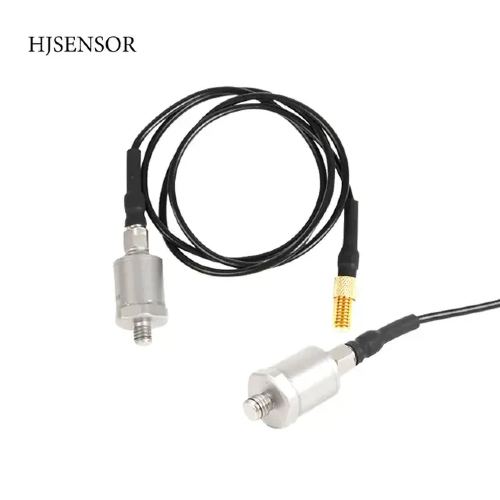
There are several types of vibration sensors, each designed for specific applications based on the type of vibration and the requirements of the system. The main types include accelerometers, velocity sensors, and displacement sensors.
3.1 Accelerometer-based Sensors
How They Work
Accelerometer-based sensors are widely used for detecting high-frequency vibrations. They work by measuring acceleration changes in the vibrating object. As the object moves, the sensor detects the movement and converts it into an electrical signal.
Applications
High-frequency vibration detection in machinery such as motors, fans, and turbines.
Seismic activity detection in structural health monitoring.
3.2 Velocity-based Sensors
How They Work
Velocity-based sensors measure the velocity of vibrations. These sensors are ideal for detecting low-frequency vibrations, often associated with large rotating machinery.
Applications
Monitoring large equipment like pumps, turbines, and compressors.
Detecting low-frequency vibrations to assess machinery health.
3.3 Displacement Sensors
How They Work
Displacement sensors measure the physical displacement caused by vibrations. They are used for high-precision applications where minute movements need to be detected.
Applications
Monitoring large structural components that experience slow, low-frequency vibrations.
Detecting minute vibrations in sensitive machinery.
4. Key Benefits of Using Vibration Sensors
4.1 Increased Equipment Reliability
Vibration sensors contribute to the continuous monitoring of machinery, ensuring that they are operating within safe parameters. Early detection of faults allows for immediate corrective actions, preventing sudden breakdowns. By addressing issues before they escalate, vibration sensors help maintain consistent machinery performance, improving overall reliability.
4.2 Reduced Downtime
Unscheduled downtime is one of the most costly aspects of industrial operations. Vibration sensors provide real-time feedback that helps detect issues early, allowing maintenance teams to perform repairs during planned shutdowns rather than during critical operational periods. This reduces the likelihood of costly downtime and ensures smoother operations.
4.3 Enhanced Safety
In critical systems, abnormal vibrations can be a sign of impending failure, which could lead to safety hazards. By detecting these vibrations early, vibration sensors help prevent accidents and ensure that equipment operates safely. For example, in automotive and aerospace applications, vibration sensors are crucial for maintaining safe performance.
4.4 Improved Product Quality
Machines that operate smoothly without vibration-related issues can maintain consistent product quality. Vibration sensors help detect irregularities that could result in defects in the final product, improving manufacturing processes and reducing the number of defective products.
5. How to Select the Right Vibration Sensor
5.1 Consider the Type of Vibration
Different applications require different types of vibration sensors. High-frequency sensors are ideal for machinery that operates at higher speeds, while low-frequency sensors are better suited for larger, slower-moving machinery.
5.2 Environmental Conditions
Environmental factors such as temperature, humidity, and exposure to chemicals can affect the performance of vibration sensors. It is important to select sensors that are durable enough to withstand these conditions. For example, sensors used in harsh environments may need to be corrosion-resistant or able to withstand high temperatures.
5.3 Response Time
Depending on the application, you may need a vibration sensor with a fast response time. For example, in high-speed machinery, it is essential to detect vibrations quickly to prevent damage, while in slower machinery, a longer response time may be acceptable.
6. Conclusion
Vibration sensors are crucial for monitoring equipment health, ensuring the reliability and safety of industrial systems. By detecting early signs of wear, misalignment, or imbalance, vibration sensors enable predictive maintenance, reduce downtime, and improve product quality. Whether in industrial machinery, structural monitoring, or aerospace applications, vibration sensors provide valuable insights into system performance.
Choosing the right vibration sensor ensures that you can detect issues early and prevent system failure. Consider the type of vibration, environmental conditions, and response time when selecting a vibration sensor for your system.
If you're interested in learning more about vibration sensors or need assistance in selecting the right sensor for your application, Nanjing Hangjia Electronic Technology Co., Ltd. is here to help. Our team of experts can guide you through the selection process and provide high-quality sensors tailored to your needs.
7. FAQ
1. What is the primary purpose of a vibration sensor?
A vibration sensor monitors mechanical vibrations to detect potential issues in machinery, equipment, and structures, helping to prevent damage and reduce downtime.
2. How do vibration sensors work?
Vibration sensors detect mechanical motion caused by vibrations and convert these movements into electrical signals, which can then be analyzed to identify potential issues.
3. What types of vibration sensors are available?
Common types of vibration sensors include accelerometers, velocity-based sensors, and displacement sensors. Each type is suited for different applications based on the frequency and amplitude of the vibrations.
4. How do I select the right vibration sensor for my system?
When selecting a vibration sensor, consider factors such as the type of vibration (high or low frequency), environmental conditions, response time, and the type of machinery or structure being monitored.
5. Can vibration sensors help prevent equipment failure?
Yes, vibration sensors can detect early signs of mechanical issues such as unbalance or misalignment, allowing for preventive maintenance and reducing the risk of sudden equipment failure.